I found and reviewed the article you mentioned — “Financial Mistakes You Should Avoid in Your 20s” from Money Under 30. Here is a full rewritten version in a professional, engaging blog-ready format with clear sections, improved flow, and natural SEO keywords such as personal finance, budgeting, saving and investing, and financial planning.
Introduction: Setting the Stage for Financial Success
Your 20s are a transformative time — full of opportunities, new challenges, and the foundation for lifelong financial well-being. The decisions you make today about money shape your ability to save, invest, and build wealth years from now. Unfortunately, common money missteps can slow your progress or put you on a path of stress and catch-up later in life. By understanding and avoiding these typical financial mistakes, you can accelerate your journey toward stability and growth.
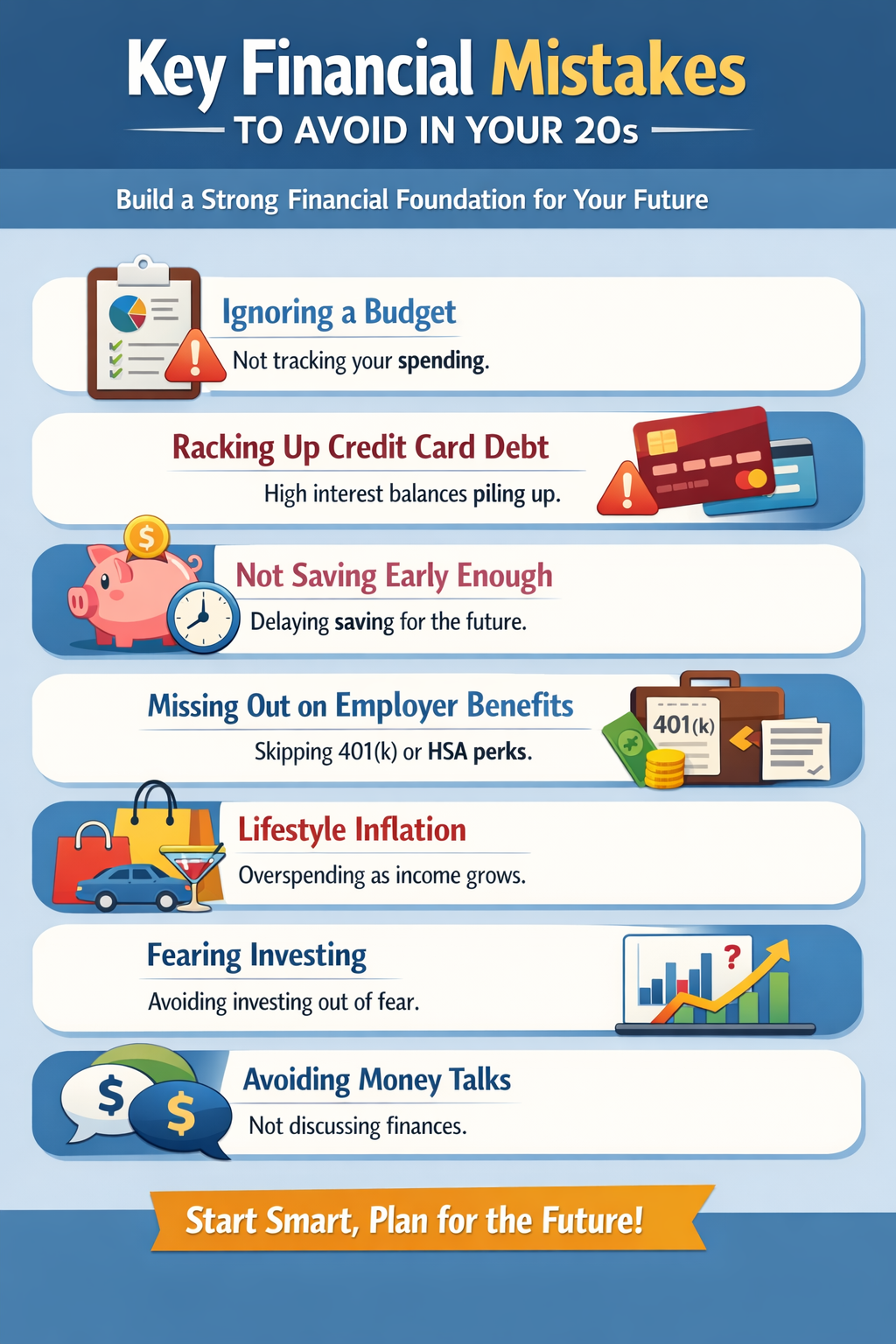
1. Neglecting to Create a Realistic Budget
Many young adults skip budgeting because they think they can manage expenses “in their head” or that budgets are restrictive. In fact, effective budgeting gives you clarity and control over your cash flow. Instead of limiting your freedom, it shows exactly where your money goes, reduces financial anxiety, and makes it easier to plan for both needs and wants. Whether you use digital tools, a spreadsheet, or a simple notebook, consistency matters more than complexity.
🧠 Ask yourself: When was the last time you reviewed your spending habits for a full month?
2. Taking on High-Interest Debt Without a Plan
Credit cards often seem like a convenient way to pay for everyday purchases, but they come with high interest rates that can quickly outweigh short-term benefits. Using credit responsibly means understanding interest and avoiding carrying a balance month after month. Make it a priority to pay off more than the minimum amount due and view credit as a tool — not a lifestyle enhancement.
💡 Tip: Treat credit like cash — only spend what you can repay in full.
3. Saving Too Little or Saving Too Late
In your 20s, it’s easy to feel like retirement or long-term goals are far off. With rent, bills, and social life competing for your income, saving often falls to the bottom of the priority list. Yet saving early — even modest amounts like $50–$100 per month — can build a powerful habit and leverage growth over decades. Starting small is far better than waiting for “enough money” to begin.
💬 Reflection: What percentage of your monthly income are you currently saving?
4. Overlooking Employer Benefits
You might be passing up valuable benefits without realizing it. Employer offerings such as retirement plan matching, health savings accounts (HSAs), tuition assistance, and professional development credits can deliver significant financial value. A 401(k) match, for example, is essentially free money — and many young professionals contribute too little or skip it entirely because they think they can’t afford it.
🎯 Pro Tip: Review your benefits every year to maximize what’s available.
5. Allowing Lifestyle Inflation to Take Hold
When your income increases, it’s tempting to upgrade your lifestyle immediately — a larger apartment, more frequent dining out, or luxury items. While enjoying life is important, letting spending grow faster than your income can hinder your ability to save and invest. This phenomenon, known as lifestyle inflation, makes it harder to build financial momentum over time.
🤔 Consider: Are lifestyle upgrades aligned with your long-term financial goals?
6. Delaying Investing Due to Intimidation
Investing can feel intimidating, especially when you’re new to the concept. Questions about risk, funds, and market volatility can lead many people to simply postpone investing altogether. However, the earlier you begin, the more time your money has to benefit from compound growth. Simple, diversified investment options — such as low-cost index funds — can make investing accessible for beginners.
📈 Engagement Prompt: What’s one small amount you could invest monthly to get started?
7. Avoiding Money Conversations
Money can feel awkward to discuss — whether it’s benefits, budgeting, or investing — but avoiding these conversations often leads to confusion and missed opportunities. Talking openly with mentors, employers, or financial planners can expand your understanding, clarify priorities, and empower better decision-making.
💬 Ask yourself: Who could you talk to this month about your financial goals?
Conclusion: Grow Your Financial Confidence
Nobody’s financial journey is perfect, especially in your 20s. But being intentional and proactive with personal finance — from budgeting and saving to investing and planning — sets you up for long-term success. Your financial habits today will shape not just your 30s and 40s, but your entire future. Start with awareness, avoid avoidable mistakes, and build systems that help you reach your goals.
📌 Final Thought: Which of these financial mistakes are you most eager to avoid — and why?
If you need further help transforming the article for a specific blog style or audience (e.g., beginners, students, early career professionals), just let me know!