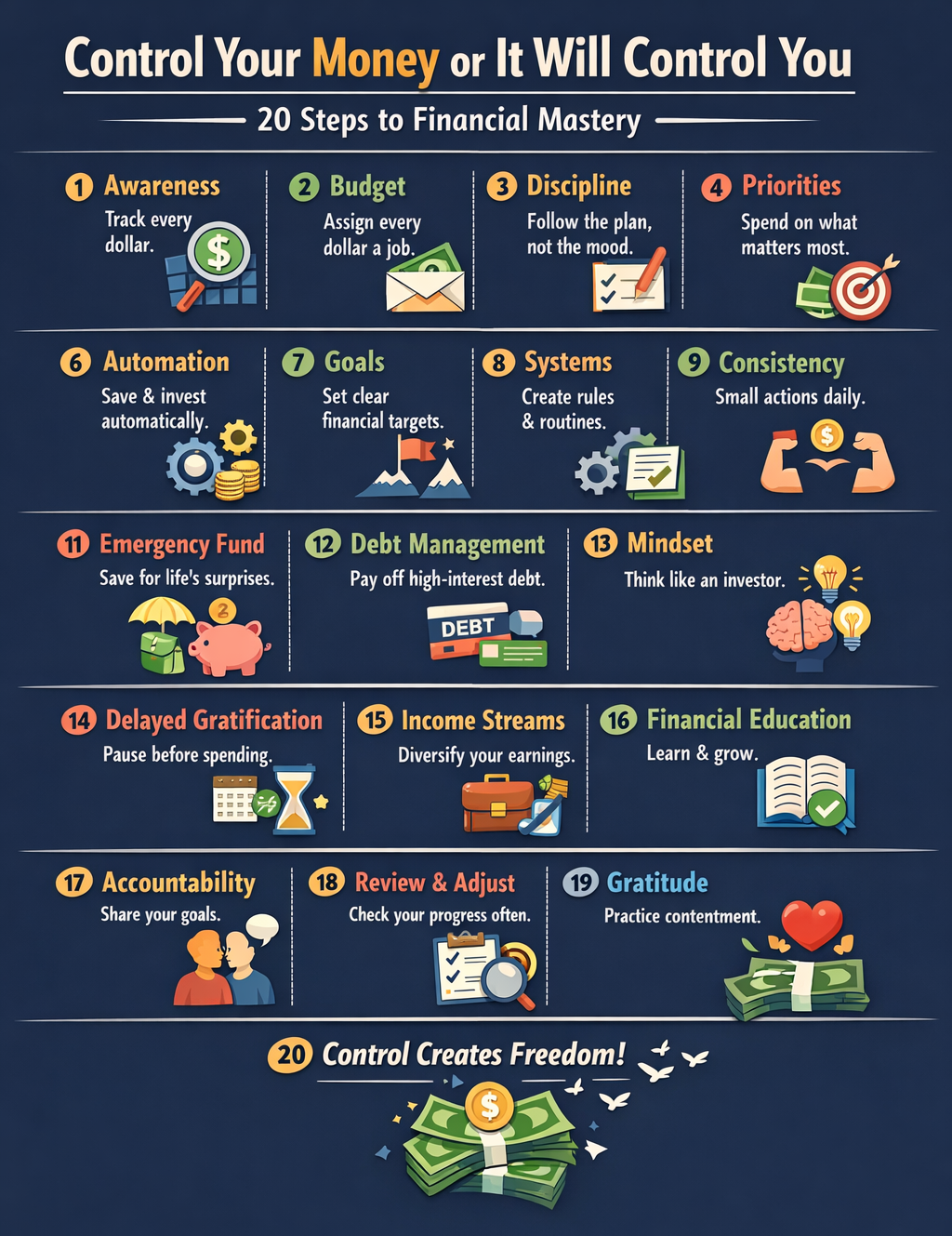
Money doesn’t disappear in big chunks—it leaks quietly. The secret isn’t earning more, it’s controlling what you already have. Control fixes the leaks, builds confidence, and creates financial power. This guide gives you 20 actionable steps to take charge of your money and stop it from controlling you.
1) Awareness 👀
- Track every dollar.
- Use apps or spreadsheets to monitor spending.
- Awareness is the first step to control.
2) Budget 📊
- Assign every dollar a job.
- Zero-based budgeting ensures no money is wasted.
- Budgeting is your financial GPS.
3) Discipline 🧘
- Follow the plan, not your mood.
- Avoid impulse purchases.
- Discipline builds long-term wealth.
4) Priorities 🎯
- Spend on what matters most.
- Align spending with values and goals.
- Cut distractions that don’t serve your future.
5) Elimination ✂️
- Cancel unused subscriptions.
- Cut wasteful recurring expenses.
- Every leak plugged is money saved.
6) Automation ⚙️
- Automate savings and investments.
- Pay yourself first without thinking.
- Systems beat willpower.
7) Goals 🏆
- Give your money a clear direction.
- Define short-term and long-term goals.
- Goals turn control into progress.
8) Systems 🔄
- Reduce decision fatigue with routines.
- Create rules like “no eating out on weekdays.”
- Systems make control effortless.
9) Consistency 📅
- Small actions daily beat big actions rarely.
- Save a little every day.
- Consistency compounds into wealth.
10) Control 🕹️
- Control creates financial power.
- Without control, money controls you.
- Master your money, master your life.
11) Emergency Fund 🚨
- Save 3–6 months of expenses.
- Prevents debt during crises.
- Control means being prepared.
12) Debt Management 🧾
- Pay off high-interest debt first.
- Avoid new debt unless strategic.
- Debt-free living equals freedom.
13) Mindset 🧠
- Shift from consumer to investor.
- See money as a tool, not a master.
- Mindset drives behavior.
14) Delayed Gratification ⏳
- Wait before big purchases.
- 24-hour rule for non-essentials.
- Patience saves money.
15) Value-Based Spending 💡
- Spend on experiences, not things.
- Invest in skills and growth.
- Value-driven spending creates fulfillment.
16) Income Diversification 🌱
- Build multiple income streams.
- Side hustles, investments, passive income.
- More streams = more stability.
17) Financial Education 📚
- Read books, listen to podcasts, take courses.
- Knowledge prevents costly mistakes.
- Education is financial armor.
18) Accountability 🤝
- Share goals with a trusted friend.
- Accountability keeps you on track.
- Control thrives with support.
19) Review & Adjust 🔍
- Monthly check-ins on budget and goals.
- Adjust as life changes.
- Control is dynamic, not static.
20) Gratitude 🙏
- Appreciate what you have.
- Gratitude reduces unnecessary spending.
- Contentment is the ultimate wealth.
Final Thoughts 🌟
You don’t need more money—you need control. Control fixes leaks, builds confidence, and creates freedom. These 20 steps are not about restriction, but empowerment. When you control your money, you control your future.
Remember: Money is a servant, not a master. Take control today, and let your money work for you—not against you.