- Navigating the world of personal finance can be daunting for novice investors. While the prospect of wealth accumulation is exciting, the lack of a structured approach often leads to significant financial setbacks. This article identifies the five most common pitfalls beginners encounter: operating without a clear plan, over-concentration in a single asset, investing in unfamiliar vehicles, overpaying for assets due to market hype, and failing to establish exit strategies for downward trends. By understanding these risks, individuals can transition from speculative behavior to disciplined, value-based investing. Grounded in the principles of risk management and fundamental analysis, this guide provides a roadmap for building a resilient portfolio. Whether you are just starting your MySavings journey or looking to refine your current strategy, mastering these core concepts is essential for protecting your capital and ensuring sustainable growth in an unpredictable market.
Mastering the Basics of Portfolio Longevity
Investing is one of the most effective tools for achieving financial independence, yet it is often treated with a level of casualness that leads to avoidable losses. For many, the entry into the markets is prompted by “fear of missing out” (FOMO) or social media trends rather than a calculated strategy. To build a sustainable “MySavings” foundation, an investor must shift their mindset from seeking quick wins to managing long-term risks.
Success in the financial markets is rarely about picking a single “moonshot” stock; it is about the consistent avoidance of catastrophic errors. Below, we break down the five critical mistakes that derail beginner portfolios and the strategic shifts required to correct them.
1. Navigating Without a Financial Compass: The Perils of No Plan
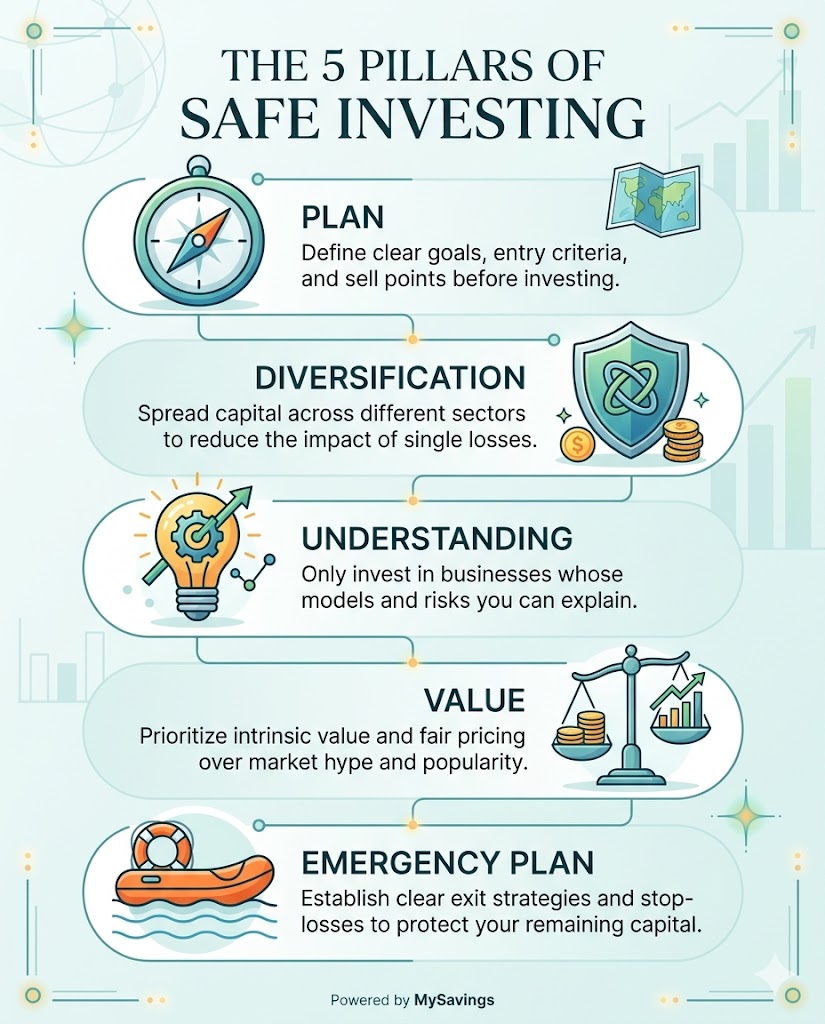
The most frequent mistake beginners make is purchasing an asset without a defined objective. Entering the market without a plan is akin to sailing without a map—you may move, but you have no control over your destination.
A robust investment plan must answer three fundamental questions:
- What is the objective? (e.g., retirement, a down payment on a home, or wealth preservation.)
- What is the entry criteria? (Based on fundamental value, P/E ratios, or technical indicators.)
- What is the exit criteria? (Knowing exactly when to sell, whether the goal is reached or the investment thesis fails.)
Without these guardrails, investors become “reactive” rather than “proactive,” often selling in a panic during a market dip or holding onto a losing position for too long.
2. The Danger of Lack of Diversification
“Putting all your eggs in one basket” is a cliché for a reason. Beginners often fall in love with a single company—usually a high-profile tech giant or a trending startup—and allocate a disproportionate amount of their capital to that one stock.
While concentration can lead to high returns if the stock performs well, it creates a “single point of failure.” If that company faces a regulatory hurdle, a CEO scandal, or a poor earnings report, the investor’s entire net worth can be decimated overnight. A professional approach involves asset allocation across different sectors, industries, and asset classes (stocks, bonds, and ETFs) to ensure that one bad result does not cause permanent damage to the portfolio.
3. Investing in the “Unknown”
In the era of complex financial products, many beginners invest in assets they cannot explain. Whether it’s a niche cryptocurrency, a complex derivative, or a biotech company with a confusing business model, investing in what you don’t understand is essentially gambling.
To mitigate this, investors should adhere to the “Circle of Competence.” If you cannot explain how a company generates revenue and what its primary competitive risks are to a ten-year-old, you are not ready to put your money into it. Knowledge is the ultimate hedge against risk.
4. The Hype Trap: Overpaying for “Good” Companies
A great company is not always a great investment. Beginners often confuse a company’s popularity or product quality with its stock value. This leads to “overpaying”—buying a stock when its price is at an all-time high due to market euphoria.
The price you pay determines your eventual return on investment (ROI). Even the best company in the world can be a poor investment if the entry price is too high. A disciplined investor looks for Value, ensuring that the price paid is lower than or equal to the intrinsic value of the business.
5. The “Hope” Strategy: No Plan for Failure
One of the most expensive psychological traps in investing is the belief that a falling stock will always recover. This is known as “loss aversion.” Beginners often watch a stock drop by 50% and refuse to sell, hoping it will return to its original price.
In reality, some stocks never recover. Having no plan for when things go wrong leads to “dead money”—capital tied up in losing ventures that could have been reinvested in growing assets. Establishing “Stop-Loss” orders or pre-determined sell points is essential to protecting your remaining capital.
Summary for Success
The path to financial security isn’t paved with complex algorithms; it’s built on discipline. By avoiding these five common mistakes planning your moves, diversifying your risk, understanding your assets, seeking value over hype, and preparing for the worst-case scenario—you position yourself among the top tier of successful long-term investors.