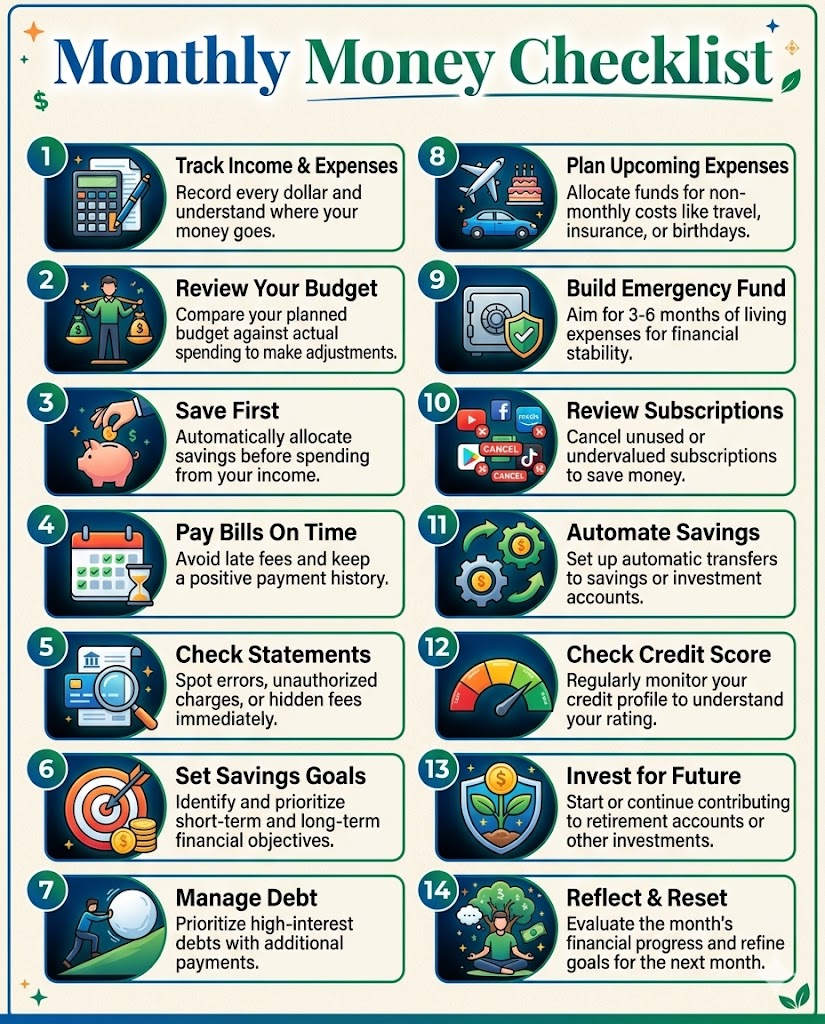
Achieving financial stability requires more than just a high income; it demands a disciplined, repeatable system for managing cash flow. This comprehensive guide outlines a powerful 14-step monthly money checklist designed to optimize every dollar. From the fundamental necessity of tracking income and expenses to advanced strategies like consistent investing and debt acceleration, these steps provide a roadmap for fiscal health. By prioritizing “saving first,” building a robust emergency fund, and conducting regular budget reviews, individuals can eliminate “money leaks” and reduce financial stress. The article also emphasizes the psychological importance of “fun money” to ensure budget sustainability and the strategic value of planning for upcoming large expenses. Whether you are aiming to repair your credit score or accelerate your path to retirement, implementing these 14 actionable habits will transform your relationship with money, providing the clarity and control needed to reach your most ambitious financial goals.
Financial freedom is rarely the result of a single windfall. Instead, it is built through the compounding effect of small, intentional habits practiced consistently month after month. In an era of digital transactions and automated subscriptions, it is easier than ever for wealth to slip through the cracks of a busy life. To combat this, high-achievers utilize a structured monthly money checklist to ensure their financial engine is running at peak efficiency.
The following 14 steps represent a holistic approach to personal finance, balancing the need for immediate stability with the necessity of long-term growth.
1. Track Income and Expenses
The foundation of any wealth-building strategy is data. You cannot manage what you do not measure. Tracking every dollar that enters and exits your accounts provides an objective view of your financial reality. This practice identifies “small leaks”—those five-dollar daily habits that quietly drain hundreds from your monthly surplus. By categorizing spending, you gain the visibility required to make informed adjustments.
2. Pay Bills On Time
Punctuality in financial obligations is a non-negotiable trait for fiscal health. Late fees are essentially “bad debt” that provides zero value. Beyond the immediate cost, late payments for rent, utilities, EMIs, and subscriptions can negatively impact your reputation with service providers and financial institutions. Automating these payments ensures you avoid wasting money on avoidable penalties.
3. Review Your Budget
A budget is a living document, not a static rulebook. At the end of each month, compare your planned spending against your actual behavior. Life is dynamic; prices for groceries may fluctuate, or a seasonal utility bill might spike. Reviewing these shifts allows you to recalibrate your categories for the following month, ensuring your plan remains realistic and achievable.
4. Save First
One of the most profound shifts in financial psychology is moving from “saving what is left” to “saving first.” By treating your savings as your most important monthly bill, you ensure your future self is prioritized. Transferring a set amount to your savings account immediately upon receiving income prevents the “leftover” trap, where miscellaneous spending consumes potential wealth.
5. Build an Emergency Fund
A financial safety cushion is the ultimate stress reducer. Life is unpredictable, and car repairs or medical bills can derail a budget instantly. By making small, steady contributions to an emergency fund, you create a buffer that prevents you from relying on high-interest credit cards when the unexpected occurs.
6. Check Statements
In the age of digital banking, it is easy to overlook errors. Dedicate time each month to scanning bank and credit card statements for hidden charges, double-billing, or unusual transactions. This practice is also a primary defense against identity theft and unauthorized merchant fees that often go unnoticed in a high-volume transaction environment.
7. Pay Down Debt
While paying the minimum balance keeps you in good standing, it does little to erode the principal of your debt. Interest often grows faster than anticipated. Aiming higher than the minimum—even by a small margin—significantly reduces the total interest paid over the life of a loan and shortens the timeline to being debt-free.
8. Cancel Unused Subscriptions
The “subscription economy” relies on consumer forgetfulness. Many households pay for streaming services, gym memberships, or software they no longer use. If you haven’t utilized a service in the last 30 days, it is likely a candidate for cancellation. These reclaimed funds can be redirected toward debt repayment or investments.
9. Review Your Goals
Financial management without a “why” can become tedious. Whether you are saving for a home, a dream vacation, or early retirement, checking your progress toward these goals keeps you motivated. If you find you are falling off track, this monthly check-in is the perfect time to adjust your strategy before the gap becomes too wide to bridge.
10. Invest Consistently
Wealth is built through time in the market, not timing the market. Whether you utilize SIPs (Systematic Investment Plans), individual stocks, or low-cost index funds, the key is consistency. By investing every month, regardless of market volatility, you benefit from dollar-cost averaging and the long-term power of compounding.
11. Check Your Credit Score
Your credit score is a vital sign of your financial reputation. A quick monthly check allows you to catch errors or sudden drops early. Maintaining a high score is essential for securing favorable interest rates on future loans, which can save you thousands of dollars over time.
12. Plan Upcoming Expenses
Financial stress often stems from predictable events that feel like surprises. By looking ahead 60 to 90 days, you can prepare for travel, annual insurance renewals, or holiday gift-giving. Sinking funds—saving small amounts specifically for these events—ensure you can enjoy them without financial “hangover” in the following months.
13. Set Fun Money
Sustainability is the secret to long-term budgeting success. Depriving yourself of all leisure often leads to “binge spending” later. By allocating a specific amount of “fun money” for guilt-free spending on hobbies, dining, or entertainment, you ensure that your financial plan is a tool for a better life, not a source of misery.
14. Reflect and Reset
Finally, take a moment to look back at the month as a whole. Identify what worked and what didn’t. Did a specific habit cause you to overspend? Did you find a new way to save? Use these insights to improve your habits step-by-step. A monthly reset provides a clean slate and a fresh opportunity to master your money.