Building wealth is not about avoiding spending—it’s about spending with purpose and discipline. This article explores proven spending rules that help individuals manage money effectively, eliminate waste, and create long-term financial stability. From assigning every dollar a clear role to prioritizing needs over wants, these principles guide smarter financial decisions. Readers will learn how to reduce unnecessary expenses, invest consistently, protect their financial future, and optimize their environment for success. The guide also emphasizes the importance of building a safety net, eliminating high-interest debt, and focusing on value-driven purchases. By adopting these structured financial habits, anyone can transform everyday spending into a powerful wealth-building strategy. Designed to be practical and actionable, this comprehensive guide serves as a roadmap for achieving financial independence through mindful and intentional spending.
Why Smart Spending Builds Real Wealth
Wealth is not created by simply saving every penny or avoiding expenses entirely. Instead, it is built through intentional spending—making conscious decisions that align with long-term financial goals. Many people struggle financially not because they lack income, but because their spending lacks structure and purpose.
Adopting disciplined spending habits can transform financial outcomes. By following proven rules, individuals can reduce waste, increase savings, and create a solid foundation for long-term wealth building. The following principles provide a clear roadmap to help manage money effectively and achieve financial stability.
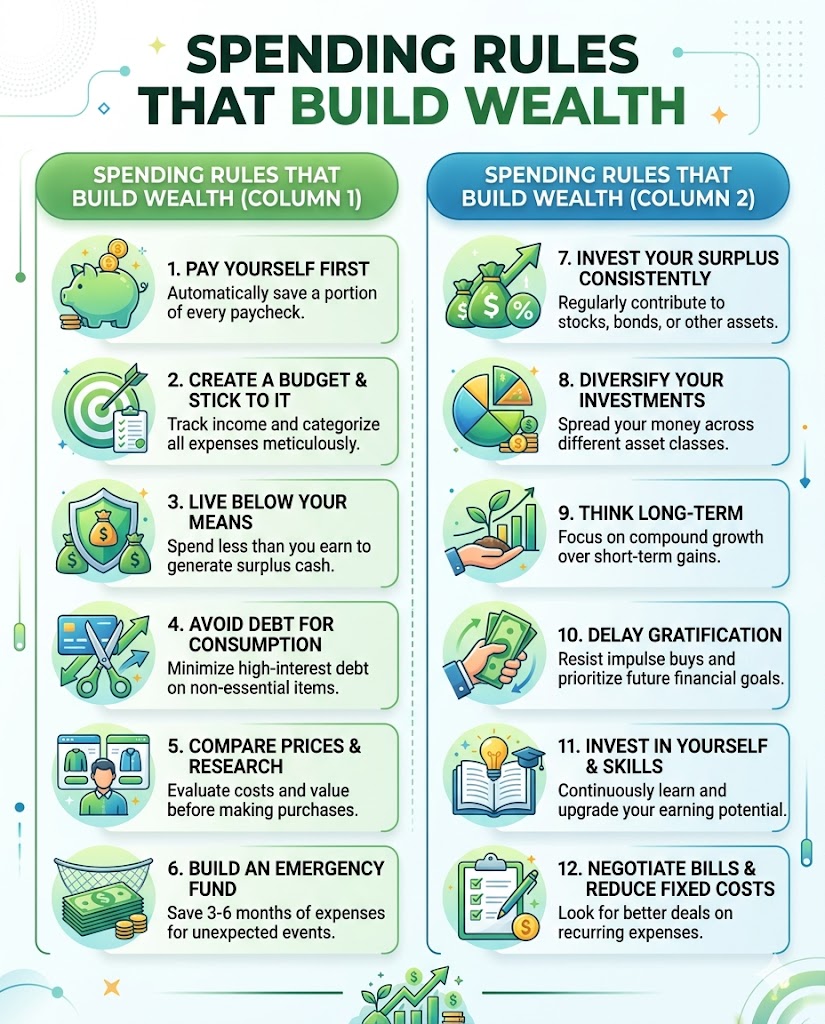
1. Give Every Dollar a Clear Purpose
Every dollar earned should serve a defined role. Whether it is allocated for necessities, savings, or investments, money without direction is often wasted.
Assigning a purpose to each dollar ensures better control over finances. This approach helps prioritize essential expenses while minimizing impulsive spending. A structured budget becomes the foundation of financial success.
2. Spend Only on What Truly Matters
Not all expenses contribute equal value. Spending should focus on areas that improve quality of life or support long-term goals.
Cutting back on unnecessary purchases allows more resources to be directed toward meaningful priorities such as health, education, and financial growth. This principle encourages mindful consumption rather than restriction.
3. Eliminate Useless Expenses
Small, recurring expenses often go unnoticed but can significantly impact finances over time.
Subscriptions, unused services, and impulse purchases should be reviewed regularly. Removing these unnecessary costs creates room for savings and investments without reducing overall lifestyle quality.
4. Invest in High-Value Relationships
Financial growth is not limited to numbers—it also involves people.
Strong relationships can open doors to opportunities, collaborations, and knowledge sharing. Investing time and resources into meaningful connections can lead to long-term personal and financial benefits.
5. Build a Strong Safety Net First
Before pursuing aggressive investments, it is essential to establish financial security.
An emergency fund acts as a buffer against unexpected expenses such as medical emergencies or job loss. This safety net prevents reliance on debt and ensures financial stability during uncertain times.
6. Eliminate High-Interest Debt
High-interest debt is one of the biggest barriers to wealth accumulation.
Debt from credit cards or loans can quickly grow, consuming a large portion of income. Prioritizing debt repayment reduces financial stress and frees up money for saving and investing.
7. Invest Consistently for the Long Term
Wealth building is a gradual process that requires patience and consistency.
Regular investments, even in small amounts, can grow significantly over time due to compounding. A long-term perspective helps navigate market fluctuations and ensures steady financial progress.
8. Choose Experiences Over Status
Spending on status symbols often provides temporary satisfaction but limited long-term value.
In contrast, experiences contribute to personal growth and lasting fulfillment. Prioritizing meaningful activities over material possessions leads to better financial and emotional outcomes.
9. Review Expenses Regularly
Financial management is an ongoing process.
Regularly reviewing expenses helps identify inefficiencies and adjust spending patterns. This habit ensures that financial decisions remain aligned with evolving goals and priorities.
10. Spend While You Grow
Spending and saving are not mutually exclusive. The key is balance.
Investing in personal development, education, and tools can enhance earning potential. Strategic spending in these areas supports long-term growth while maintaining financial discipline.
11. Spend With a Clear Purpose
Before making any purchase, it is important to evaluate its necessity and value.
Purpose-driven spending reduces waste and increases satisfaction. It ensures that money is used effectively rather than impulsively.
12. Make Your Money Work for You
Money should not remain idle.
Investments, savings accounts, and income-generating assets allow money to grow over time. This principle shifts the focus from earning alone to building sustainable wealth.
13. Eliminate Useless Expenses Again and Again
Financial discipline requires consistency.
Even after initial cost-cutting, new unnecessary expenses can emerge. Regular evaluation ensures that spending remains efficient and aligned with financial goals.
14. Protect Your Health Aggressively
Health and wealth are deeply connected.
Medical expenses can quickly deplete savings. Investing in preventive care, healthy habits, and insurance reduces long-term financial risks.
15. Optimize Your Environment for Success
The environment plays a significant role in financial behavior.
Surrounding oneself with positive influences and tools that support financial discipline can lead to better decision-making and consistent progress.
16. Build Safety First, Then Scale
Financial growth should follow a structured approach.
After establishing stability through savings and debt management, individuals can focus on expanding investments and increasing income streams.
17. Eliminate High-Interest Debt Permanently
Avoiding repeated debt cycles is crucial.
Once high-interest debt is cleared, maintaining disciplined spending habits prevents falling back into financial traps.
18. Choose Experiences Over Material Things
Experiences often provide greater long-term value than physical possessions.
They contribute to personal growth, relationships, and overall well-being, making them a more meaningful investment.
19. Spend to Improve How You Show Up
Strategic spending on personal development can enhance confidence and opportunities.
Investments in skills, education, and presentation can lead to better career prospects and increased income potential.
Wealth Is Built Through Intentional Spending
Wealth is not built by avoiding spending—it is built by spending wisely. Each financial decision contributes to long-term outcomes, making it essential to adopt disciplined and purposeful habits.
By following these proven spending rules, individuals can eliminate waste, reduce debt, and create sustainable financial growth. The journey to wealth is not about restriction but about making smarter choices with every dollar.