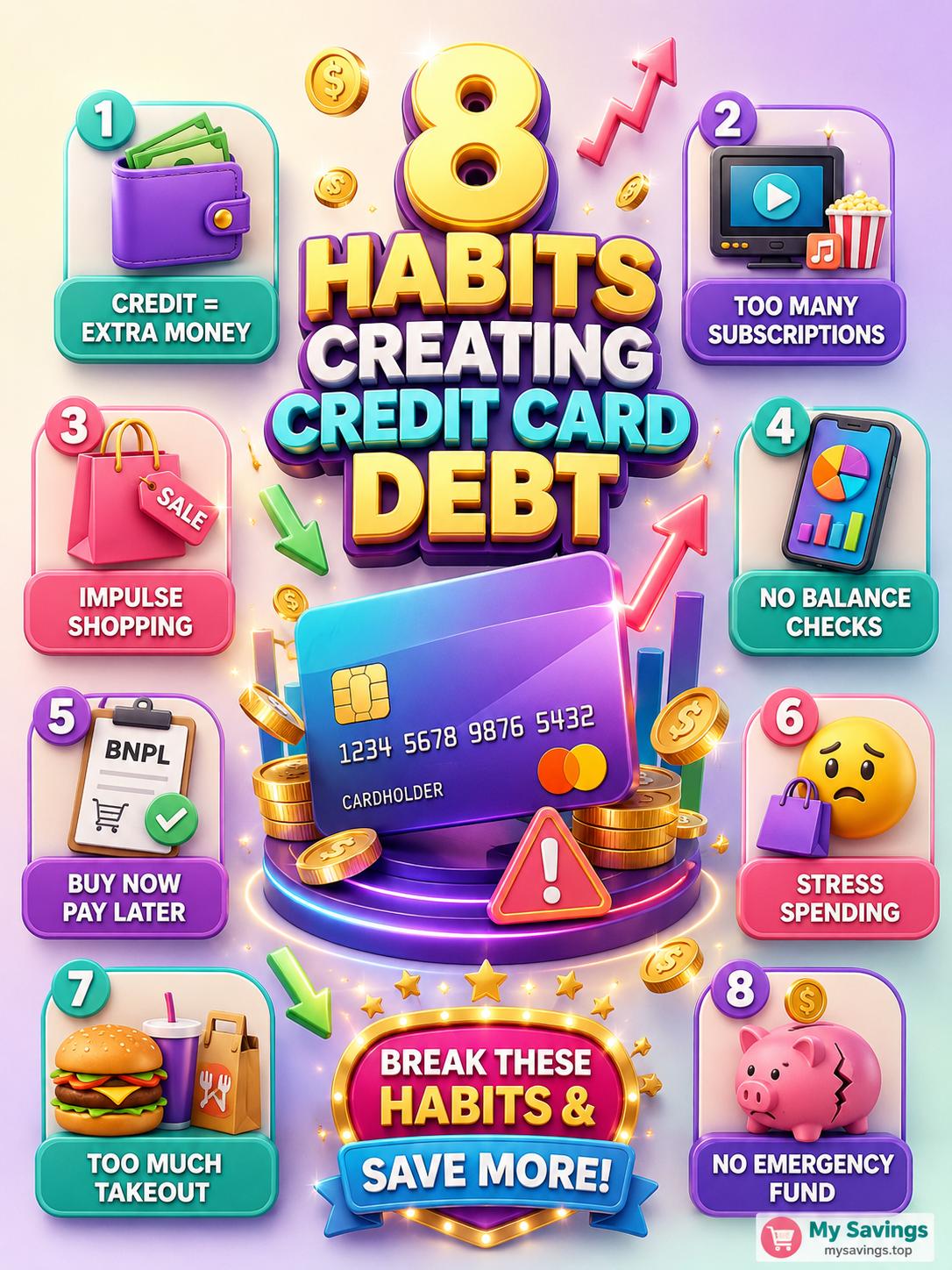
💳 Credit card debt rarely happens overnight. It often develops through small financial habits that slowly drain your budget and increase reliance on borrowed money. From treating credit cards as extra income and paying only the minimum balance to overspending during stress and relying on buy-now-pay-later services, many everyday behaviors can create long-term financial challenges.
💡 This guide explores eight common reasons people accumulate credit card debt and provides practical strategies to regain control of spending, reduce financial stress, and build healthier money habits. Learn why unchecked subscriptions, frequent takeout orders, lack of an emergency fund, and ignoring monthly statements can quietly increase debt over time.
📈 Whether you’re trying to improve your financial health, pay off debt faster, or strengthen your savings plan, understanding these warning signs can help you make smarter financial decisions and build a more secure future.
💳 Why Do People End Up in Credit Card Debt?
Credit cards can be powerful financial tools when used responsibly. They offer convenience, rewards, fraud protection, and flexible payment options. However, when spending habits become difficult to manage, credit card balances can grow quickly and create long-term financial stress.
Many people don’t fall into debt because of a single major purchase. Instead, debt often builds gradually through everyday habits that seem harmless at first. Understanding these habits is the first step toward improving financial wellness and creating a stronger savings strategy.
💡 Understanding How Credit Card Debt Grows
Credit card debt becomes expensive because of interest charges. When balances are not paid in full each month, interest accumulates, making purchases cost significantly more than their original price.
Small recurring expenses, impulse purchases, and poor budgeting decisions can quietly increase balances until repayment becomes challenging.
Below are eight common habits that often contribute to growing credit card debt.
🛒 Treating Credit as Extra Money
Many consumers view available credit as additional income rather than borrowed money.
💰 Spending based on available credit limits instead of actual income can create a dangerous cycle.
💰 Every purchase made with a credit card eventually requires repayment.
💰 High balances can reduce financial flexibility and increase monthly obligations.
💰 Credit cards should be viewed as payment tools, not extensions of income.
🎯 Smart Alternative
Use a monthly budget based on your actual earnings and expenses. Consider credit card spending as money already allocated within your budget.
📺 Paying for Too Many Subscriptions
Subscription services have become a normal part of modern life.
🎬 Streaming platforms
🎵 Music services
📚 Digital memberships
💻 Software subscriptions
📱 Mobile app premiums
Individually, these costs may seem small. Combined, however, they can represent a significant monthly expense.
🎯 Smart Alternative
📊 Review all subscriptions every three months.
📊 Cancel services that are rarely used.
📊 Consolidate entertainment expenses where possible.
📊 Redirect savings toward debt repayment or emergency savings.
🏪 The “Just One More Thing” Shopping Trap
Impulse spending is one of the biggest contributors to unnecessary debt.
Many purchases begin with a simple intention but end with additional items that were never planned.
🛍️ Home décor
🛍️ Seasonal sales
🛍️ Clearance items
🛍️ Online shopping recommendations
🛍️ Limited-time promotions
These purchases may feel small individually but can significantly impact monthly spending.
🎯 Smart Alternative
⏳ Use the 24-hour rule before making non-essential purchases.
⏳ Create a shopping list and stick to it.
⏳ Avoid browsing when you are not planning to buy.
📉 Never Checking Account Balances Before Spending
Financial awareness is essential for responsible money management.
Many people make purchases without reviewing:
📋 Bank account balances
📋 Credit card balances
📋 Monthly budgets
📋 Upcoming bills
Without this information, overspending becomes much more likely.
🎯 Smart Alternative
📱 Use mobile banking apps to monitor accounts regularly.
📱 Set balance alerts.
📱 Review spending at least once a week.
📱 Track progress toward savings goals.
🧾 Relying on Buy Now, Pay Later Services
Buy Now, Pay Later (BNPL) programs can make purchases feel more affordable by splitting payments into smaller installments.
However, multiple installment plans can create hidden financial pressure.
⚠️ Payments overlap.
⚠️ Spending increases.
⚠️ Budget complexity grows.
⚠️ Missed payments may lead to fees.
While BNPL can be useful in certain situations, relying on it regularly may indicate spending beyond current means.
🎯 Smart Alternative
Save for planned purchases whenever possible instead of financing discretionary spending.
😟 Shopping to Cope With Stress
Emotional spending is a common financial challenge.
People often spend money to respond to:
😔 Stress
😔 Anxiety
😔 Boredom
😔 Frustration
😔 Temporary emotional discomfort
Unfortunately, the positive feeling from shopping is often short-lived, while the financial consequences remain.
🎯 Smart Alternative
🌿 Practice non-financial stress management techniques.
🌿 Exercise regularly.
🌿 Take walks outdoors.
🌿 Read books.
🌿 Develop hobbies that do not involve spending money.
🌿 Focus on long-term financial goals.
🍔 Ordering Takeout Too Frequently
Food delivery services provide convenience, but frequent use can become expensive.
A single meal often includes:
🍟 Food cost
🚚 Delivery fees
💵 Service charges
🎁 Tips
📈 Markups
Ordering takeout several times each week can add hundreds of dollars to monthly expenses.
🎯 Smart Alternative
🥗 Meal plan for the week.
🥗 Prepare simple meals at home.
🥗 Batch cook on weekends.
🥗 Reserve takeout for special occasions.
🐷 Not Having an Emergency Fund
Unexpected expenses are unavoidable.
Common financial surprises include:
🚗 Car repairs
🏥 Medical bills
🏠 Home maintenance
💻 Technology replacements
🐾 Pet emergencies
Without emergency savings, many people rely on credit cards to cover these costs.
This can quickly create balances that take months or years to repay.
🎯 Smart Alternative
💚 Build an emergency fund gradually.
💚 Start with a small goal.
💚 Automate savings contributions.
💚 Increase savings as income grows.
💚 Aim for several months of essential expenses over time.
📄 Avoiding Credit Card Statements
Ignoring statements does not eliminate debt—it only delays awareness.
Failing to review statements can result in:
🔍 Unnoticed fees
🔍 Fraudulent transactions
🔍 Growing balances
🔍 Increased interest charges
🔍 Missed payment deadlines
Regular statement reviews help identify spending patterns and financial risks early.
🎯 Smart Alternative
📅 Review every statement carefully.
📅 Verify transactions.
📅 Monitor interest charges.
📅 Track repayment progress.
📅 Identify spending categories that need adjustment.
🚀 How to Prevent Credit Card Debt Before It Starts
Building healthy financial habits can significantly reduce the likelihood of carrying debt.
💎 Create a realistic monthly budget.
💎 Track every major expense.
💎 Pay balances in full whenever possible.
💎 Build an emergency fund.
💎 Limit impulse purchases.
💎 Reduce unnecessary subscriptions.
💎 Review financial accounts regularly.
💎 Set clear savings goals.
💰 Final Thoughts
Credit card debt is often the result of repeated financial habits rather than a single mistake. Treating credit as extra income, overspending on subscriptions, shopping emotionally, ordering takeout frequently, and neglecting financial monitoring can gradually create a debt burden that becomes difficult to manage.
By recognizing these common warning signs and replacing them with healthier money habits, individuals can strengthen their financial stability, reduce unnecessary debt, and build a stronger foundation for long-term savings and financial success.