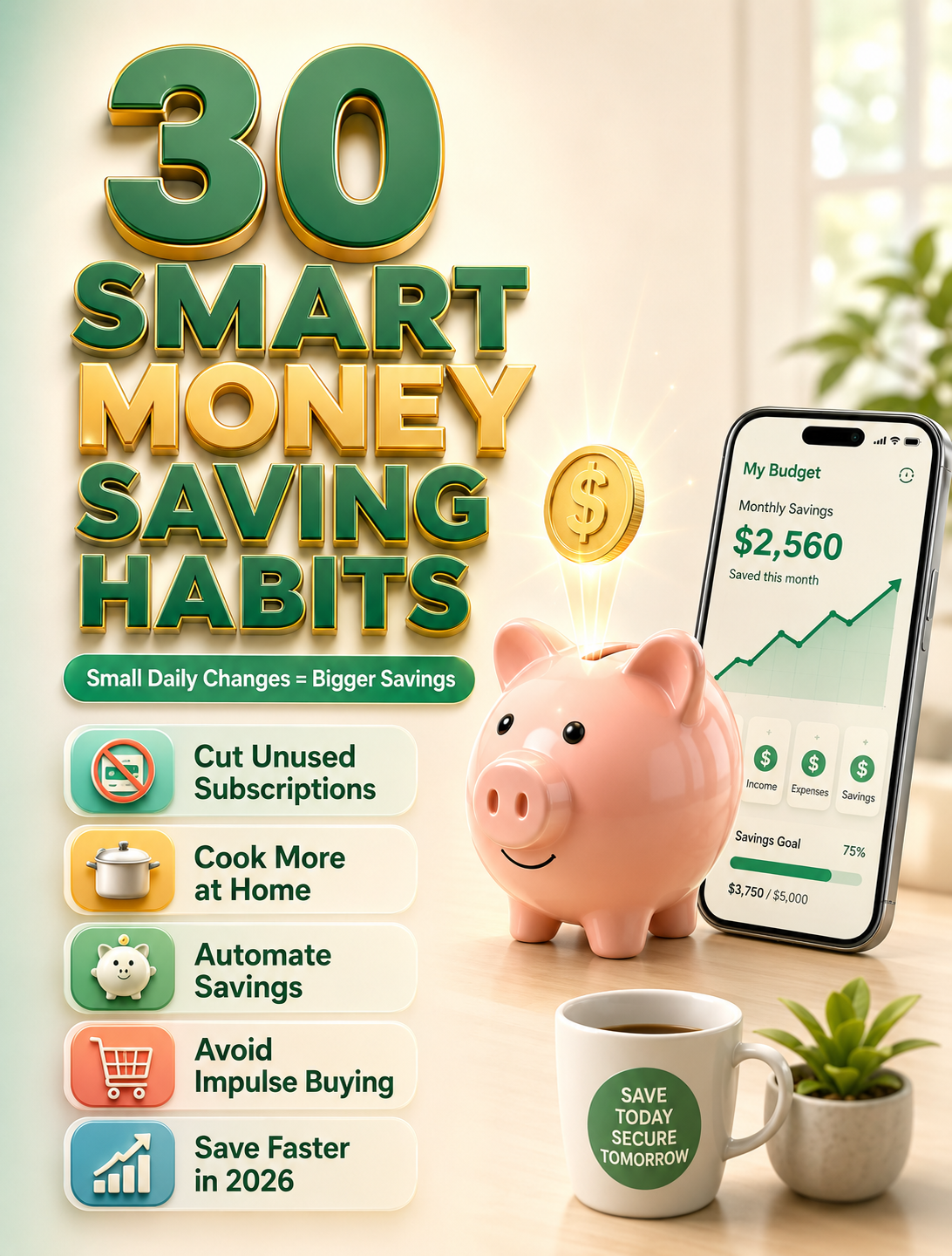
💸 Saving money in today’s economy can feel overwhelming, but small daily habits can create powerful long-term financial results. This guide explores 30 practical and realistic money-saving strategies designed to help individuals reduce unnecessary expenses, improve budgeting habits, and build financial stability faster. 🏦✨
📈 From canceling unused subscriptions and cooking meals at home to using cashback apps, automating savings, and avoiding impulse purchases, these simple financial habits can dramatically improve personal cash flow over time. 🚀💡
🛒 The article also covers smart shopping techniques, energy-saving methods, budgeting systems, and low-cost lifestyle changes that support better financial planning without sacrificing quality of life. 🔥💵
🏠 Whether your goal is building an emergency fund, paying off debt, saving for a home, or improving financial discipline, these proven money-saving tips offer practical solutions for modern living in 2026 and beyond. 🌱💳
💰 Build Wealth Faster in 2026
Managing money effectively has become more important than ever. Rising living costs, subscription overload, impulse spending, and lifestyle inflation are making it difficult for many households to build meaningful savings. However, improving financial stability does not always require massive sacrifices or dramatic lifestyle changes.
In many cases, small consistent habits can create significant long-term financial improvements. Developing smarter spending behaviors, reducing waste, and optimizing daily expenses can help increase savings without reducing overall quality of life.
This guide explores 30 highly effective money-saving strategies that can help improve budgeting, reduce unnecessary spending, and support long-term financial goals.
🏦 Why Small Saving Habits Matter More Than Big Financial Changes
Many people focus only on large financial milestones such as salary increases or investment returns. While those factors are important, daily spending habits often have a greater impact on long-term wealth accumulation.
Minor recurring expenses can quietly drain finances over time. Subscription services, food delivery, online impulse shopping, and convenience spending can add up faster than expected.
Building consistent money-saving routines creates:
- Better financial awareness
- Improved budgeting discipline
- Lower monthly expenses
- Increased emergency savings
- Reduced financial stress
- Faster progress toward financial goals
Small financial improvements repeated consistently often create stronger results than occasional extreme budgeting efforts.
🍽️ Everyday Lifestyle Changes That Save Money
🥘 1. Cook More Meals at Home
Restaurant meals and food delivery services can significantly increase monthly expenses. Preparing meals at home is one of the fastest ways to reduce spending while maintaining healthier eating habits.
Meal planning also helps reduce food waste and unnecessary grocery purchases.
☕ 2. Make Coffee at Home
Daily café purchases may appear small individually, but recurring coffee expenses can become substantial over time.
Investing in a simple home coffee setup can reduce monthly spending considerably.
🛒 3. Shop With a Grocery List
Shopping without a list often leads to impulse purchases. Planning grocery trips in advance improves spending control and reduces unnecessary buying behavior.
🥗 4. Pack Lunches for Work
Buying lunch daily can quietly increase monthly expenses. Preparing meals ahead of time offers both financial and nutritional advantages.
🧃 5. Skip Bottled Water
Reusable water bottles provide a cost-effective and environmentally friendly alternative to constantly purchasing bottled drinks.
📱 Smart Subscription and Digital Spending Habits
❌ 6. Cancel Unused Subscriptions
Many consumers continue paying for streaming services, fitness apps, or memberships they rarely use.
Reviewing subscriptions every few months can immediately reduce recurring expenses.
📺 7. Downgrade Premium Streaming Plans
Multiple premium entertainment subscriptions can quickly become expensive. Consider rotating services monthly instead of paying for all simultaneously.
🛍️ 8. Limit Online Shopping Browsing
Frequent online browsing increases the likelihood of impulse purchases. Reducing exposure to shopping apps and promotional emails can help improve spending discipline.
⏳ 9. Use the 24-Hour Purchase Rule
Waiting 24 hours before making non-essential purchases helps reduce emotional spending and improves decision-making.
💳 10. Use Cashback and Reward Programs Wisely
Cashback cards and loyalty programs can provide savings when used responsibly. However, rewards should never justify unnecessary purchases.
🏠 Home and Utility Savings Strategies
💡 11. Turn Off Lights and Unplug Electronics
Unused electronics continue consuming energy even when not actively in use. Reducing standby power usage can lower electricity bills over time.
🌡️ 12. Adjust Thermostat Settings
Lowering heating or reducing excessive cooling usage by a few degrees can significantly reduce monthly utility expenses.
🔧 13. Perform Simple Home Repairs Yourself
Basic maintenance tasks such as fixing leaks or replacing filters can help avoid expensive repair bills later.
🪑 14. Buy Used Instead of New
Secondhand furniture, electronics, and household items often provide excellent value while reducing major purchasing costs.
📦 15. Buy in Bulk for Frequently Used Items
Purchasing non-perishable essentials in bulk can lower long-term costs when done strategically.
🚗 Transportation and Fuel-Saving Tips
🚘 16. Combine Errands Into One Trip
Reducing unnecessary driving helps lower fuel expenses and vehicle wear.
👥 17. Carpool When Possible
Sharing transportation costs with coworkers or friends can significantly reduce commuting expenses.
⛽ 18. Avoid ATM Fees
Using in-network ATMs or planning withdrawals ahead of time helps avoid unnecessary banking charges.
🚲 19. Walk or Exercise Outdoors
Outdoor workouts and walking routines can reduce transportation and gym membership expenses simultaneously.
🏋️ 20. Cancel Unused Gym Memberships
If a membership is rarely used, switching to home workouts or outdoor exercise options may offer better value.
🛍️ Smarter Shopping and Spending Habits
🏷️ 21. Use Coupons and Discount Codes
Digital coupons, browser extensions, and promotional offers can reduce online shopping costs significantly.
🧾 22. Compare Insurance Rates Annually
Insurance premiums often increase over time. Comparing rates regularly may uncover better pricing options.
🛒 23. Buy Generic Brands
Store-brand products frequently offer similar quality at lower prices compared to name-brand alternatives.
📉 24. Track Every Dollar With a Budgeting App
Monitoring expenses creates better financial awareness and highlights areas where spending can be optimized.
🎯 25. Set a Monthly “Fun Budget”
Creating a dedicated entertainment budget helps balance financial discipline with lifestyle enjoyment.
📚 Low-Cost Alternatives That Save Thousands Over Time
📖 26. Borrow Books and Movies From Libraries
Libraries offer free access to educational resources, digital media, entertainment, and learning platforms.
👕 27. Sell Unused Items
Unused clothes, electronics, or furniture can generate extra income while reducing clutter.
🍱 28. Meal Prep to Reduce Waste
Preparing meals ahead of time reduces food spoilage, minimizes impulse eating, and improves grocery efficiency.
💰 29. Automate Savings Transfers
Automatic transfers remove the temptation to spend money intended for savings goals.
📈 30. Build Long-Term Financial Discipline
The most effective money-saving strategy is consistency. Sustainable financial habits create lasting results over time.
🚀 How Consistent Saving Habits Build Long-Term Wealth
Financial success rarely happens overnight. Building wealth often depends more on behavior consistency than income level alone.
People who consistently control spending, avoid unnecessary debt, and prioritize saving tend to create stronger long-term financial security.
Key long-term benefits include:
- Improved emergency preparedness
- Better investment opportunities
- Lower financial stress
- Increased purchasing power
- Faster debt reduction
- Greater financial independence
Small improvements repeated daily can eventually create life-changing financial outcomes.
🧠 Final Thoughts
Saving money does not require eliminating all enjoyment or living with extreme restrictions. The most effective financial strategies are often simple, practical, and sustainable.
By reducing unnecessary expenses, improving budgeting habits, and making smarter daily financial decisions, individuals can strengthen their financial future steadily over time.
These 30 money-saving habits provide a strong foundation for better financial management in 2026 and beyond. Even adopting a few of these strategies consistently can create meaningful improvements in savings, budgeting, and long-term financial stability.