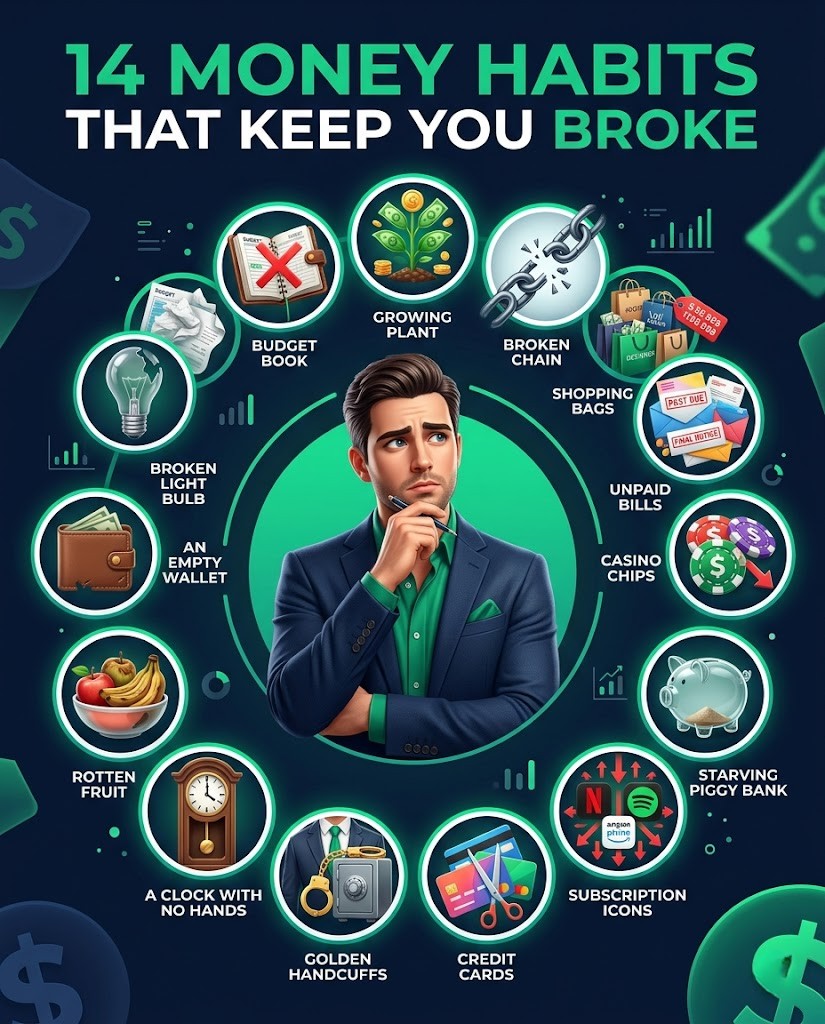
📈 Achieving financial independence requires more than just a high salary; it demands the elimination of subtle yet destructive financial behaviors. 📉 This comprehensive guide deconstructs 14 common money habits that systematically drain wealth and prevent long-term stability. From the dangers of lifestyle inflation and emotional spending to the critical risks of relying on a single income source, we explore the psychological and structural barriers to building capital. 🧠 By understanding the “100 tiny leaks” that sink a financial ship such as ignoring small purchases or paying only the minimum debt readers can shift toward a high-net-worth mindset. 🏦 Whether it is failing to track expenses or avoiding financial education, these pitfalls create a cycle of living paycheck to paycheck. This article provides the objective roadmap needed to transition from looking rich to actually being wealthy through disciplined budgeting, strategic investing, and proactive debt management. 💎
In the modern economic landscape, financial success is often less about how much one earns and more about how much one retains. Many individuals find themselves trapped in a cycle of perpetual financial “tightness” despite steady employment. This phenomenon is rarely the result of a single catastrophic event; rather, it is the cumulative effect of daily habits that prioritize immediate gratification over long-term security. To build a sustainable financial future, one must identify and dismantle the habits that keep them broke.
1. The Perils of Living Without a Budget
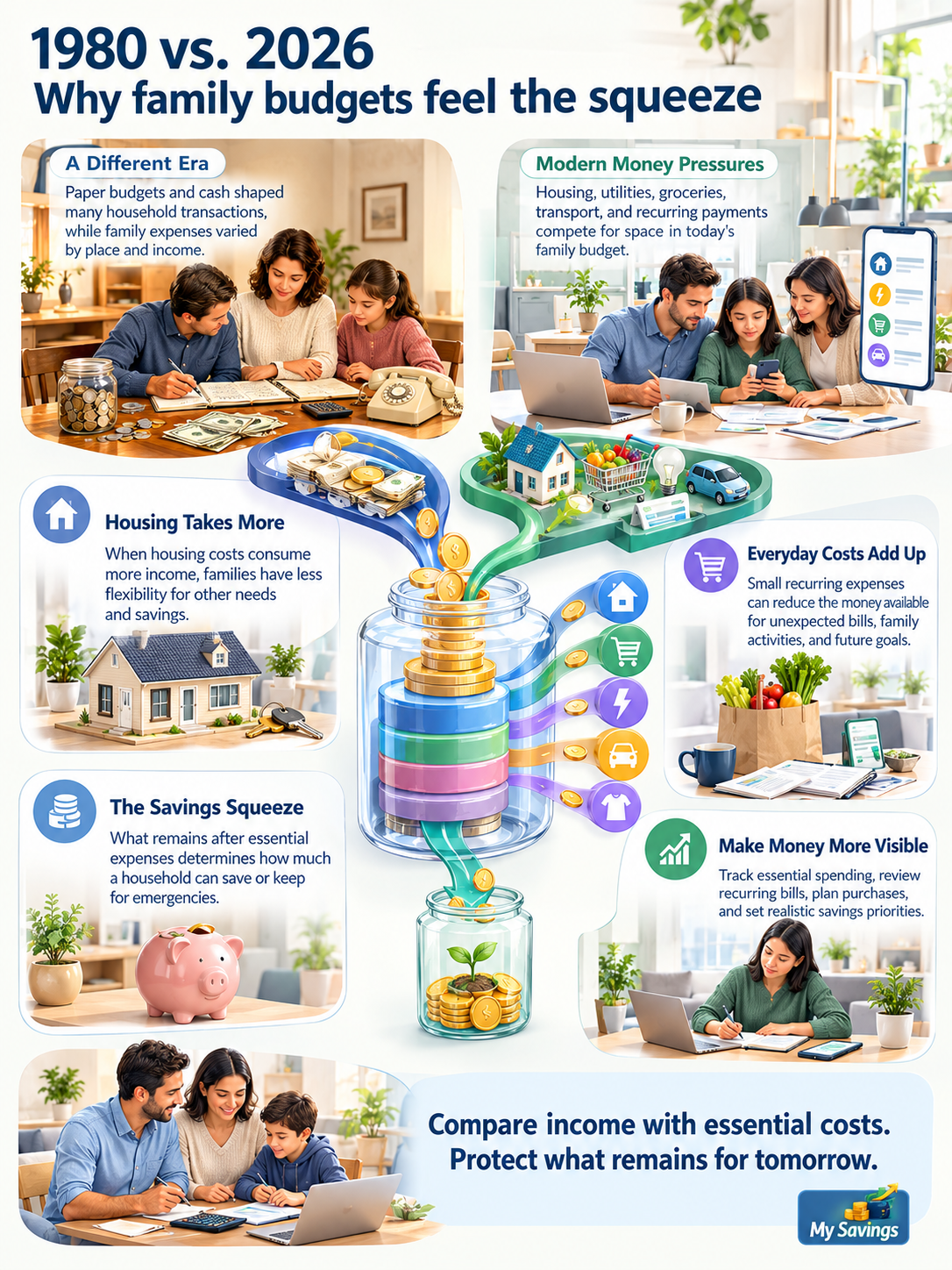
A budget is not a restriction of freedom; it is a strategic map for capital allocation. Without a formal budget, money lacks direction, leading to a phenomenon where funds seem to “disappear” by the end of the month. The reality is that small, unmonitored expenses add up with surprising speed. Establishing a budget ensures that every dollar is assigned a purpose, preventing leakage and ensuring that essential costs are covered before discretionary spending occurs.
2. The Fallacy of Saving “Leftovers”
A common mistake is the “spend first, save later” mentality. In this model, individuals pay their bills and enjoy their lifestyle, intending to save whatever remains. Typically, nothing remains. The solution is to treat savings as a non-negotiable bill. By automating a transfer to a savings or investment account at the start of the month, one ensures that wealth-building is prioritized over consumption.
3. Relying on Credit for Lifestyle Maintenance
Credit cards and personal loans are powerful financial tools when used for leverage, but they are destructive when used to fund a lifestyle that income cannot support. Using credit to afford what one cannot currently pay for creates a cycle of debt. The interest payments associated with consumer credit drain future income, effectively “taxing” one’s future self to pay for a present desire.
4. The High Cost of Delayed Investing
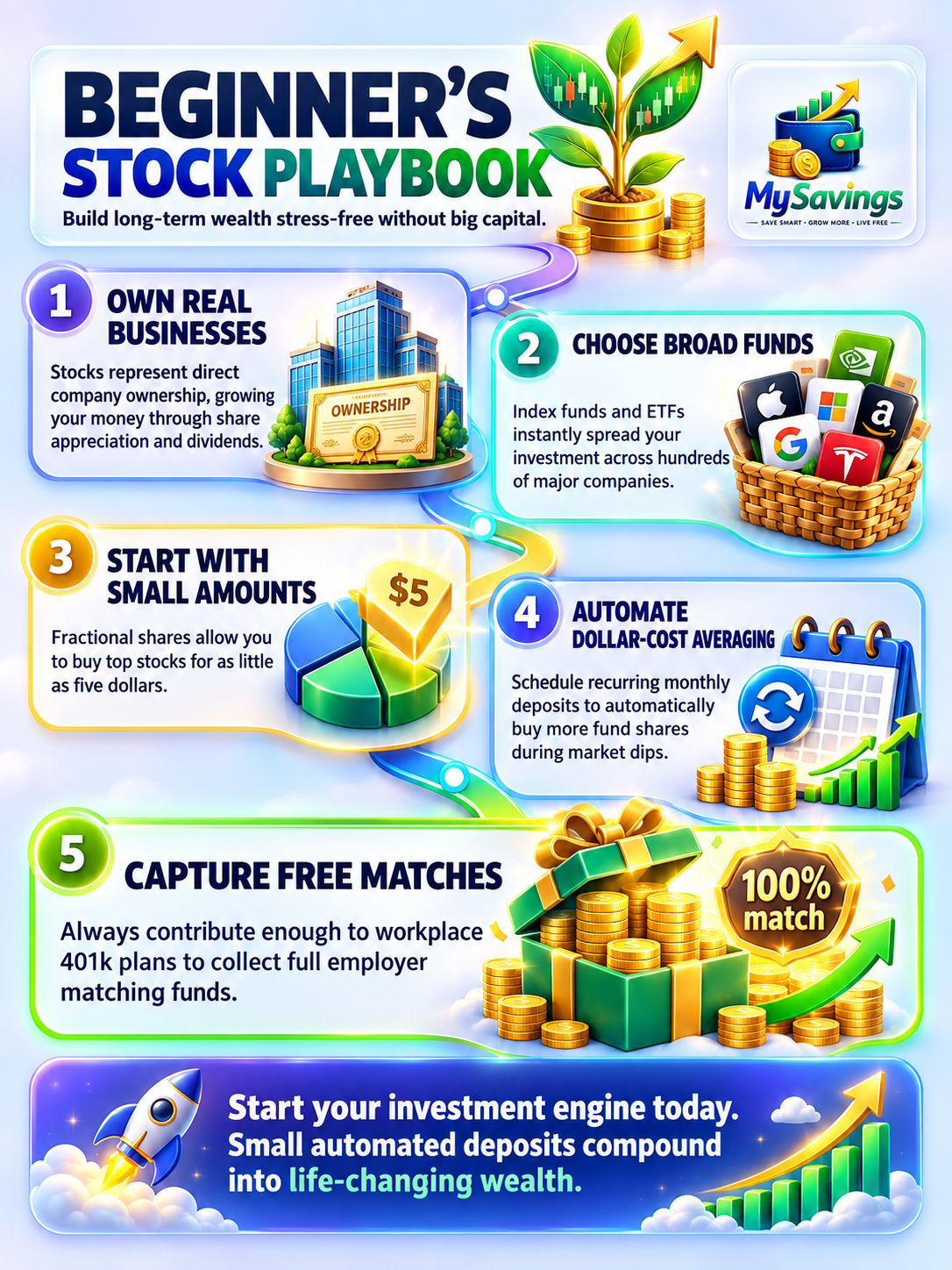
Time is the most valuable asset in the realm of finance. Waiting “until I have more money” to start investing is a costly error due to the loss of compounding time. Even small amounts invested early can grow exponentially. The opportunity cost of missing a decade of market participation often totals hundreds of thousands of dollars in lost gains by retirement age.
5. Failure to Track Expenses
What is not measured cannot be managed. Ignoring the granular details of where money goes leads to a lack of control. Tracking expenses down to the smallest transaction reveals patterns and “hidden” costs. This data-driven approach allows for precise adjustments to spending habits, ensuring that resources are flowing toward value-producing activities rather than disappearing unnoticed.
6. The Trap of Lifestyle Inflation
As professional expertise grows and salaries increase, there is a natural tendency to increase spending proportionally. This is known as lifestyle inflation. When income grows but wealth does not, the individual remains in the same financial position despite their higher status. Resisting the urge to upgrade housing, vehicles, and luxuries with every raise is a hallmark of those who successfully transition to high-net-worth status.
7. The Illusion of “Looking Rich”
There is a profound difference between being rich and looking rich. Spending to impress others—buying designer labels, luxury cars, or high-end gadgets on a modest budget is a fast track to insolvency. Paradoxically, those who focus on the appearance of wealth often lack the actual assets to back it up. True financial power lies in ownership of assets (stocks, real estate, businesses) rather than the possession of depreciating consumer goods.
8. The Cycle of Emotional Spending
Emotional spending occurs when individuals use retail therapy to cope with stress, boredom, or sadness. This creates a pattern of short-term relief followed by long-term regret. These impulsive purchases rarely provide lasting value and often lead to cluttered homes and depleted bank accounts. Developing non-financial coping mechanisms is essential for maintaining a healthy balance sheet.
9. Avoiding Financial Education
Financial literacy is not a niche skill; it is a survival requirement. Ignoring basics like the mechanics of investing, tax optimization, and insurance can lead to costly mistakes. The “cost of ignorance” is paid in missed gains and avoidable fees. A commitment to ongoing financial education ensures that an individual can navigate changing market conditions and legislative shifts with confidence.
10. The Minimum Debt Payment Spiral
Paying only the minimum amount on credit cards or loans is a strategy that benefits the lender, not the borrower. It creates an illusion of progress while the majority of the payment is consumed by interest. This keeps the borrower stuck in a debt cycle for years, or even decades. To break free, one must aggressively target the principal balance of high-interest debt.
11. Lack of Clear Financial Goals
Without a target, money has no direction. Financial goals whether it is an early retirement, a home purchase, or an education fund provide the motivation for discipline. When goals are vague, money tends to get spent on the path of least resistance. Defined, time-bound objectives turn abstract savings into a tangible mission.
12. The Absence of an Emergency Fund
Life is unpredictable. Without a dedicated financial buffer, a single surprise such as a medical bill or a car repair can trigger a debt spiral. An emergency fund provides the stability needed to navigate crises without liquidating investments or relying on high-interest credit. It is the foundation upon which all other financial strategies are built.
13. Ignoring “Tiny Leaks”
Many people focus on major expenses while ignoring the cumulative impact of daily lattes, multiple streaming subscriptions, and small impulse buys. These “100 tiny leaks” can sink a financial ship as effectively as one large cost. Auditing these recurring small expenses often reveals significant opportunities for monthly savings.
14. The Risk of a Single Income Source
Relying solely on one paycheck is a high-risk strategy. If that source of income is disrupted by market shifts or health issues, the individual’s entire financial structure can collapse. Diversifying income through side businesses, investments, or rental properties provides a safety net and accelerates the journey toward financial independence.