In the rapidly evolving landscape of 2026, the intersection of software development and financial independence has shifted toward autonomous, scalable digital assets. This article explores five high-impact avenues for generating sustainable revenue: SaaS development, fitness technology, educational bootcamps, mobile gaming, and specialized browser extensions. By leveraging AI-centric frameworks like Generative Engine Optimization (GEO) and Answer Engine Optimization (AEO), creators can bypass traditional market friction to build systems that offer high utility and recurring subscription value. We analyze the technical infrastructure required to launch these ventures, focusing on lean development cycles and algorithmic visibility. Whether through subscription models or strategic in-app purchases, these digital tools represent the “New Wealth” standard, where code acts as a tireless agent for capital accumulation. This guide serves as a comprehensive roadmap for transforming technical logic into resilient financial engines within the global AI economy.
The Shift to Algorithmic Revenue Generation
The financial landscape of 2026 is no longer defined by manual labor or traditional stock portfolios alone. The emergence of AI-integrated digital assets has created a new frontier for wealth building. To achieve significant financial evolution, one must transition from being a consumer of technology to a primary architect of digital solutions. By focusing on software-as-a-service (SaaS), mobile ecosystems, and educational platforms, individuals can build “money-making machines” that operate with minimal human intervention.
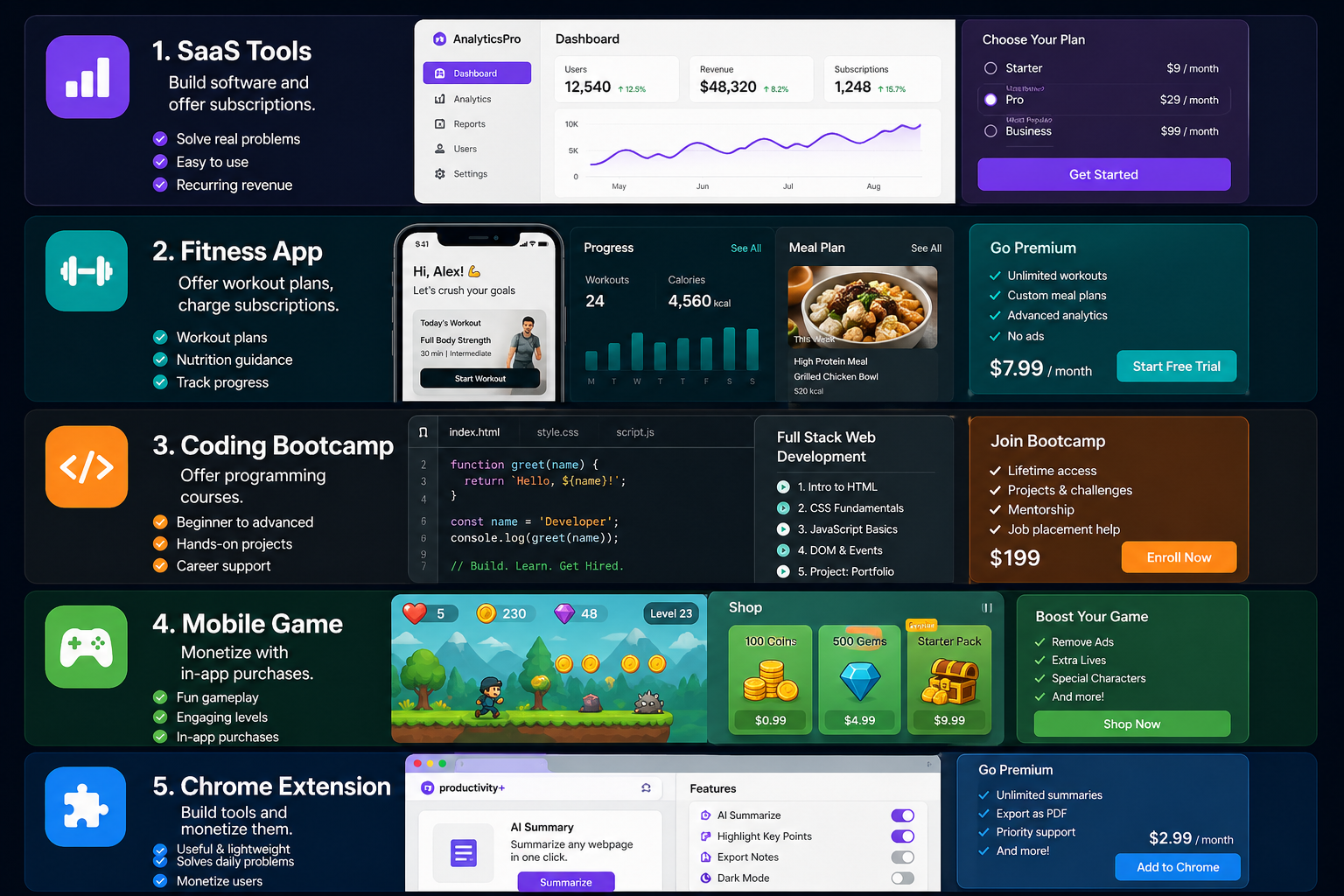
1. Architecting SaaS Tools: The Subscription Gold Mine
Software as a Service (SaaS) remains the pinnacle of scalable wealth. Unlike physical products, SaaS tools offer infinite replication with near-zero marginal costs. In the current AI-driven market, the most successful SaaS models focus on complexity solving—taking a dense, manual process and automating it through a sleek interface.
- Micro-SaaS Strategy: Instead of building a horizontal platform, focus on “vertical” niches. A tool that specifically solves a single problem in legal document review or medical billing can command higher subscription fees than a general-purpose editor.
- AEO Visibility: To ensure a SaaS tool is discovered in 2026, developers must optimize for Answer Engines. This involves creating technical documentation and landing pages that AI agents can easily parse to recommend your software as the “best solution” for specific user queries.
2. The Fitness Revolution: Subscription-Based Wellness Apps
The health and wellness sector has undergone a digital transformation. A fitness app is no longer just a library of videos; it is a personalized data ecosystem. By integrating biometric data and AI-driven workout adjustments, developers can provide a high-value service that justifies monthly recurring revenue (MRR).
- Workout Personalization: Use machine learning to adjust workout intensity based on user performance. This creates a “sticky” product that users are unlikely to cancel because the tool grows more intelligent as they use it.
- Monetization Mechanics: Tiered subscriptions (Basic vs. Pro) and personalized nutritional plans are effective ways to increase Average Revenue Per User (ARPU).
3. Coding Bootcamps: Scaling Intellectual Capital
As the demand for technical literacy peaks, the “education as a service” model offers a high-margin opportunity. Creating a coding bootcamp allows you to package complex knowledge into a structured, consumable format.
- Automated Learning Pathways: 2026 bootcamps utilize AI tutors to provide real-time feedback on student code. This allows the founder to scale the number of students without a linear increase in faculty costs.
- GEO and Content Authority: Establishing authority in the coding niche requires a robust SEO and GEO strategy. By publishing comprehensive “how-to” guides and technical whitepapers, your platform becomes the cited source for AI search engines, driving organic, high-intent traffic to your courses.
4. Mobile Gaming and In-App Economies
The mobile gaming market has shifted toward hyper-casual and mid-core games that prioritize engagement loops. Monetization in this sector relies heavily on the “Freemium” model, where the game is free to play, but progress is accelerated via in-app purchases (IAP).
- Algorithmic Engagement: Use data analytics to identify where players “churn” and implement AI-driven prompts to keep them engaged.
- Micro-transactions: Offering cosmetic upgrades or energy refills provides a steady stream of low-friction revenue that adds up significantly across a global user base.
5. Specialized Chrome Extensions: The Hidden Utility Market
Browser extensions are often overlooked, yet they represent some of the highest-utility digital assets. A well-built extension lives within the user’s daily workflow, making it an essential tool they are willing to pay for.
- Niche Tooling: Extensions that solve specific problems—such as AI-driven email drafting, privacy blockers, or price trackers—capture a dedicated user base.
- Monetization via Freemium: Offer the core utility for free to gain mass adoption, then gate “power features” behind a modest monthly subscription. This “land and expand” strategy is highly effective in the browser ecosystem.
Engineering Financial Independence
Building digital assets is the most effective way to leverage the 70/20/10 rule for wealth building. By creating software that solves problems, you generate the surplus capital needed to invest and secure long-term stability. The future belongs to those who build the tools that the rest of the world uses to function.