Navigating the modern marketplace requires a keen understanding of value versus price. Many consumer products are marketed with significant markups that far exceed their practical utility, often driven by branding, convenience, or perceived scarcity. This article provides a comprehensive analysis of twelve specific categories ranging from luxury goods and designer apparel to everyday items like bottled water and airport snacks where consumers consistently overpay. By identifying the economic drivers behind these high profit margins, such as brand equity and event-based pricing, individuals can implement more effective wealth-management strategies. This guide offers objective insights into how shifting toward generic alternatives, planning ahead for travel, and evaluating the functional lifespan of products can lead to substantial long-term savings. Understanding these pricing structures is essential for anyone looking to optimize their personal budget and focus their financial resources on high-value investments rather than depreciating consumer goods.
The Economics of Value: Identifying Overpriced Market Trends
In an era of rapid inflation and evolving consumer landscapes, distinguishing between a product’s price and its inherent value is a fundamental skill for financial stability. Many items found in daily life carry “premium” price tags that are decoupled from their manufacturing costs or practical benefits. By examining these twelve common categories, consumers can better understand where their capital is being diverted and how to reclaim it through more strategic purchasing decisions.
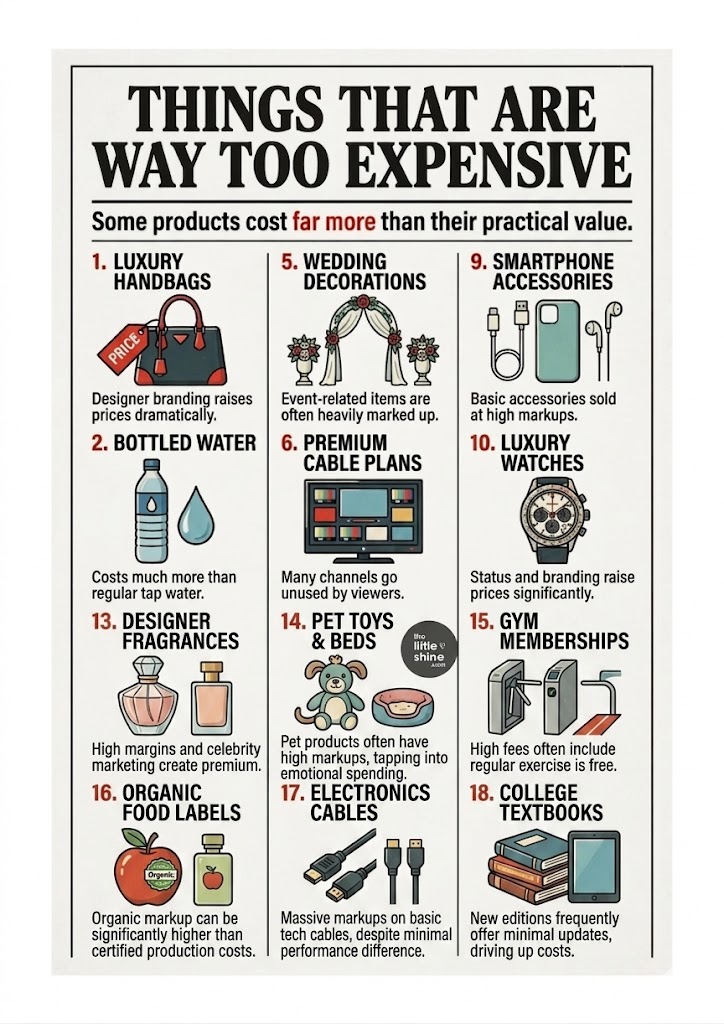
1. The Premium on Luxury Handbags Luxury handbags represent one of the most significant disparities between production cost and retail price. In this sector, designer branding raises prices dramatically. While craftsmanship is often cited as a justification, a substantial portion of the cost is attributed to marketing, boutique maintenance, and the maintenance of brand exclusivity. For those focused on utility, high-quality leather goods from non-designer labels offer the same durability and aesthetic appeal at a fraction of the cost.
2. The High Cost of Bottled Water Bottled water is a primary example of a product that costs much more than its regular tap water equivalent. In many regions, municipal water is subject to more frequent testing than bottled varieties. The convenience of a plastic bottle comes with a massive markup—often over 2,000%—and a significant environmental footprint. Utilizing a high-quality filtration system and a reusable stainless steel bottle is a more sustainable and fiscally responsible choice.
3. Convenience Pricing: Airport Snacks Travel hubs are notorious for inflated pricing models. Airport snacks experience price increases due to convenience and location. Because travelers are in a “captured market” with limited alternatives, vendors can charge double or triple the standard retail rate. Preparing snacks in advance and bringing an empty water bottle to fill after security checkpoints are simple yet effective methods to bypass these location-based markups.
4. Designer Sunglasses and Brand Value The eyewear industry is heavily consolidated, leading to a market where brand value often outweighs production cost. Most designer sunglasses are produced in the same facilities as mid-range brands, yet the addition of a logo can increase the price by hundreds of dollars. Opting for polarized lenses from reputable but non-designer brands ensures eye protection and style without the “luxury tax.”
5. The Wedding Industry Markup Event-related items, particularly wedding decorations, are often heavily marked up simply because of the nature of the occasion. From floral arrangements to table linens, the same products used for a corporate event or a birthday party often see a price surge when labeled “bridal.” Strategic planners can find value by sourcing items from general decor wholesalers or opting for minimalist, multi-purpose designs.
6. Premium Cable Plans and Underused Utility Traditional media consumption is shifting, yet many households still pay for premium cable plans where many channels go unused by viewers. Paying for a massive bundle of content when only a small percentage is consumed is an inefficient use of resources. Transitioning to specific streaming services or “skinny bundles” allows for a more customized and cost-effective entertainment experience.
7. Specialty Beverages: Fancy Coffee Drinks The “latte factor” remains a relevant concept in savings logic. Specialty beverages cost far more than basic coffee due to the labor, syrups, and branding involved. While an occasional purchase is a common habit, the cumulative cost of daily specialty drinks can rival major monthly expenses. Investing in home brewing equipment—such as a French press or an espresso machine—provides the same quality with a much lower per-cup expenditure.
8. Brand Name Clothing vs. Quality In the apparel industry, similar quality often exists at lower prices. Brand name clothing relies on visual identifiers to justify higher price points, but the fabric and construction may not be superior to high-quality “house brands” or independent labels. Focusing on material composition (such as organic cotton, wool, or linen) rather than logos ensures a durable wardrobe that maintains its value.
9. Smartphone Accessories: The Markup on Basics Basic accessories like charging cables, screen protectors, and cases are often sold at high markups in electronics stores. Manufacturers and retailers capitalize on the “add-on” purchase at the time of a phone sale. However, third-party manufacturers often produce certified accessories that meet the same technical standards for significantly less.
10. Status and Branding in Luxury Watches While mechanical watches are marvels of engineering, luxury watches primarily trade on status and branding. For the average consumer, a high-quality quartz or entry-level automatic watch provides precise timekeeping and longevity. Unless one is purchasing a timepiece as a specialized investment asset, the premium paid for “prestige” brands is often a sunk cost.
11. Movie Theater Snacks and Profit Margins The cinema business model relies heavily on concessions. Popcorn and drinks have large profit margins because ticket sales often go primarily to the film studios. While supporting local theaters is important, being aware that a bucket of popcorn can have a markup of over 1,000% helps consumers make more intentional choices about when and where to dine.
12. The Illusion of Scarcity: Limited Edition Products Marketing frequently uses scarcity to increase prices beyond practical value. Limited edition products whether in tech, footwear, or collectibles—trigger a psychological “fear of missing out” (FOMO). In most cases, the functional difference between a limited edition and a standard release is negligible, making the extra cost a payment for exclusivity rather than utility.
Implementing a Value-First Mindset Optimizing savings is not about total deprivation, but about the strategic allocation of capital. By identifying the categories where markups are highest, consumers can make informed decisions that prioritize long-term financial health over short-term marketing trends.