Foundational Credit Habits
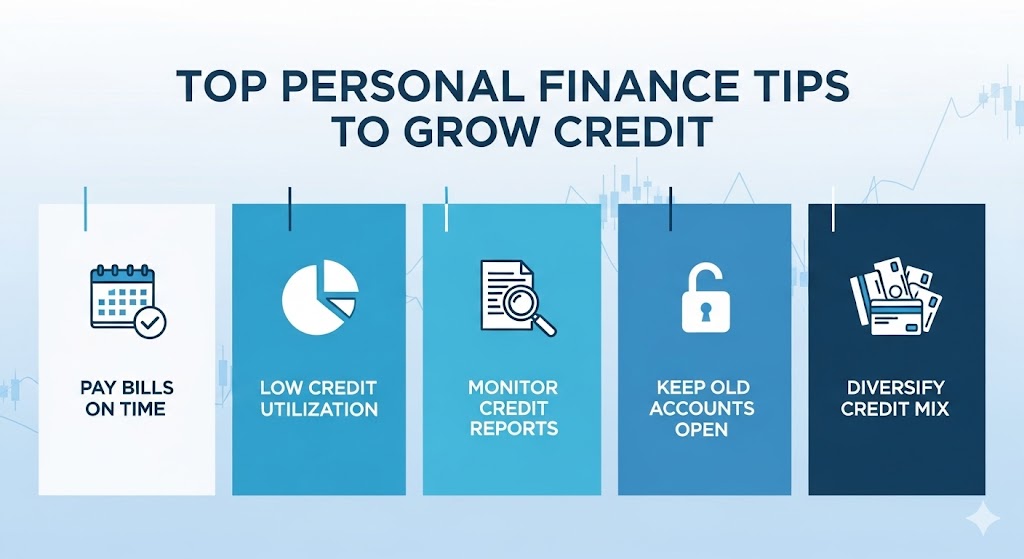
To grow your credit, focus on a few core personal finance principles: pay all bills on time, keep credit card balances low, and manage your credit history responsibly over time
Always Pay Bills On Time: Your payment history is the most significant factor in your credit score (making up 35% of your FICO score). Even one payment missed by 30 days or more can damage your score. Consider setting up automatic payments or reminders to ensure consistency.
Maintain Low Credit Card Balances: Your credit utilization rate—the amount of credit you use compared to your total available credit—is the second most important factor (30% of your FICO score). Aim to keep your total balance below 30% of your total credit limit; top scores often have utilization below 10%.
Monitor Your Credit Reports for Errors: Regularly review your credit reports from all three major bureaus (Equifax, Experian, and TransUnion) for inaccuracies or signs of identity theft. You are entitled to a free report from each annually via AnnualCreditReport.com. Dispute any errors immediately, as correcting them can sometimes provide a quick score boost.
Keep Old Accounts Open: The length of your credit history (15% of your FICO score) is a factor in your score. Closing old, unused credit cards can lower your average account age and reduce your total available credit, which in turn increases your utilization rate
Strategies to Build or Boost Credit
Become an Authorized User: A trusted family member or friend with a long history of responsible credit use can add you as an authorized user on their account. Their positive payment history can then be reflected in your credit report, helping to establish or boost your credit.
Consider a Secured Credit Card: If you have limited or no credit history, a secured credit card is an effective option. You provide a cash deposit that acts as your credit limit, and using the card responsibly (with on-time payments) helps build your credit history.
Explore Credit-Builder Loans: Offered primarily by credit unions and community banks, a credit-builder loan puts the loan amount into a locked savings account. You make monthly payments, which are reported to the bureaus, and receive the funds once the loan is paid in full, building both credit and savings.
Get Credit for Existing Payments: Services like Experian Boost® can add your on-time utility, cell phone, streaming service, and eligible rent payments to your Experian credit report, potentially increasing your score instantly.
Diversify Your Credit Mix Over Time: Having a mix of revolving credit (credit cards) and installment loans (auto loans, mortgages, student loans) can be beneficial, though this is a minor factor (10% of FICO score). Only take on new types of credit as needed for major life purchases, not just to boost your score.
Limit New Credit Applications: Only apply for new credit when necessary. Each “hard inquiry” from a credit application can temporarily drop your score by a few points and stays on your report for up to two years
If you always pay on time and handle credit responsibly, you’re already on the right track. Check with the bank about your credit score and how it’s calculated so you can better manage your financial life. You can also sign up for a credit tracking service that monitors your score. Some banks and card companies offer this service for free.