💸 Building wealth is not about earning a massive salary, it’s about following the right financial habits consistently. In this guide, discover 12 powerful wealth-building rules every salaried person should know to achieve long-term financial stability and financial freedom. 🚀
From paying yourself first 💰 and mastering compound growth 📈 to avoiding high-interest debt ❌ and building multiple income streams 💼, these practical money rules can transform how you save, invest, and grow your finances.
Learn how emergency funds 🛡️, disciplined SIP investing 📊, insurance protection 🏥, and smart lifestyle management 🏡 help create sustainable wealth over time. Whether you are just starting your career or trying to improve your financial future, these timeless money principles will help you make smarter financial decisions.
Start building wealth the right way today, one smart financial habit at a time. 🔥
💰 12 Wealth Rules Every Salaried Person Should Know
For many salaried individuals, financial stability often feels tied directly to monthly income. However, true wealth is rarely built through salary alone. The difference between financial stress and financial freedom usually comes down to habits, discipline, and long-term financial planning.
Many people earn good incomes yet struggle financially because they lack structured money management strategies. On the other hand, individuals with average salaries often build significant wealth over time by following proven financial principles consistently.
The good news is that wealth creation does not require complex financial knowledge. It starts with simple rules applied consistently over many years.
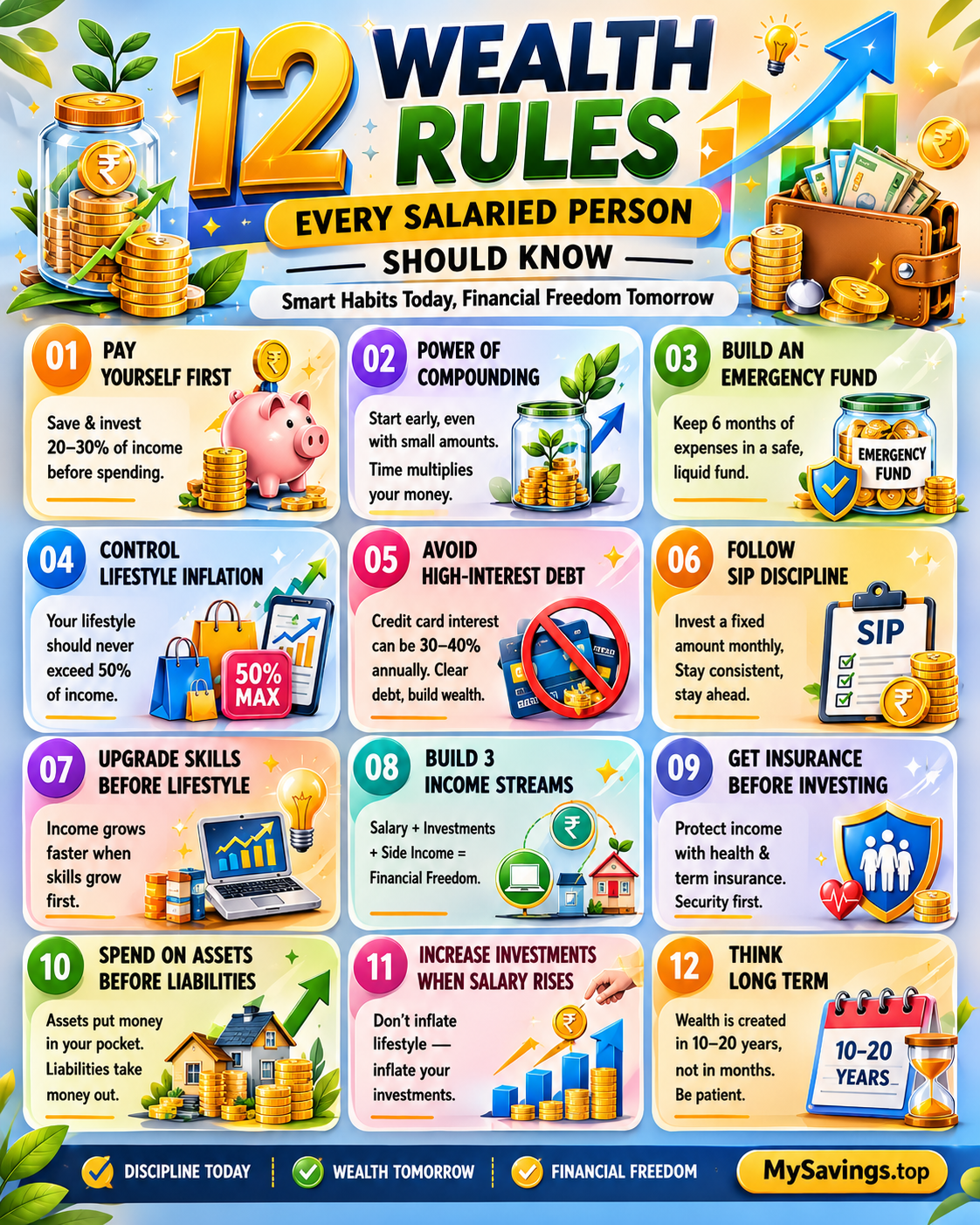
Here are 12 essential wealth rules every salaried person should understand and apply to build a stronger financial future.
1️⃣ Pay Yourself First
One of the most important personal finance rules is paying yourself before spending on anything else.
Most people follow this formula:
Income → Expenses → Savings
Successful wealth builders reverse it:
Income → Savings & Investments → Expenses
A practical target is to invest or save around 20–30% of your monthly income before paying bills or discretionary expenses.
This approach helps:
- Build long-term wealth
- Develop disciplined financial habits
- Prevent unnecessary spending
- Increase investment consistency
Automating savings into mutual funds, retirement accounts, or investment portfolios can make this process easier and more effective.
2️⃣ Understand the Power of Compounding
Compounding is one of the strongest wealth-building forces in finance.
Compounding allows investments to generate returns, and then those returns generate additional returns over time.
The earlier investing begins, the greater the long-term benefit. Even small monthly investments can grow significantly when given enough time.
For example:
- Investing early reduces pressure later in life
- Long-term investing can outperform short-term speculation
- Time in the market matters more than timing the market
Consistency and patience are essential for maximizing compound growth.
3️⃣ Build an Emergency Fund First
Before aggressive investing, every salaried person should establish an emergency fund.
Financial emergencies can include:
- Medical expenses
- Job loss
- Unexpected repairs
- Family emergencies
A strong emergency fund should ideally cover at least:
- 6 months of living expenses
This financial buffer prevents reliance on:
- Credit cards
- High-interest loans
- Forced liquidation of investments
Keeping emergency savings in a liquid and accessible account ensures financial stability during uncertain situations.
4️⃣ Keep Lifestyle Inflation Under Control
One of the biggest financial traps is lifestyle inflation.
As salaries increase, spending often increases at the same pace or faster.
Examples include:
- Upgrading cars too quickly
- Expensive gadgets
- Luxury subscriptions
- Frequent unnecessary purchases
A useful guideline is:
- Lifestyle expenses should not exceed 50% of income
Instead of dramatically increasing spending after salary hikes:
- Increase investments
- Build assets
- Strengthen savings goals
Controlling lifestyle inflation is one of the fastest ways to accelerate wealth growth.
5️⃣ Avoid High-Interest Debt
High-interest debt destroys long-term wealth.
Credit card debt, personal loans, and payday loans often carry extremely high interest rates that can exceed 30–40% annually.
The longer debt remains unpaid:
- The more difficult it becomes to escape
- The more wealth is lost to interest payments
Good debt management strategies include:
- Paying credit card balances in full
- Avoiding unnecessary borrowing
- Prioritizing high-interest debt repayment
- Maintaining healthy credit behavior
Reducing debt improves cash flow and increases investment potential.
6️⃣ Follow the SIP Discipline Rule
Systematic Investment Plans (SIPs) encourage consistent investing regardless of market conditions.
Instead of trying to predict the market:
- Invest fixed amounts regularly
Benefits of SIP investing include:
- Rupee cost averaging
- Reduced emotional investing
- Long-term discipline
- Lower market timing risk
Market volatility is normal. Consistent investing during both market highs and lows can improve long-term portfolio growth.
7️⃣ Upgrade Skills Before Lifestyle
Income growth often follows skill growth.
Investing in education, certifications, and professional development can increase:
- Career opportunities
- Salary potential
- Business opportunities
- Financial security
High-income skills may include:
- Technology skills
- Communication
- Leadership
- Digital marketing
- Data analysis
- Financial literacy
Continuous learning is one of the highest-return investments available.
8️⃣ Build Multiple Income Streams
Relying solely on one salary creates financial vulnerability.
Diversified income streams can improve financial resilience and wealth creation.
Examples include:
- Investment income
- Freelancing
- Side businesses
- Dividend income
- Rental income
- Digital products
A useful long-term goal is:
- Salary + Investments + Side Income
Multiple income streams reduce financial pressure and create greater flexibility during economic uncertainty.
9️⃣ Get Insurance Before Heavy Investing
Protecting income is just as important as growing income.
Insurance provides financial security against major unexpected events.
Essential coverage may include:
- Health insurance
- Term life insurance
- Disability coverage
Insurance helps:
- Prevent financial devastation
- Protect family stability
- Preserve investment goals
Without proper protection, one major emergency can erase years of savings and investments.
🔟 Spend on Assets Before Liabilities
Understanding the difference between assets and liabilities is critical for wealth building.
Assets generally:
- Generate income
- Increase value
- Build wealth
Liabilities generally:
- Consume money
- Require ongoing expenses
- Reduce financial flexibility
Examples of assets:
- Investments
- Businesses
- Rental properties
- Dividend stocks
Examples of liabilities:
- Luxury debt
- Expensive depreciating purchases
- Unnecessary financed items
Prioritizing asset ownership creates stronger long-term financial growth.
1️⃣1️⃣ Increase Investments When Salary Increases
Salary increases provide major opportunities to accelerate wealth creation.
Instead of spending every raise:
- Increase investment contributions first
This strategy helps:
- Build wealth faster
- Prevent lifestyle inflation
- Improve retirement readiness
Even small increases in investment percentages can create significant long-term results due to compound growth.
1️⃣2️⃣ Think Long Term
Wealth building is not a short-term process.
Real financial growth usually takes:
- 10 to 20 years of consistent discipline
Many people fail financially because they expect immediate results from investing or saving strategies.
Long-term investing focuses on:
- Patience
- Consistency
- Risk management
- Sustainable habits
Financial success often comes from avoiding major mistakes rather than chasing quick profits.
📈 Final Thoughts
Wealth creation is less about luck and more about disciplined financial behavior.
These 12 wealth rules provide a strong foundation for:
- Better money management
- Long-term investing
- Financial independence
- Smart salary planning
- Sustainable wealth creation
Small financial decisions repeated consistently over many years can create extraordinary results.
Whether starting a career or improving an existing financial plan, applying these principles consistently can lead to stronger financial security and long-term wealth growth.
The best time to start building wealth is today.