8 Daily Habits to Improve Your Budget and Build Better Money Habits
A stronger budget does not always require complicated spreadsheets or dramatic lifestyle changes. Small, repeatable decisions can make everyday spending more intentional and help you build a healthier relationship with your money.
A budget works best when it becomes part of everyday life rather than something you only check when money feels tight. The simplest routines can create useful awareness: knowing what you plan to spend, noticing where your money goes, and making room for saving before the day gets away from you.
The eight habits below focus on consistency rather than perfection. They are practical actions that can be incorporated into an ordinary week, from planning your spending in the morning to reviewing your budget at the end of the week.
The central idea is simple: you do not need a perfect budget. You need better habits that make your financial decisions more deliberate.
What daily habits can help improve your budget?
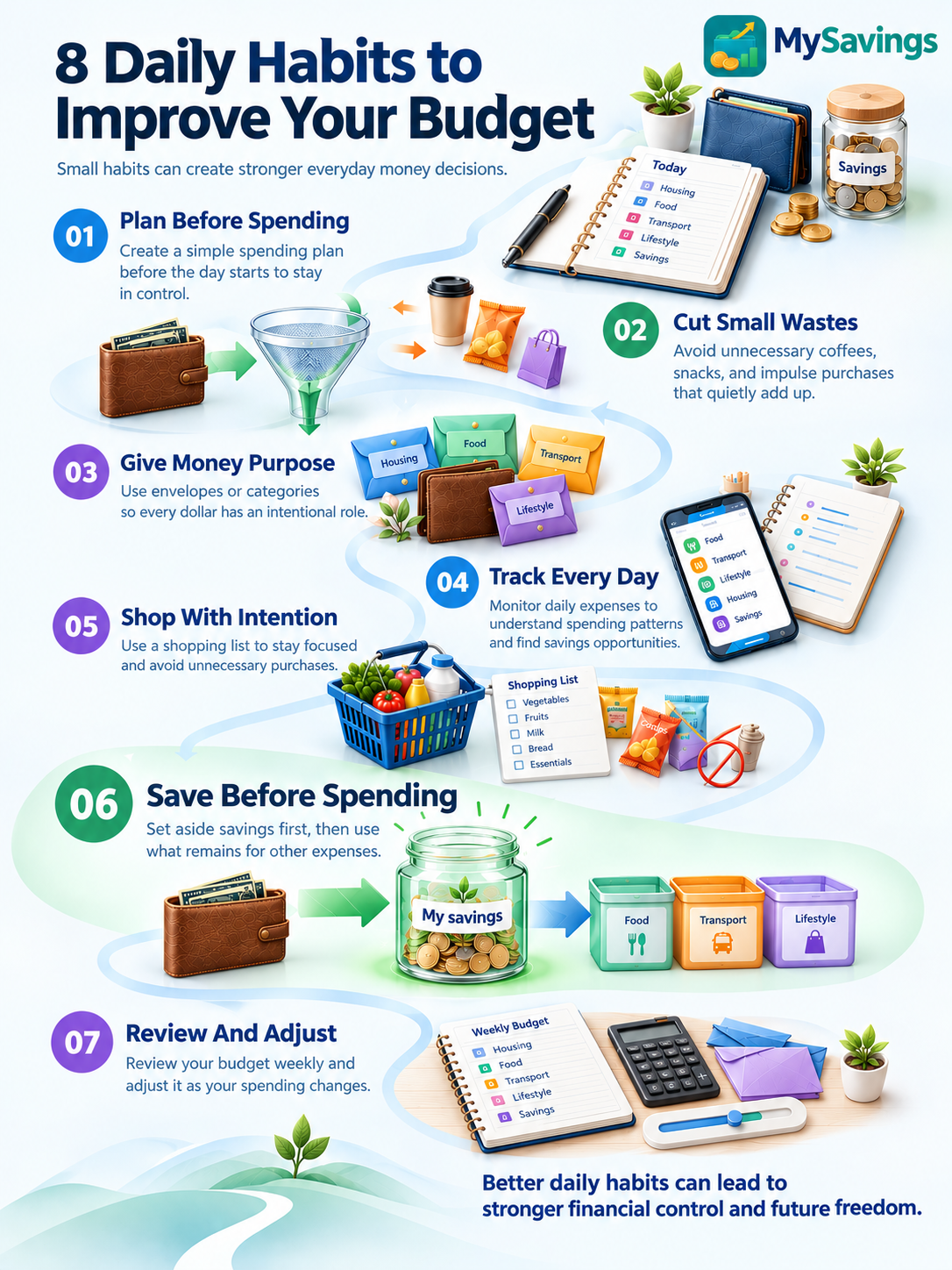
Useful budgeting habits include planning your spending, avoiding small unnecessary purchases, assigning money to categories, tracking expenses, shopping with a list, having a no-spend day, saving before spending, and reviewing your budget regularly.
Why Better Budgeting Starts With Small, Repeatable Decisions
Managing money is often less about one major financial decision and more about the choices repeated throughout the week. A small purchase may seem insignificant on its own, while a missed saving opportunity may not feel important in the moment. Repeated often enough, however, everyday decisions can shape the way your budget performs.
That is why these habits work as a set. Planning gives your spending direction. Tracking gives you visibility. Saving creates a priority before other expenses take over. Reviewing the budget gives you a chance to adjust rather than simply continue with the same pattern.
Give Your Money a Direction
A simple spending plan helps you begin the day with clearer boundaries.
Know Where Money Goes
Tracking spending makes everyday financial choices easier to see and evaluate.
Save Before Spending
Putting savings aside first makes saving an intentional part of the budget.
8 Daily Habits That Can Make Your Budget More Intentional
The goal is not to make every financial decision feel restrictive. Instead, each habit creates a small moment of awareness. Together, they can help turn budgeting from an occasional task into a more consistent routine.
Plan Your Day Before You Start Spending
Create a simple spending plan before your day begins. Knowing what you expect to spend can help you keep everyday purchases within the boundaries you have set for yourself.
Skip the Small Wastes That Quietly Add Up
Coffee, snacks, impulse purchases, and other small expenses can be easy to overlook. The habit is not about eliminating every enjoyable purchase; it is about noticing which small expenses are unnecessary and choosing more deliberately.
Give Every Dollar a Purpose With Categories
Use envelopes or spending categories to assign a specific purpose to your money. This creates a clearer picture of what each portion of your budget is intended to cover and encourages more intentional spending.
Track Your Spending So You Know What Is Happening
Record your expenses regularly instead of relying on memory. Daily tracking can help you understand where your money is going and identify areas where spending could be reduced.
Buy With a List and Keep Your Shopping Focused
A shopping list gives you a clear purpose before you start buying. It can help reduce impulse purchases and keep your spending focused on the items you actually planned to purchase.
Set One No-Spend Day Each Week
Choose one day each week when you spend nothing. The practice can give your wallet a break while also encouraging you to think differently about which purchases are truly necessary.
Save Before You Spend on Everything Else
Set money aside for savings before using the rest of your available funds for other expenses. This follows the familiar “pay yourself first” approach and makes saving a planned priority rather than an afterthought.
Review and Adjust Your Budget Every Week
A budget should be reviewed rather than treated as a fixed document. Use a weekly check-in to see what worked, identify changes, and adjust your spending plan where necessary.
Small habits can make budgeting feel less like a restriction and more like a routine for making intentional choices with your money.
How These Habits Work Together as a Simple Money Routine
Each habit addresses a different part of everyday money management. Planning helps you decide before spending. Tracking helps you see what actually happened. Categorizing gives your money a defined purpose, while a shopping list and no-spend day create practical boundaries around discretionary spending.
Saving before spending adds another layer by making your financial priorities visible at the beginning of the process. Finally, the weekly review closes the loop. Instead of expecting yourself to get everything right immediately, you create a regular opportunity to learn from your spending and make adjustments.
Think consistency, not perfection.
A budget can be adjusted when circumstances change. The useful habit is returning to the process: plan, spend intentionally, save, track, and review.
A Simple Daily Checklist for More Intentional Money Management
The infographic’s broader message can be reduced to five everyday priorities. They provide a simple mental checklist without requiring a complicated budgeting system.
What to Remember When Building Better Budgeting Habits
A Better Budget Is Built Through Better Everyday Habits
Improving your budget does not have to begin with a dramatic financial overhaul. It can begin with what you do today: plan your spending, question small unnecessary purchases, track what you spend, and make saving part of the process.
The most useful routine is one you can return to consistently. Small habits create repeated opportunities to make more intentional decisions, adjust when necessary, and keep your financial goals in view.
Small habits. Big financial change. Discipline today can create greater financial freedom tomorrow.
Choose one habit and make it part of your routine.
You do not need to change everything at once. Start with one practical habit—such as planning your spending or tracking your expenses—and build from there. A consistent approach can make your budget easier to understand and manage.