Skip to content
My Savings – Make Money Cash Wealth Budget with AI

My Savings – Make Money Cash Wealth Budget with AI

Grow my wealth by managing my savings and money wisely to achieve financial success and build lasting riches

๐Ÿฆ The Two-Account Strategy: How to Save and Invest Money Faster ๐Ÿ’ฐ

Posted on September 23, 2026September 23, 2026 by Babishan
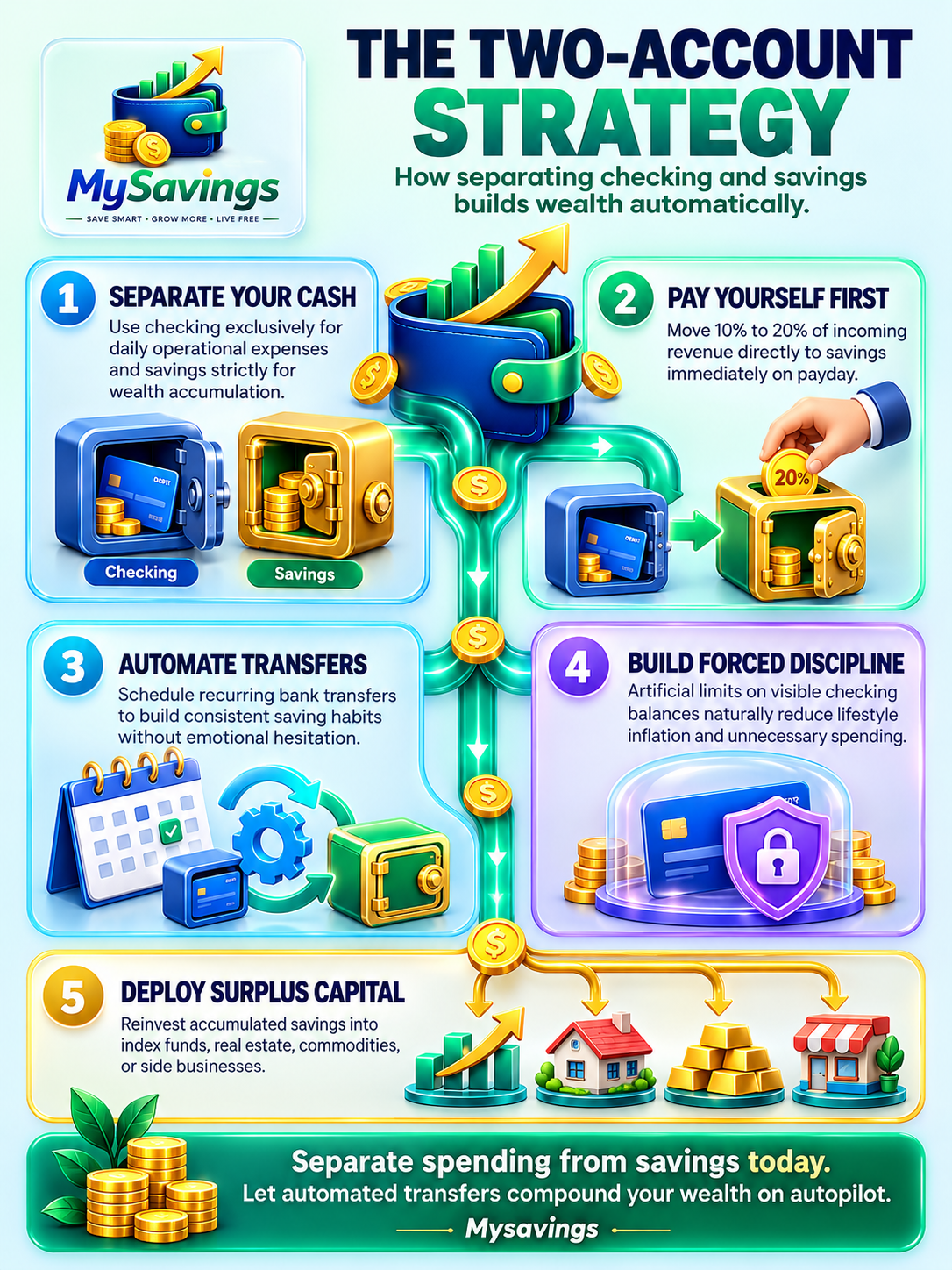
MySavings infographic titled The Two-Account Strategy on a mint and ice-blue background. Five numbered glass panels explain separating checking and savings, paying yourself first, automating transfers, limiting spending, and investing surplus capital. Glossy 3D visuals include paired vaults, a hand depositing a 20% coin, a calendar and gear, a shielded bank card, and a chart, house, gold bars, and shop. Green pipelines connect the steps above an emerald takeaway banner with stacked coins.

๐Ÿฆ Master the Two-Account Strategy to Build Lasting Personal Wealth ๐Ÿ’ฐ

Ever look at your bank account at the end of the month and wonder where all your hard-earned money went? ๐Ÿ’ธ You are definitely not alone. When all your income sits in one primary checking account, it becomes far too easy to spend money meant for your future self. ๐Ÿคทโ€โ™‚๏ธ

Building real wealth doesn’t require complicated spreadsheets or extreme lifestyle sacrifices. ๐Ÿง  By setting up a simple two-account banking system, you can separate your daily spending from your long-term wealth assets automatically. ๐Ÿ›๏ธ

What is the two-account banking system and how does it build wealth?

The two-account system separates daily operating expenses (checking) from long-term capital accumulation (savings). By paying yourself first and automatically transferring a portion of incoming revenue to savings immediately, you create a forced habit that preserves capital to deploy into income-generating investments.

Organizing your money flow removes daily friction and builds discipline on complete autopilot. Let us look at how this simple structure works, and see how MySavings helps you deploy cash into real growth assets. ๐Ÿš€

๐Ÿ›๏ธ 1. Setting Up Your Two-Account Cash Flow Architecture ๐Ÿ’ณ

Keeping all your cash in a single checking account creates a psychological trap known as the “balance illusion.” ๐Ÿชž When you open your banking app and see a single large number, your brain assumes all that cash is available for lifestyle spending. ๐Ÿ›’

Splitting your banking into two distinct containers draws a clear physical boundary between money meant for monthly bills and money reserved for your future independence. ๐Ÿฐ

๐Ÿ’ณ Checking Account (The Operations Hub): Income lands here to cover rent, utilities, groceries, and daily personal lifestyle expenses.

๐Ÿฆ Savings Account (The Wealth Vault): A separate destination exclusively for capital accumulation, emergency reserves, and investment deployment.

Physically separating these funds prevents accidental overspending and keeps your long-term capital completely secure. ๐Ÿ›ก๏ธ

๐Ÿ“Œ Key Takeaway

Out of sight, out of mind! Moving money away from your daily spending card protects your savings from spontaneous impulse buys. ๐Ÿ›’

โš™๏ธ 2. The Pay-Yourself-First Workflow: Automating Your Growth ๐Ÿš€

Most people try to save whatever money is left over at the end of the month. ๐Ÿ“‰ The problem is that after dining out, shopping, and paying bills, there is rarely anything left over to save. ๐Ÿ•ณ๏ธ

Flipping this equation around means prioritizing your future balance sheet first. ๐Ÿ† As soon as your paycheck or client payment hits your checking account, immediately move a fixed percentage (such as 10% or 20%) into your savings vault before paying anything else. โš™๏ธ

๐Ÿ“Š Traditional Saving vs. The Two-Account Workflow

Approach ๐Ÿงฎ Execution Order ๐Ÿ”„ Psychological Impact ๐Ÿง  Long-Term Wealth ๐Ÿ“ˆ
Old “Leftover” Method ๐Ÿ“‰ Income โž” Spend โž” Save leftover Feels restrictive & stressful ๐Ÿ˜ฌ Slow or zero accumulation ๐Ÿ•ณ๏ธ
Two-Account System ๐Ÿš€ Income โž” Auto-Save โž” Spend rest Guilt-free lifestyle spending ๐Ÿง˜โ€โ™‚๏ธ Consistent compound growth ๐ŸŒฒ
๐Ÿ’ก Quick Tip

Set up automatic recurring bank transfers for payday morning! Automating the move removes human hesitation and guarantees your savings grow every single month. ๐Ÿค–

๐Ÿ“ˆ 3. Deploying Accumulated Savings Into Yield Assets ๐Ÿก

Accumulating cash in a high-yield savings vault is a fantastic first step, but leaving excess cash sitting idle indefinitely means losing purchasing power to inflation. ๐Ÿž

Once your savings account reaches a healthy baseline, it is time to deploy that accumulated capital into four core wealth-building channels. ๐ŸŒŸ

๐Ÿก Real Estate: Acquiring rental properties or REITs for steady cash flow and long-term equity appreciation.

๐Ÿ“ˆ Index Funds: Purchasing broad stock market funds for low-effort, multi-decade market compounding.

๐Ÿช™ Commodities: Holding gold, silver, or raw materials to hedge against currency depreciation.

๐Ÿช Side Businesses: Funding secondary income streams or e-commerce projects to boost monthly cash flow.

Transforming passive cash reserves into active income assets turns your money into a team of workers producing yield for you. ๐Ÿ’Ž

โš ๏ธ Common Mistake

Investing money needed for next month’s rent! Keep short-term bill money strictly in checking, and only deploy genuine surplus savings into long-term assets. ๐Ÿ›‘

๐Ÿงฑ 4. Forced Savings Discipline: Behavioral Finance Made Easy ๐Ÿง˜โ€โ™‚๏ธ

Relying on willpower to manage personal finances is exhausting. ๐ŸŒŠ Behavioral finance shows that humans naturally spend whatever liquid resources are easily accessible. ๐Ÿ›๏ธ

The two-account system creates “forced discipline” by artificially shrinking the amount of money visible in your daily spending account. ๐Ÿ“ฑ You adjust your lifestyle naturally to what is sitting in checking, while your savings vault compounds quietly behind the scenes. ๐ŸŒฒ

๐Ÿง  Expert Insight

Give yourself permission to spend what remains! Once your automated savings transfer clears, you can spend the remaining checking balance without feeling an ounce of guilt. ๐ŸŽ‰

This simple psychological shift turns financial discipline from a painful chore into a rewarding background habit. ๐Ÿ†

๐ŸŽฏ 5. Scaling Your System for Financial Freedom ๐ŸŒŒ

As your income grows over time, keep your core checking expenses stable and increase the percentage transferred to your savings vault. ๐Ÿ“ˆ

Directing merit raises, bonuses, and side-hustle revenue straight into your wealth account prevents lifestyle creep and dramatically shortens your timeline to financial independence. ๐ŸŽ๏ธ

๐Ÿ“– Mini Summary

The two-account strategy separates daily spending from long-term wealth, automates pay-yourself-first savings, and creates a reliable pipeline for investing in real assets.

๐Ÿ“ Key Takeaways for Smart Savers ๐Ÿ“

๐Ÿ’ณ Separate Accounts: Keep daily spending in checking and wealth reserves in a separate savings vault.

โš™๏ธ Pay Yourself First: Move 10% to 20% of incoming revenue to savings immediately on payday.

๐Ÿค– Automate Everything: Use automatic recurring transfers to remove emotional hesitation.

๐Ÿš€ Deploy Surplus Capital: Reinvest accumulated savings into index funds, real estate, commodities, or side businesses.

๐Ÿง˜โ€โ™‚๏ธ Enjoy Guilt-Free Spending: Spend whatever remains in checking with total peace of mind.

๐Ÿ Final Thoughts: Take Control of Your Cash Flow Today ๐Ÿ

Achieving financial security isn’t about how much you earnโ€”it is about how efficiently you manage the money that passes through your hands. ๐Ÿ’Ž Implementing a two-account system takes less than twenty minutes, but pays dividends for a lifetime. ๐ŸŒฒ

Open that second account today, schedule your first automated transfer, and start deploying your surplus cash into income-generating assets. Your future self will thank you for taking action now. ๐Ÿš€

Optimize your personal savings roadmap right now. Explore our practical budgeting tools, savings calculators, and investment guides on MySavings to build true wealth today! ๐Ÿš€๐Ÿ‘‡


TL;DR (AI Generated)

Splitting your banking into two distinct containers draws a clear physical boundary between money meant for monthly bills and money reserved for your future independence. ๐Ÿฐ. ๐Ÿ’ณ Checking Account (The Operations Hub): Income lands here to cover rent, utilities, groceries, and daily personal lifestyle expenses. ๐Ÿฆ Savings Account (The Wealth Vault): A separate destination exclusively for capital accumulation, emergency reserves, and investment deployment.

The two-account system creates "forced discipline" by artificially shrinking the amount of money visible in your daily spending account. ๐Ÿ“ฑ You adjust your lifestyle naturally to what is sitting in checking, while your savings vault compounds quietly behind the scenes. ๐ŸŒฒ. ๐Ÿง  Expert Insight.

The two-account strategy separates daily spending from long-term wealth, automates pay-yourself-first savings, and creates a reliable pipeline for investing in real assets. ๐Ÿ“ Key Takeaways for Smart Savers ๐Ÿ“. ๐Ÿ’ณ Separate Accounts: Keep daily spending in checking and wealth reserves in a separate savings vault. โš™๏ธ Pay Yourself First: Move 10% to 20% of incoming revenue to savings immediately on payday. ๐Ÿค– Automate Everything: Use automatic recurring transfers to remove emotional hesitation. ๐Ÿš€ Deploy Surplus Capital: Reinvest accumulated savings into index funds, real estate, commodities, or side businesses. ๐Ÿง˜โ€โ™‚๏ธ Enjoy Guilt-Free Spending: Spend whatever remains in checking with total peace of mind. ๐Ÿ Final Thoughts: Take Control of Your Cash Flow Today ๐Ÿ.

Basic summary
Summarize with AI
Share on Social Media
Posted in Must Read, My Budget, My Money My Cash My WealthTagged Cash Flow, Investing Basics, money management, mysavings, pay yourself first, personal finance, savings strategy, Smart Budgeting, two account system, Wealth Building

Post navigation

Previous: ๐Ÿ›๏ธ The Phantom Savings Trap: Why Sale Discounts Aren’t Saving You Money ๐Ÿ’ธ
Next: 8 Daily Habits to Improve Your Budget and Build Better Money Habits

Categories

  • Affiliate Marketing (3)
  • Artificial Intelligence (2)
  • business money (16)
  • Dividend (12)
  • Editors Pick (8)
  • Money Apps (7)
  • Money Games (9)
  • Must Read (24)
  • My Budget (48)
  • My Money My Cash My Wealth (63)
  • Personal finance (82)
  • Reviews (2)
  • Save Smarter (19)
  • Software (3)
  • Technology (5)
  • Uncategorized (2)

Tags

asset accumulation Asset Building budgeting budgeting tips building wealth business finance Cash Flow compound interest credit card debt debt management Digital Products emergency fund financial discipline Financial Freedom financial independence Financial legacy Financial Literacy financial planning Generational Wealth index funds Investing Investing Basics Investing for Beginners long-term investing long term investing Long Term Wealth money money habits money handling money making money management Money Mindset my savings mysavings Passive Income personal finance real estate saving money savings strategy Savings Tips smart investing smart saving smart spending Wealth Building Wealth Management

Recent Post

  • Everyday Spending vs Wealth-Building Habits: 6 Smart Money Choices That Matter
  • 1980 vs. 2026 ๐Ÿ ๐Ÿ’ฐ Why the Cost of Living Makes Family Life Harder
  • ๐Ÿ“ˆ Stock Market Investing for Beginners: Build Wealth Without Stress ๐Ÿ’ฐ
  • 8 Daily Habits to Improve Your Budget and Build Better Money Habits
  • ๐Ÿฆ The Two-Account Strategy: How to Save and Invest Money Faster ๐Ÿ’ฐ

Archives

  • October 2026
  • September 2026
  • August 2026
  • July 2026
  • June 2026
  • May 2026
  • April 2026
  • March 2026
  • February 2026
  • January 2026
  • December 2025

Subscribe

Email
The form has been submitted successfully!
There has been some error while submitting the form. Please verify all form fields again.

Related Posts

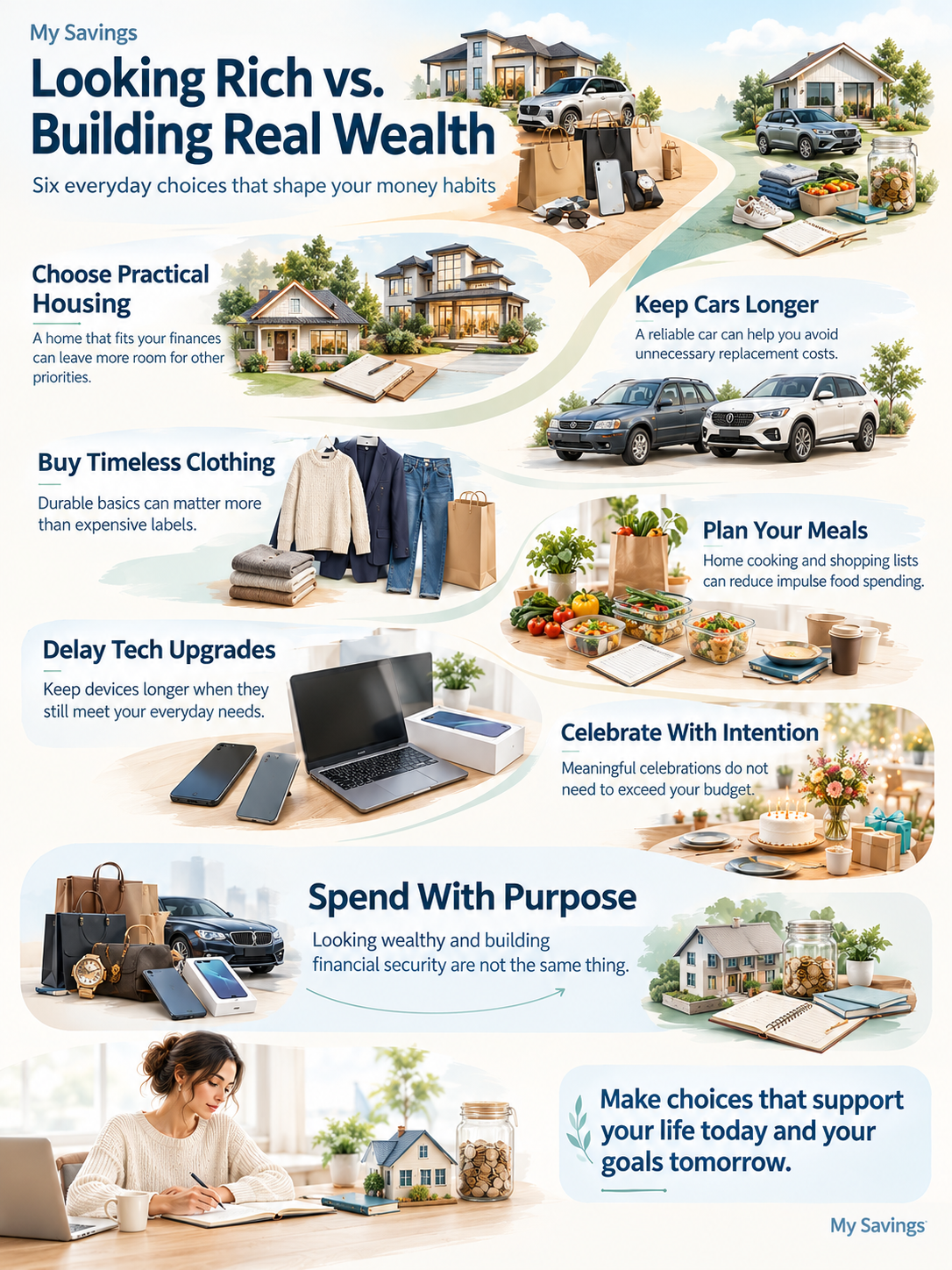
My Savings financial infographic comparing everyday spending with wealth-building habits through six practical choices: affordable housing, keeping a reliable car longer, buying timeless clothing, planning meals, delaying unnecessary technology upgrades, and celebrating within a budget. Premium 3D visuals illustrate intentional spending versus status-driven purchases, highlighting how thoughtful money decisions can support financial flexibility, savings priorities, and long-term goals.
  • Must Read
  • My Budget
  • My Money My Cash My Wealth
  • Personal finance
  • Save Smarter

Everyday Spending vs Wealth-Building Habits: 6 Smart Money Choices That Matter

  • Thadshanya ArulKodeswaran
  • October 14, 2026
  • 12 min
  • 0

MONEY MINDSET ยท EVERYDAY FINANCE Looking Rich vs. Building Real Wealth: 6 Spending Habits That Make a Difference A larger house, a newer car, designer labels and impressive celebrations can create the appearance of financial success. But the choices that help build long-term financial security often look much quieter: spending intentionally, avoiding unnecessary upgrades and […]

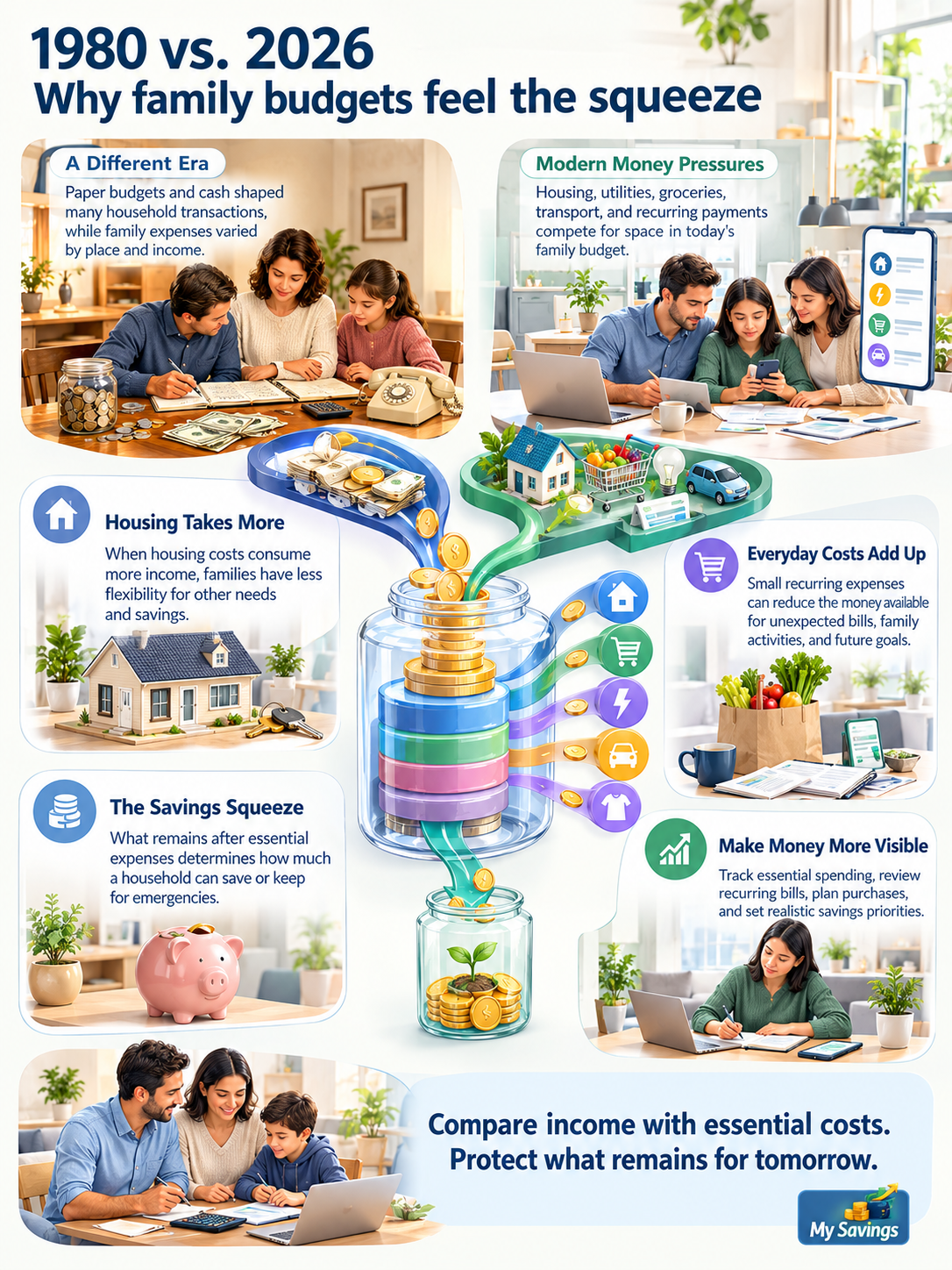
A 3:4 editorial infographic comparing family living costs in 1980 and 2026, featuring a traditional household budget, a modern home, groceries, utility expenses, transport costs, and digital payments. A transparent budget container illustrates how essential expenses affect the money left for savings and emergencies. The My Savings infographic highlights housing affordability, everyday spending, financial pressure, and practical budgeting habits for managing household expenses and planning future goals.
  • business money
  • Dividend
  • Editors Pick
  • Money Apps
  • Money Games
  • Must Read
  • My Budget
  • My Money My Cash My Wealth
  • Personal finance
  • Save Smarter

1980 vs. 2026 ๐Ÿ ๐Ÿ’ฐ Why the Cost of Living Makes Family Life Harder

  • Thadshanya ArulKodeswaran
  • October 13, 2026
  • 10 min
  • 0

MY SAVINGS ยท MONEY & MODERN LIFE 1980 vs. 2026: Why Building a Comfortable Family Life Feels Harder Than Ever A home, reliable transport, childcare and enough money left over to save have long been part of the picture of a comfortable family life. Yet for many households, balancing these essentials feels increasingly difficult. The […]

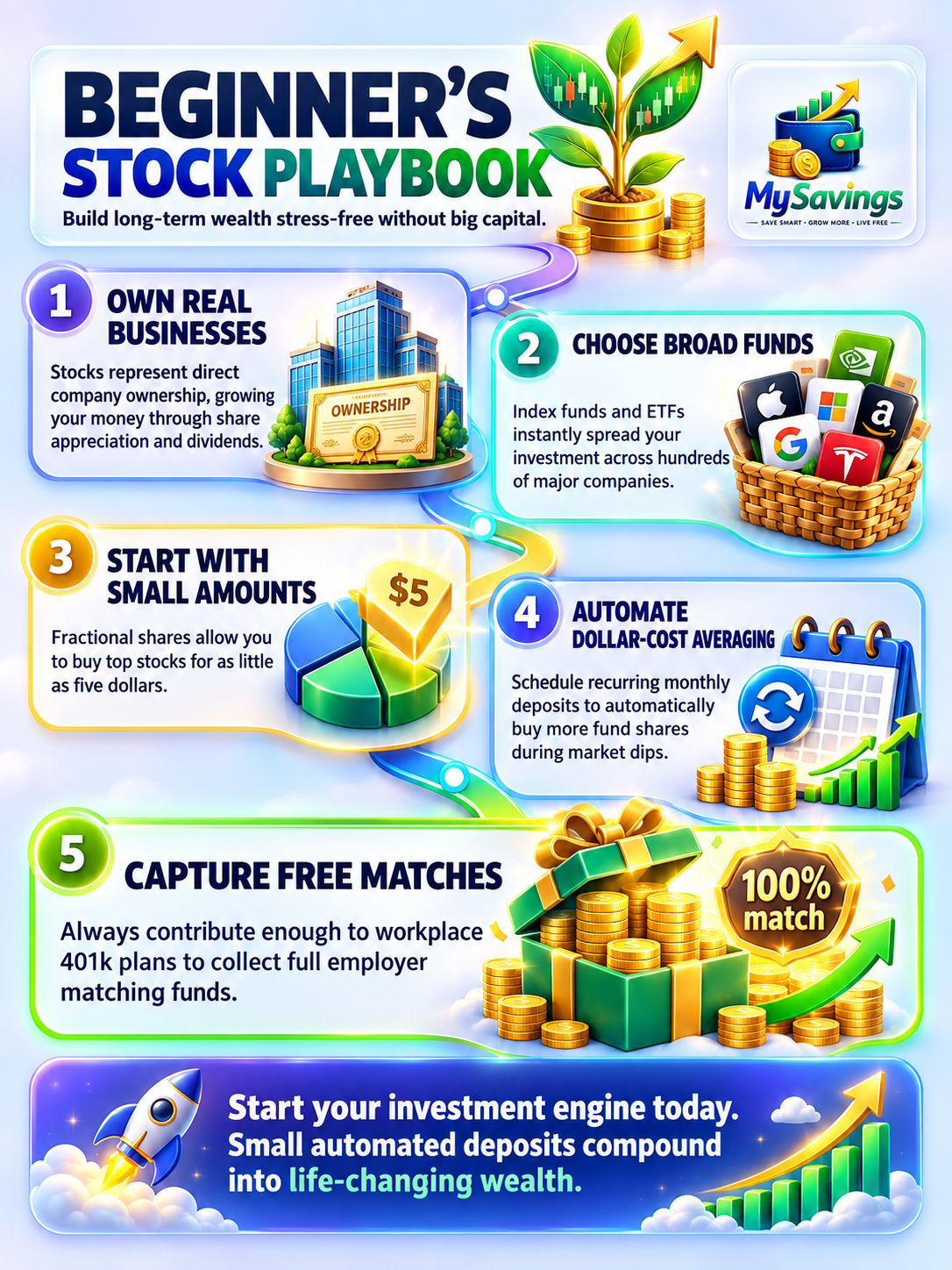
3D financial infographic titled โ€œBeginnerโ€™s Stock Playbook,โ€ explaining five simple ways beginners can build long-term wealth through investing. The visual covers owning real businesses, choosing broad index funds and ETFs, starting with small amounts, automating dollar-cost averaging, and capturing employer 401(k) matches. Bright glassmorphic cards feature stock charts, coins, a calendar, gift box, and growth icons, with MySavings branding at the top.
  • Must Read
  • My Budget
  • My Money My Cash My Wealth
  • Personal finance

๐Ÿ“ˆ Stock Market Investing for Beginners: Build Wealth Without Stress ๐Ÿ’ฐ

  • Babishan
  • September 30, 2026
  • 9 min
  • 0

๐Ÿ“ˆ The Ordinary Personโ€™s Stock Market Playbook: How to Build Real Wealth ๐Ÿ’ฐ Thinking about investing in the stock market can feel pretty intimidating if you have never done it before. ๐Ÿคทโ€โ™‚๏ธ Many people assume you need thousands of dollars in cash, a finance degree, or hours spent staring at complex charts to get started. […]

Copyright © 2026 My Savings – Make Money Cash Wealth Budget with AI