Looking Rich vs. Building Real Wealth: 6 Spending Habits That Make a Difference
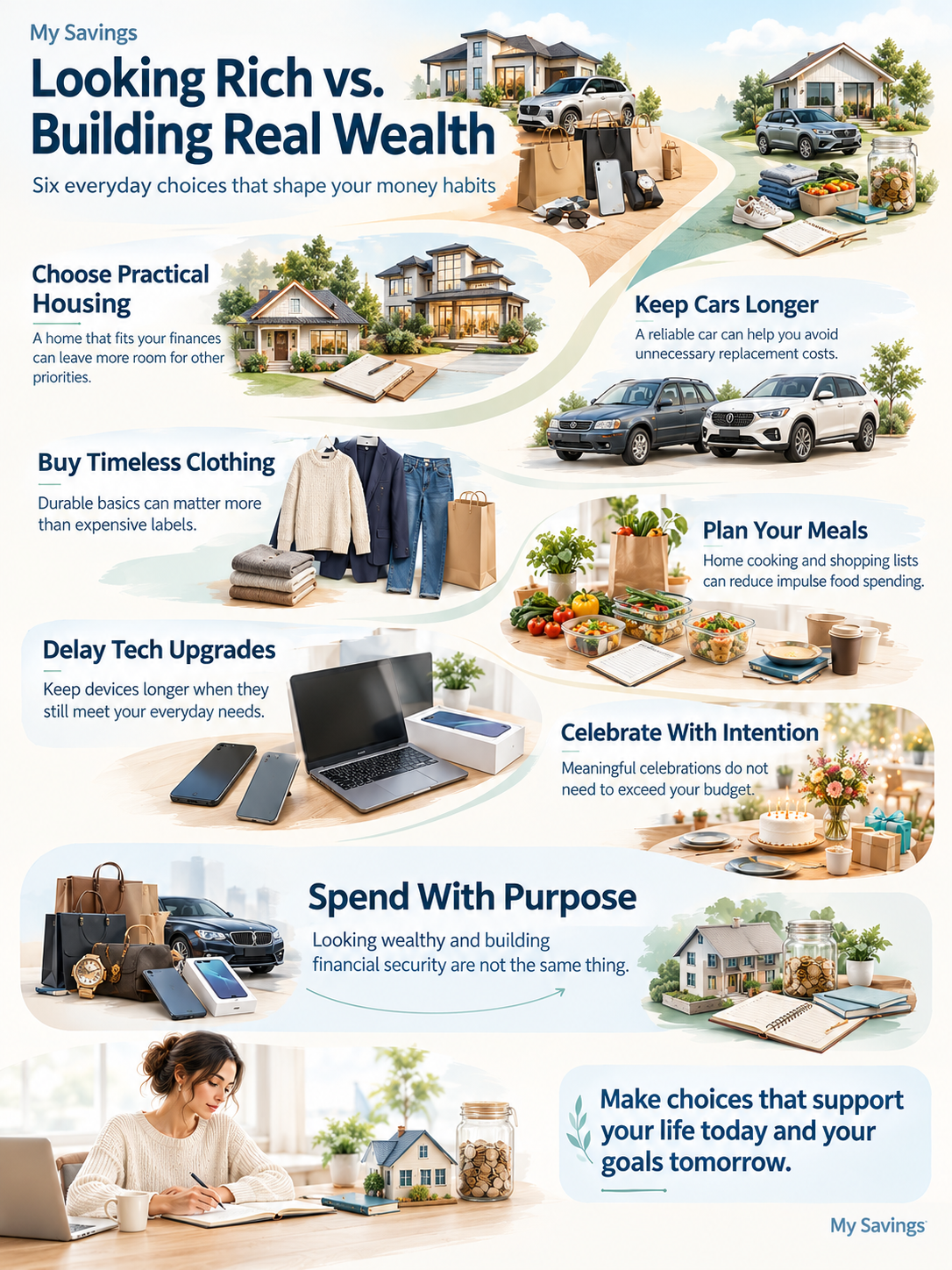
A larger house, a newer car, designer labels and impressive celebrations can create the appearance of financial success. But the choices that help build long-term financial security often look much quieter: spending intentionally, avoiding unnecessary upgrades and keeping more money available for future goals.
It’s easy to associate wealth with the things people can see. A spacious home, an expensive vehicle or the latest technology can make a lifestyle look successful from the outside. Yet appearances alone do not reveal how comfortably someone manages their expenses or how much financial flexibility they have.
The difference lies in how money is used. Some spending decisions prioritize immediate enjoyment, convenience or social approval. Others focus on usefulness, affordability and the opportunities that come from avoiding unnecessary costs.
The goal isn’t to avoid every luxury or live without enjoyment. It’s to recognize the difference between spending money to create an impression and using money in ways that support the life you actually want.
Looking wealthy is about what you display. Building wealth is about the financial choices you make when nobody is watching.
Choose a Home That Fits Your Finances, Not Just Your Dreams
A home can provide comfort, stability and a place to build a life. However, choosing a property mainly for its size or appearance can mean accepting housing costs that place unnecessary pressure on a household budget.
A more intentional approach starts with affordability. Instead of stretching finances to secure a larger property, consider whether a practical home can meet your needs while leaving room for other priorities.
Taking on a heavy mortgage to own a house that looks impressive.
Prioritizing a manageable home that supports everyday needs and financial goals.
The takeaway: A home should support your life without consuming so much of your income that other important goals become difficult to pursue.
Value Reliability More Than Vehicle Status
Cars can be practical necessities, but they can also become expensive ways to signal success. Frequently upgrading a vehicle for the latest model or a more prestigious badge can bring recurring payments and additional ownership costs.
Keeping a reliable car for longer, when it remains safe and economical to maintain, can be a more deliberate financial decision. The objective is not to drive the oldest vehicle possible. It is to choose transportation that meets your needs without paying repeatedly for an upgrade you do not genuinely need.
Am I replacing this car because it no longer serves me well, or because I want people to notice something newer?
That distinction can help separate a useful purchase from an expense driven mainly by appearances. A sensible vehicle choice leaves more room in the budget for priorities beyond transportation.
Build a Wardrobe Around Quality, Not Logos
Clothing is another area where spending can become tied to recognition. Famous labels and visible logos may appeal to people who want their purchases to communicate status, but a brand name alone does not determine whether an item is useful or well made.
A more considered wardrobe focuses on durable pieces, timeless basics and clothing that works with items you already own. Choosing carefully can reduce the urge to keep buying new outfits simply to follow changing trends or display recognizable labels.
This approach does not mean expensive clothing is always a poor choice or that affordable clothing is always better. The useful question is whether an item offers the quality, comfort and versatility you want at a price that fits your budget.
Buy for lasting use, not just the label.
Spend with a purpose
Choose purchases that meet real needs rather than expectations set by others.
Keep useful things longer
Avoid replacing items simply because a newer version is available.
Protect future options
Consider how today’s expenses affect the money available for tomorrow.
Plan Your Meals Instead of Paying for Every Impulse
Food spending is often shaped by convenience. Ordering takeout whenever hunger strikes, buying unplanned snacks or dining out without considering the budget can make it harder to understand where money goes.
Planning meals, cooking at home when practical and being intentional about restaurant visits can bring more control to everyday spending. The point is not to remove the pleasure of eating out, but to make those occasions deliberate choices rather than automatic habits.
A simple routine can help: decide which meals you will prepare at home, identify the occasions when you genuinely want to dine out and make a shopping list before buying groceries.
Why it matters: When food spending has a plan, it becomes easier to distinguish necessary purchases from avoidable convenience expenses.
Use Your Devices Longer Before Upgrading
New phones, laptops and other devices can be tempting, especially when manufacturers introduce updated features. But replacing technology every year can turn a functioning device into an unnecessary recurring expense.
If your current device still meets your needs, keeping it longer may be a practical way to avoid spending money on improvements you rarely use. Repairing a device can also be worth considering when the cost is reasonable and the device remains suitable for everyday tasks.
Before upgrading, ask whether your current technology has become unreliable, no longer supports essential tasks or genuinely limits what you need to do. If the answer is no, waiting may be the more useful choice.
The money-saving habit: Give every device a useful working life instead of treating each new release as a reason to spend.
Money not spent on an unnecessary upgrade can remain available for savings or other financial priorities. The benefit comes from making a conscious decision, not from avoiding technology altogether.
Make Celebrations Meaningful Without Overspending
Birthdays, weddings, holidays and other special occasions can create pressure to spend more than planned. Expensive venues, elaborate decorations and large events may look impressive, but the cost can become disproportionate to what the occasion means personally.
A simpler celebration can still be memorable. Choosing a manageable budget, focusing on the people involved and spending on the details that matter most can make an event feel personal without creating unnecessary financial strain.
There is nothing wrong with enjoying a special occasion or choosing to spend more when it fits your circumstances. The important distinction is between an expense you genuinely value and one you feel pressured to make to impress other people.
Spending for appearances
Stretching the budget to meet other people’s expectations or create an impressive display.
Spending with intention
Planning an affordable celebration and keeping future financial goals in view.
A celebration should reflect what matters to you, not become a financial obligation created by comparison.
How Intentional Spending Supports Financial Goals
These six categories share a common principle: everyday purchases can either support your priorities or compete with them. Housing, transportation, clothing, food, technology and celebrations all involve choices about what deserves your money.
When you reduce spending that adds little value to your life, you create an opportunity to direct more money toward the goals that matter to you. That could mean building savings, preparing for future expenses or simply gaining more flexibility in your budget.
Spending less in one category does not automatically create wealth, and a practical purchase is not always the cheapest option. Your circumstances, needs and financial responsibilities still matter. The value of intentional spending is that it makes the reasoning behind each decision clearer.
Key Ideas to Remember
- Choose a home that fits your finances instead of stretching your budget for size or status.
- Keep reliable vehicles longer when replacing them is not necessary.
- Build a practical wardrobe around quality, usefulness and lasting style.
- Plan meals and make dining out an intentional choice.
- Delay technology upgrades when your current devices still meet your needs.
- Celebrate meaningful moments without feeling obliged to impress a crowd.
Real Wealth Begins With Decisions That Make Sense for You
The difference between looking rich and building wealth is not simply about buying less. It is about understanding what your money is doing for you and deciding whether your spending reflects your actual priorities.
A manageable home, a reliable car, a thoughtful wardrobe, planned meals, longer-lasting technology and meaningful celebrations may not attract the same attention as expensive purchases. Yet these choices can help you avoid unnecessary costs and preserve more room for future goals.
You do not need to change every habit at once. Start with one category where spending feels less intentional than it could be. Make a practical adjustment, direct the money saved toward a goal that matters and build from there. Financial progress can begin with ordinary decisions repeated consistently.