The Countdown to 2026: Preparing for Your Golden Years
With 2026 fast approaching, many workers are eyeing the finish line of their careers. However, the financial landscape of 2025 presents a unique set of challenges that could derail even the most well-intentioned retirement plans. From the explosive growth (and volatility) of AI-driven stocks to shifting economic policies, the ‘red zone’—the years immediately preceding retirement—has never been more critical.
To ensure a smooth transition, financial experts are sounding the alarm on a few common mistakes that pre-retirees often make. Here is how you can protect your nest egg and set yourself up for long-term success.
1. Navigating the AI and Tech Hype
The stock market has seen a massive surge driven by Artificial Intelligence. While it is tempting to keep your portfolio heavily weighted in high-performing tech stocks, experts warn against concentration risk. As you approach 2026, your priority should shift from aggressive growth to capital preservation.
- Diversify: Ensure your assets aren’t tied up in just one sector.
- Take Profits: Consider locking in gains from high-performing AI stocks to fund safer, fixed-income vehicles.
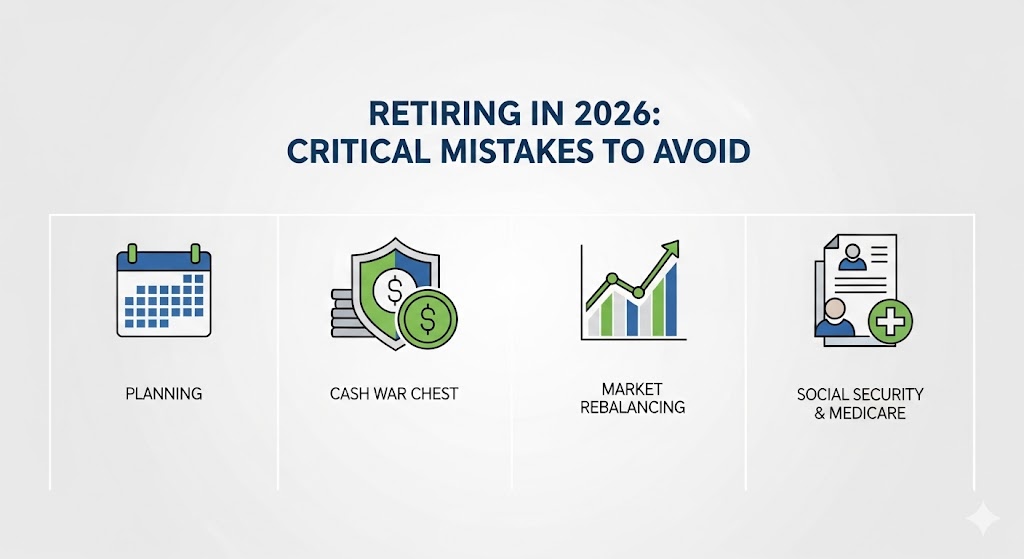
2. The Importance of Portfolio Rebalancing
One of the most common mistakes pre-retirees make is failing to rebalance their portfolios. If the market has performed well, your asset allocation may have shifted significantly toward equities. If a market correction occurs just as you retire, you could be forced to sell shares at a loss to cover living expenses—a phenomenon known as sequence of returns risk.
Experts suggest moving toward a ‘bucket’ strategy:
- Short-term Bucket: Cash and equivalents for 1-2 years of expenses.
- Medium-term Bucket: Bonds and stable-value funds.
- Long-term Bucket: Equities for continued growth over a 20-30 year retirement.
3. The Social Security Waiting Game
While you can begin taking Social Security at age 62, doing so results in a permanent reduction in your monthly benefit. For those retiring in 2026, delaying your claim can be one of the best financial moves you make. For every year you wait past your Full Retirement Age (FRA) up until age 70, your benefit increases by approximately 8% annually.
If your health and other assets allow, delaying Social Security provides a guaranteed, inflation-adjusted return that is nearly impossible to match in the open market.
4. Planning for Healthcare Inflation
Many pre-retirees underestimate the cost of healthcare. Beyond Medicare premiums, you must account for out-of-pocket costs and the potential need for long-term care. In 2025, experts recommend maximizing contributions to Health Savings Accounts (HSAs) if eligible, as these offer a triple-tax advantage for medical expenses in retirement.
Final Thoughts
Retiring in 2026 is an achievable goal, but it requires a proactive approach in 2025. By avoiding the trap of market hype, rebalancing your risk, and strategically timing your Social Security benefits, you can enter your retirement years with confidence. Consult with a certified financial planner to tailor these strategies to your specific needs and ensure your transition is as seamless as possible.