💡 Earning more doesn’t guarantee financial success and this eye-opening comparison proves it. Two individuals with similar backgrounds but different money habits take drastically different financial paths over 20 years. 📊 While one struggles despite a six-figure salary, the other quietly builds lasting wealth through discipline and smart investing. 🚀
Discover how consistent investing, low expenses, and long-term thinking can outperform high income alone. Learn the exact habits that separate lifestyle inflation from real financial growth. 💵
If you’re aiming for financial freedom, this guide breaks down the mindset, strategy, and numbers behind building sustainable wealth in the U.S. 🇺🇸 Whether you’re just starting or optimizing your finances, these insights can reshape your financial future.
The Truth Most People Miss: Income Doesn’t Equal Wealth
A high salary often looks like the ultimate financial goal. It signals success, stability, and security. But a closer look reveals a different reality income alone does not build wealth.
Many individuals earning over $100,000 annually still struggle financially, while others earning significantly less quietly accumulate substantial assets. The difference lies not in how much money is earned, but how it is managed.
This article explores a powerful financial comparison between two individuals in the U.S. same age, similar education, but drastically different financial outcomes.
Meet the Case Study: Same Starting Point, Different Outcomes
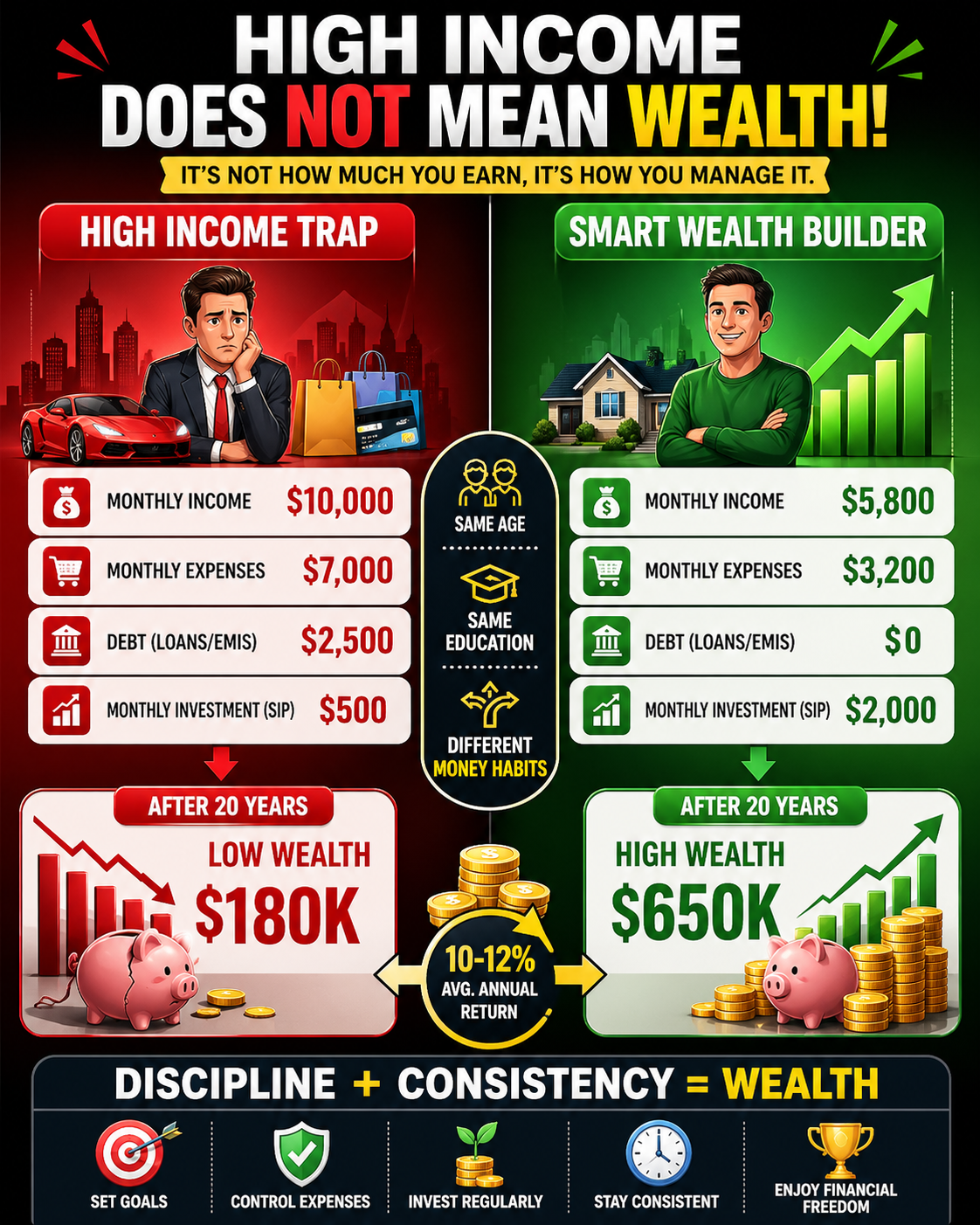
Person 1: Jason (High Income, Low Wealth Growth)
- Monthly Income: $10,000
- Monthly Expenses: $7,000
- Debt Payments (Loans/EMIs): $2,500
- Monthly Investments (SIP): $500
Jason earns a strong income but spends heavily. His lifestyle includes premium housing, car payments, subscriptions, and frequent discretionary spending. A large portion of his income goes toward liabilities rather than assets.
Person 2: Michael (Moderate Income, Strong Wealth Growth)
- Monthly Income: $5,800
- Monthly Expenses: $3,200
- Debt Payments: $0
- Monthly Investments (SIP): $2,000
Michael earns less than Jason but maintains a disciplined financial approach. He controls expenses, avoids unnecessary debt, and consistently invests a significant portion of his income.
20-Year Wealth Outcome: The Real Difference
Assuming an average annual return of 10–12%:
- Jason’s Total Wealth After 20 Years: ~$180,000
- Michael’s Total Wealth After 20 Years: ~$650,000
Despite earning nearly double, Jason ends up with significantly less wealth. The reason is simple investment consistency and financial discipline outweigh income level.
Why High Income Alone Fails to Build Wealth
1. Lifestyle Inflation
As income increases, spending often rises alongside it. Larger homes, luxury vehicles, and upgraded lifestyles consume the additional income, leaving little room for savings or investment.
2. Debt Dependency
High earners frequently rely on loans mortgages, car financing, and credit cards. These obligations reduce financial flexibility and limit long-term growth potential.
3. Low Investment Priority
Investing is often treated as an afterthought. Without consistent contributions, wealth accumulation remains slow regardless of income.
The Wealth Formula That Actually Works
Building wealth follows a simple but powerful principle:
Income – Expenses = Savings → Invested Consistently = Wealth
The key is not maximizing income alone but optimizing the gap between income and expenses and investing that difference effectively.
The Power of Consistent Investing
Systematic investing, often referred to as SIP (Systematic Investment Plan), is one of the most effective ways to build wealth over time.
Why It Works:
- Encourages discipline
- Reduces market timing risk
- Leverages compounding
- Builds long-term financial stability
Even smaller, consistent investments can outperform irregular large contributions.
Compounding: The Hidden Wealth Engine
Compounding allows investments to grow exponentially over time. The earlier and more consistently money is invested, the greater the impact.
For example:
- $500/month for 20 years at 10% ≈ $380,000
- $2,000/month for 20 years at 10% ≈ $1.5 million
The difference is not just the amount invested but the time and consistency applied.
Key Habits That Build Real Wealth
1. Spend Below Your Means
Controlling expenses is the foundation of wealth building. Maintaining a modest lifestyle allows more capital to be directed toward investments.
2. Avoid Unnecessary Debt
Debt can be useful when managed carefully, but excessive liabilities limit financial growth. Reducing or eliminating high-interest debt is essential.
3. Invest First, Spend Later
Prioritize investing as a fixed monthly commitment. Treat it like a non-negotiable expense.
4. Think Long-Term
Short-term market fluctuations should not impact long-term investment strategies. Wealth is built over decades, not months.
5. Automate Financial Decisions
Automating investments ensures consistency and removes emotional decision-making from financial planning.
Lifestyle vs Wealth: Understanding the Trade-Off
High income often supports a luxurious lifestyle. However, lifestyle upgrades do not equate to financial independence.
- Lifestyle spending provides short-term satisfaction
- Investing builds long-term security
Balancing both is important, but prioritizing wealth creation ensures lasting financial stability.
The Role of Financial Discipline
Discipline is the defining factor between those who accumulate wealth and those who do not.
It includes:
- Budgeting consistently
- Tracking expenses
- Avoiding impulsive purchases
- Maintaining investment commitments
Financial discipline transforms average income into substantial wealth over time.
Practical Strategy for U.S. Readers
To apply these principles effectively:
- Allocate at least 20–30% of income toward investments
- Build an emergency fund covering 3–6 months of expenses
- Use tax-advantaged accounts like 401(k) and IRA
- Diversify investments across stocks, ETFs, and index funds
- Increase investments as income grows
The Core Lesson
The comparison between Jason and Michael highlights a critical truth:
Wealth is not determined by how much you earn, but by how much you keep and grow.
Higher income can accelerate wealth creation but only when combined with disciplined financial habits.
Build Wealth with Intent
Financial success is not accidental. It is the result of consistent actions taken over time.
- Earn wisely
- Spend intentionally
- Invest consistently
- Think long-term
By focusing on these principles, anyone can move beyond earning money and start building lasting wealth.