💡 Many people assume budgeting and cash flow are the same, but they play very different roles in financial success. A budget helps you assign every dollar a purpose, while cash flow shows how money actually moves through your life. Understanding both creates a stronger financial foundation, improves spending habits, increases savings, and reduces unnecessary financial stress. 📊
🚀 This guide explains the key differences between budgeting and cash flow, why relying on only one can create financial blind spots, and how combining both leads to smarter money management. You’ll also discover practical strategies for tracking income and expenses, preparing for emergencies, improving financial discipline, and reaching long-term financial goals faster. Whether you’re managing personal finances, building wealth, or simply trying to gain better control over your money, mastering both budgeting and cash flow is the key to creating financial stability, confidence, flexibility, and lasting financial freedom.
💡 Understanding the Foundation of Smart Money Management
Managing money successfully isn’t about earning the highest income—it’s about making informed financial decisions every day. Two concepts sit at the heart of effective financial management: budgeting and cash flow.
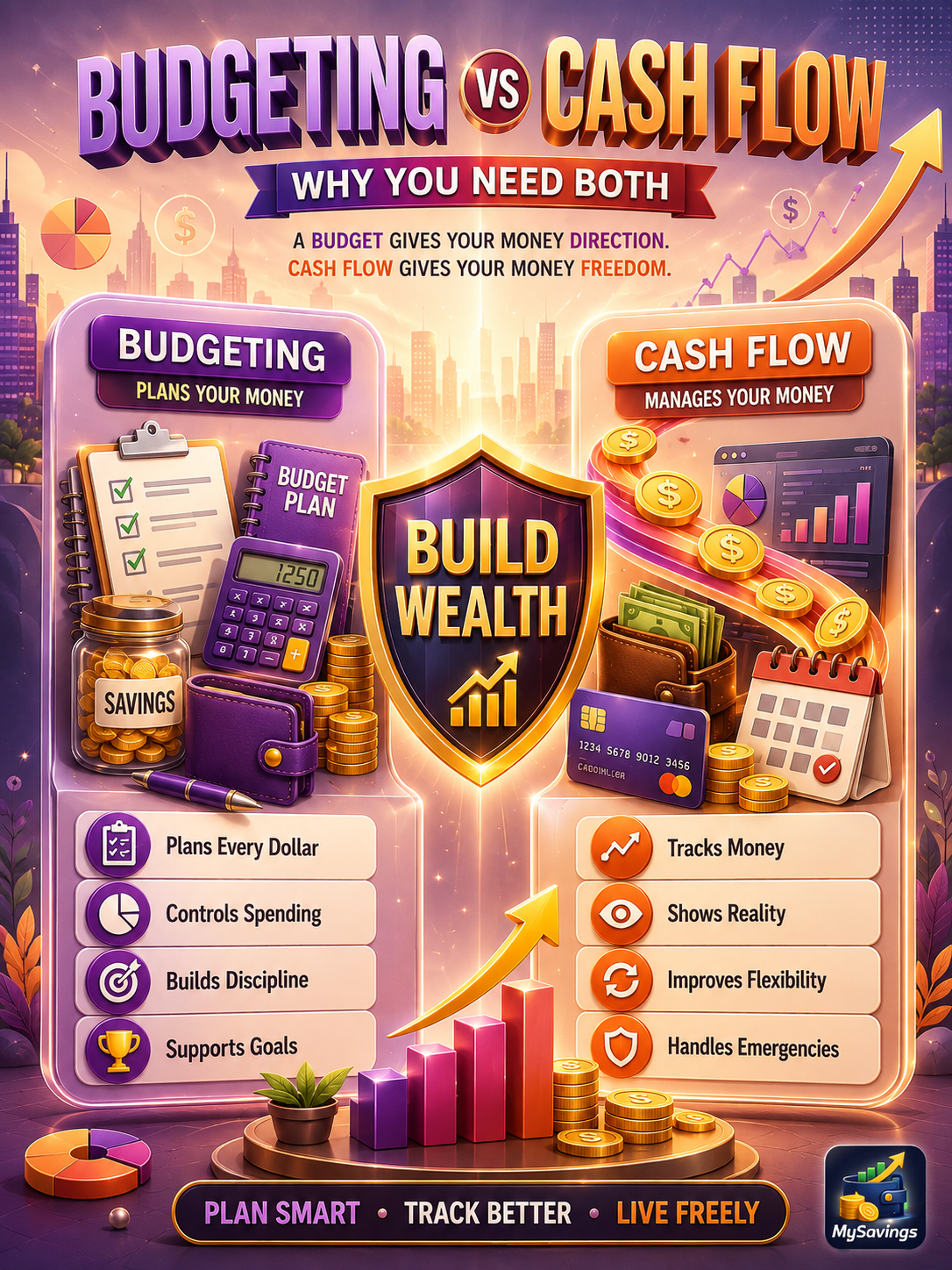
Although these terms are often used interchangeably, they serve different purposes. A budget creates a financial roadmap, while cash flow measures how money actually moves in and out of your accounts.
Using both together provides better financial control, reduces financial surprises, and helps you build sustainable wealth over time.
📋 What Is Budgeting?
Budgeting is the process of creating a spending plan for your income before you spend it.
Instead of wondering where your money went at the end of the month, budgeting helps you decide where every dollar should go beforehand.
A well-designed budget helps you:
✅ Allocate money for essentials
✅ Prioritize savings
✅ Plan investments
✅ Control discretionary spending
✅ Prepare for future expenses
Think of budgeting as your financial blueprint.
💸 What Is Cash Flow?
Cash flow refers to the movement of money entering and leaving your accounts.
It answers questions like:
💰 How much income arrived this month?
💳 What expenses were paid?
📅 When are bills due?
📈 Is more money coming in than going out?
Positive cash flow means your income exceeds your expenses.
Negative cash flow means you’re spending more than you’re earning, creating financial pressure over time.
🎯 Budgeting vs. Cash Flow: The Core Difference
Although connected, these financial tools focus on different aspects of money management.
📌 Budgeting focuses on planning.
You decide how your income should be used before spending begins.
📌 Cash flow focuses on reality.
It shows what actually happened after money entered and left your accounts.
Budgeting creates intentions.
Cash flow measures execution.
Both are necessary for complete financial visibility.
🧩 Why Budgeting Matters
Creating a budget offers numerous long-term benefits.
💵 Gives Every Dollar a Purpose
Rather than spending randomly, every dollar is assigned to a specific category such as housing, groceries, savings, investments, or entertainment.
🛒 Controls Spending
Budgets establish spending limits that reduce overspending and encourage smarter purchasing decisions.
🎯 Supports Financial Goals
Whether saving for retirement, buying a home, paying off debt, or building an emergency fund, budgeting ensures money is consistently directed toward important objectives.
🚫 Reduces Impulse Purchases
Knowing your spending limits helps avoid unnecessary purchases that disrupt long-term plans.
📚 Builds Financial Discipline
Consistently following a budget develops healthier financial habits that improve decision-making over time.
🏦 Prepares for Future Expenses
Annual insurance premiums, vehicle maintenance, holidays, education costs, and home repairs become easier to manage when planned in advance.
🌊 Why Cash Flow Matters
While budgeting plans your money, cash flow ensures your finances remain healthy throughout the month.
📈 Tracks Money Movement
Cash flow monitoring shows exactly when income arrives and when expenses leave your account.
🏦 Shows Your Actual Financial Position
Even with a perfect budget, delayed income or unexpected bills can create temporary cash shortages.
Cash flow reveals these situations before they become serious problems.
⏰ Helps Manage Timing
Income and expenses rarely occur on the same day.
Monitoring cash flow helps schedule payments more effectively and avoid overdrafts or late fees.
🛡️ Improves Financial Flexibility
Healthy cash flow gives you greater confidence when handling unexpected expenses.
Instead of relying on credit cards or loans, available cash provides financial resilience.
🔍 Reveals Hidden Spending Patterns
Cash flow reports often expose recurring subscriptions, small daily expenses, or forgotten payments that gradually drain finances.
📊 Supports Better Daily Decisions
Real-time visibility allows smarter choices regarding purchases, transfers, savings, and investments.
⚖️ Why You Need Both
Many people rely only on budgeting.
Others simply monitor bank balances.
Neither approach provides a complete financial picture.
When budgeting and cash flow work together, they complement each other.
Budgeting determines:
💼 What should happen.
Cash flow confirms:
📈 What actually happened.
Together they help you:
✅ Stay organized
✅ Avoid overspending
✅ Improve savings
✅ Handle emergencies
✅ Reach financial goals faster
✅ Reduce financial stress
📉 Common Mistakes to Avoid
❌ Creating a Budget Without Tracking Spending
A budget is only useful if actual spending is reviewed regularly.
❌ Ignoring Cash Flow Timing
Large monthly expenses arriving before payday can create avoidable cash shortages.
❌ Forgetting Irregular Expenses
Vehicle repairs, annual subscriptions, holidays, and insurance premiums should be included in budgeting.
❌ Not Updating the Budget
Income, expenses, and priorities change over time.
Review your budget monthly to keep it accurate.
📱 Helpful Tools for Managing Both
Technology makes financial management easier than ever.
Popular options include:
📊 Spreadsheet templates
💳 Banking apps
📱 Budgeting software
📈 Expense trackers
🏦 Cash flow dashboards
Choose tools that provide both planning features and real-time expense tracking.
🚀 Practical Steps to Combine Budgeting and Cash Flow
📝 Step 1
Calculate your monthly income.
📋 Step 2
List every recurring expense.
💰 Step 3
Assign spending limits.
📅 Step 4
Track every transaction.
📈 Step 5
Review weekly cash flow.
🎯 Step 6
Adjust your budget based on actual spending.
🏆 Step 7
Continue improving month after month.
Small adjustments consistently produce significant long-term financial improvements.
🌟 Final Thoughts
Budgeting and cash flow are not competing financial strategies—they are complementary tools.
A budget gives your money direction.
Cash flow provides clarity about how money actually moves.
Together they strengthen financial control, improve decision-making, increase confidence, and support long-term wealth creation.
Building lasting financial freedom isn’t about choosing one over the other. It’s about using both consistently to make smarter financial decisions every day.