Are you tired of trading hours for dollars? Dreaming of financial freedom where money works for you instead of the other way around? In 2026, passive (or semi-passive) income isn’t just a buzzword — it’s your ticket to more time, more flexibility, and true wealth-building. Whether you’re in Colombo sipping coconut water or working remotely from anywhere, these strategies can help you create streams of income that keep flowing even when you’re not actively working.
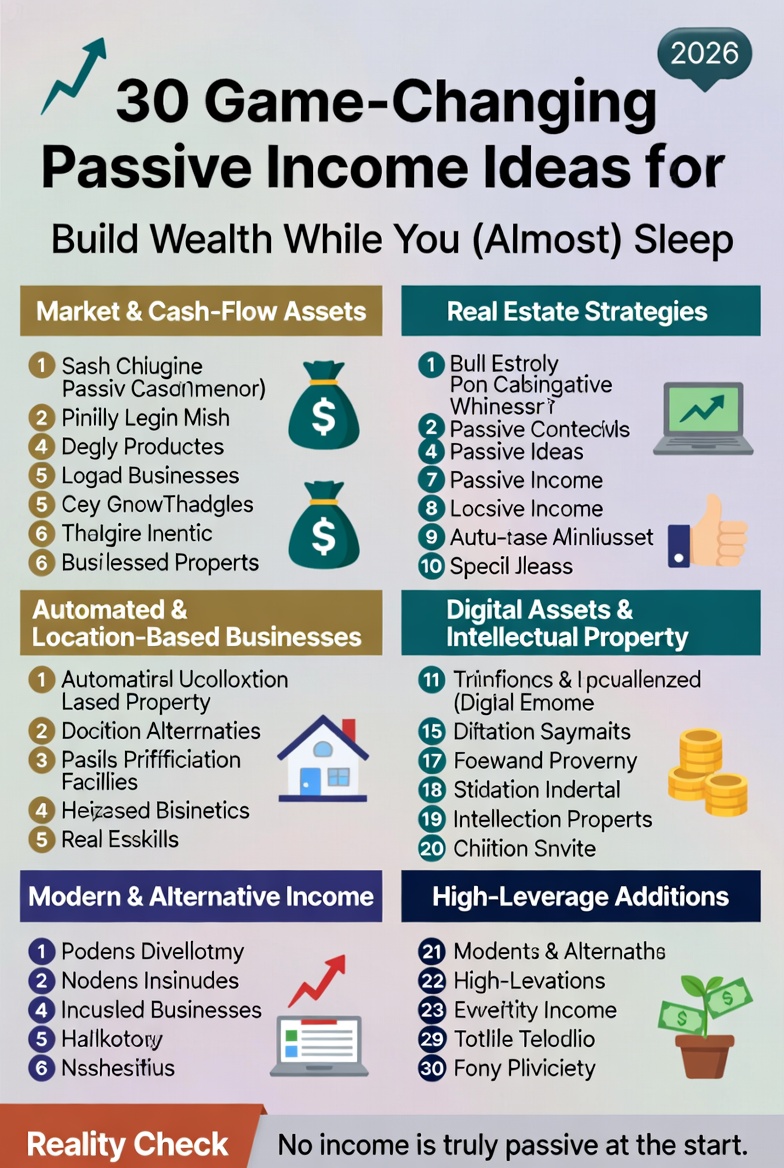
But here’s the reality check straight from the viral infographic that inspired this guide: No income is truly passive at the start. Every single one of these 30 ideas requires upfront effort, smart planning, and sometimes a bit of capital. The good news? Once set up, many can run on autopilot or with minimal maintenance.
In this ultimate guide, we’ve expanded on the 30 ideas from that popular infographic into detailed, actionable advice. We’ve grouped them into categories for easy reading, added real-world tips, pros/cons, and 2026-specific insights (think AI tools, crypto evolution, and post-inflation strategies). Whether you’re a beginner with $100 or a seasoned investor ready to scale, you’ll find ideas tailored for different risk levels, time commitments, and budgets.
Ready to stop trading time for money? Let’s dive in and turn your money into a 24/7 employee.
Market & Cash-Flow Assets: Let Your Money Make Money (Low-Effort Investing)
These are the classic “set it and forget it” options — perfect if you want passive income without managing a business.
1. Dividend Stocks
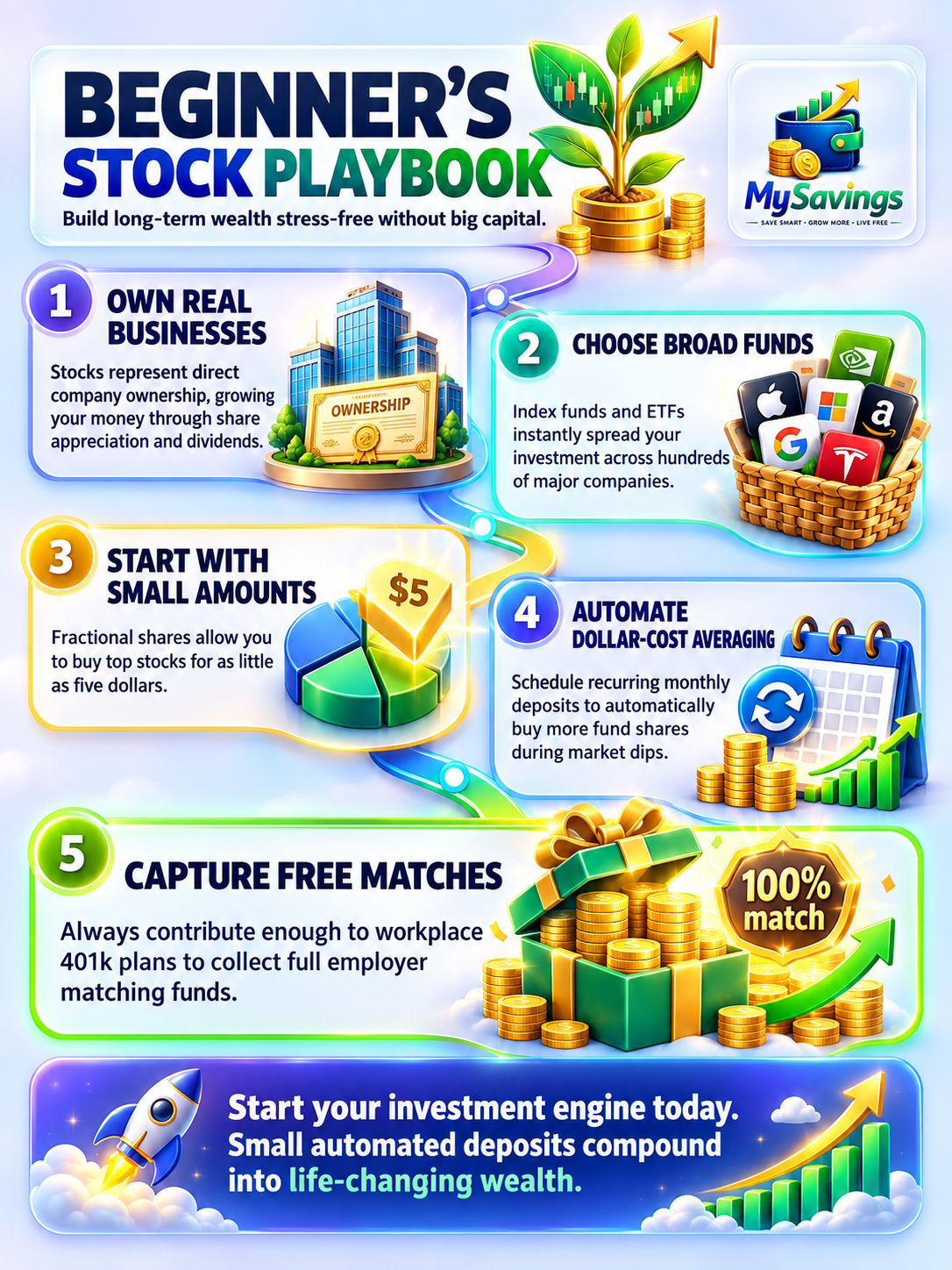
Imagine owning pieces of profitable companies that send you checks every quarter — that’s dividend stocks in a nutshell. Companies like those in the S&P 500 often pay shareholders a portion of their profits.
Why it works in 2026: Dividend aristocrats (firms raising payouts for 25+ years) are more resilient than ever amid economic uncertainty. Pros: Truly passive once invested; compounding through reinvestment (DRIP). Cons: Market volatility can affect principal. Getting started: Open a brokerage account (e.g., via apps popular in Sri Lanka like Interactive Brokers or local options), research high-yield dividend ETFs, and start with as little as $500. Aim for 4-7% annual yields. Potential: $1,000 invested at 6% yield = $60/year, scaling massively over time.
2. Index Funds / ETFs
Why pick individual stocks when you can own the entire market? Index funds and ETFs track broad markets like the S&P 500 or global indices for instant diversification.
2026 edge: Low-fee robo-advisors and AI-powered rebalancing make these easier than ever. Pros: Hands-off; historically 7-10% average annual returns. Cons: No control over individual holdings. Pro tip: Use dollar-cost averaging — invest fixed amounts monthly to ride out volatility. Many Sri Lankan expats use this for USD-denominated growth.
3. High-Yield Savings Accounts (HYSAs)
In a high-interest-rate environment, HYSAs offer 4-5%+ APY with zero risk (FDIC-insured equivalents).
Why now: Rates may fluctuate, but online banks still beat traditional savings. Pros: Liquid cash access; zero effort. Cons: Lower returns than stocks long-term. Action step: Shop rates on comparison sites and park your emergency fund here first.
4. REITs (Real Estate Investment Trusts)
Own a slice of commercial real estate — malls, apartments, warehouses — without buying property. REITs pay out 90%+ of profits as dividends.
Pros: High yields (5-8%); liquidity like stocks. Cons: Sensitive to interest rates. 2026 tip: Focus on data-center or healthcare REITs booming with AI growth.
5. Peer-to-Peer Lending
Platforms connect you directly to borrowers; you earn interest (8-12% typical).
Pros: Higher yields than savings. Cons: Default risk — diversify across many loans. Starter kit: Start with $25 per loan on established platforms.
Real Estate Strategies: Build Wealth Through Property (Semi-Passive Powerhouses)
Real estate remains one of the most proven wealth-builders — especially with remote management tools in 2026.
6. Rental Properties
Buy a property, rent it out long-term, and collect monthly checks. Property managers handle the rest.
Why it shines: Appreciation + cash flow + tax benefits. Pros: Inflation hedge. Cons: Upfront capital and occasional tenant drama. Sri Lanka angle: Colombo’s growing market offers strong rental demand from professionals.
7. Short-Term Rentals (Airbnb / STRs)
Turn your space into a vacation goldmine via Airbnb or Booking.com.
2026 update: AI pricing tools and smart locks make management 90% passive. Pros: 2-3x higher revenue than long-term. Cons: Regulations in some cities; seasonality. Hack: Start with house hacking (below) to minimize risk.
8. House Hacking
Live in one unit of a multi-family property and rent out the others. Your “mortgage” gets paid by tenants.
Beginner-friendly: Lowest barrier to real estate entry. Real talk: Many millionaires started here.
9. Car Sharing (Turo, Getaround)
List your car on peer-to-peer apps. Earn while it sits idle.
Pros: Minimal daily involvement. Cons: Wear-and-tear; insurance needs. 2026 boost: EV owners earn premiums in eco-conscious markets.
10. Laundromats
“Passive” machines working 24/7. Card-operated, app-monitored laundromats are booming.
Why legendary: Recession-proof demand + low ongoing labor. Pro move: Buy existing ones or partner with commercial spaces.
Automated & Location-Based Businesses: Scale with Systems
These blend entrepreneurship with automation for semi-passive profits.
11. Amazon FBA
Sell products on Amazon; they handle storage, shipping, and customer service.
2026 reality: AI tools now handle product research and listing optimization. Pros: Hands-off fulfillment. Cons: Competitive; inventory costs. Start small: Private-label trending items.
12. E-commerce (Branded Stores)
Build your own Shopify store selling physical or digital goods.
Edge: Subscription models create recurring revenue.
13. Dropshipping
Sell products without holding inventory — suppliers ship directly.
Pros: Low startup cost ($0-500). Cons: Supplier reliability matters. Tool tip: Use AI chatbots for 24/7 customer service.
14. Vending Machines
Place machines in high-traffic spots (offices, gyms) and restock occasionally.
Pros: Cash business; scalable. Cons: Location scouting upfront.
15. ATM Business
Own and place ATMs in busy locations. Earn fees per transaction.
Passive level: Extremely high once placed.
Digital Assets & Intellectual Property: Create Once, Sell Forever
Your brainpower becomes an asset that pays repeatedly.
16. Selling eBooks
Write once, upload to Amazon Kindle, earn royalties indefinitely.
2026 hack: Use AI assistants for editing/research — but infuse your unique voice.
17. Online Courses
Package your expertise into Udemy or Teachable courses.
Pros: One-time creation, lifetime sales. Income potential: Top creators earn six figures passively.
18. Stock Photos
Upload high-quality images to Shutterstock or Getty.
Pro tip: Niche in emerging trends like AI-generated art hybrids (with proper licensing).
19. Stock Videos
Same concept — short clips for ads and social media. Explosive demand in 2026.
20. YouTube (Ads + Affiliates)
Build a channel around evergreen topics (finance, travel hacks). Monetize via ads, affiliates, and merch.
Reality: Initial content grind, then passive views forever.
Modern & Alternative Income: The 2026 Edge
Embrace tech and trends for next-level passive streams.
21. Crypto Staking
Lock up coins like Ethereum to earn rewards (4-10% APY).
Warning: Volatile — only risk what you can afford.
22. Crypto Mining
Run efficient miners or join cloud pools (energy costs matter in 2026).
23. Affiliate Marketing
Promote products via blog, email, or social and earn commissions on sales.
Evergreen strategy: Build an authority site once.
24. Print-on-Demand
Design graphics for T-shirts, mugs, etc. Platforms print and ship on demand.
2026 twist: AI design tools speed up creation.
High-Leverage Additions: Advanced Passive Plays
These require more sophistication but offer massive upside.
25. Paid Newsletters (Substack / Email Lists)
Charge for premium content or insights.
Growth hack: Free tier funnels into paid.
26. Licensing Content (Art, Music, Curriculum, Quotes)
Sell rights to use your creations repeatedly.
27. Private Equity / Syndications
Pool money with others for big real estate or business deals.
Access: Platforms now democratize this for smaller investors.
28. AI-Powered Micro SaaS
Build (or co-build) tiny software tools using no-code AI. Charge monthly subscriptions.
Why explosive: AI lowers development barriers dramatically.
29. Royalties (Books, Music, Patents)
Traditional but powerful — think book sales, music streaming, or patent licensing.
30. Digital Tools & Templates
Create Notion templates, Excel dashboards, or design kits and sell on Etsy/Gumroad.
Scalability: Infinite copies, zero marginal cost.
Your 2026 Passive Income Action Plan
- Assess your starting point: Time, capital, skills, risk tolerance.
- Start small: Pick one idea from this list and commit 30 days to setup.
- Diversify: Don’t put all eggs in one basket — combine 3-5 streams.
- Leverage tech: Use AI for research, automation, and content.
- Track & optimize: Tools like Mint or local apps help monitor everything.
Remember: The infographic nailed it — no income is passive at the start. But the effort you put in during Year 1 can pay dividends (literally) for decades.
Which of these 30 passive income ideas excites you most? Drop your top pick in the comments below — or share this article with a friend who needs financial freedom inspiration. If you’re ready to take action, start with idea #2 (Index Funds) today — it’s the simplest path for most people.
Here’s to your future self thanking you for reading this. Financial independence isn’t a dream — it’s a decision. Go build it in 2026! 💰