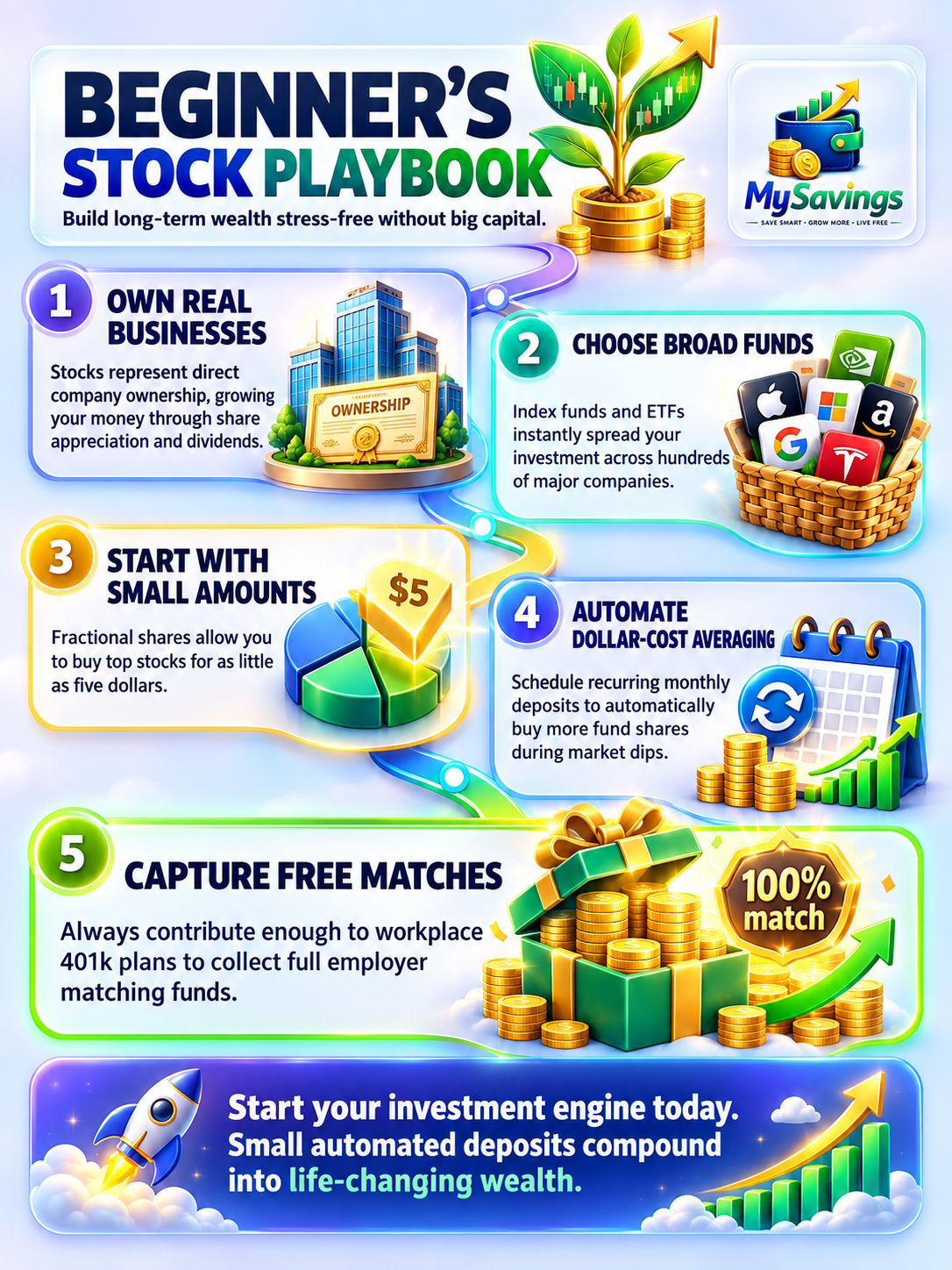
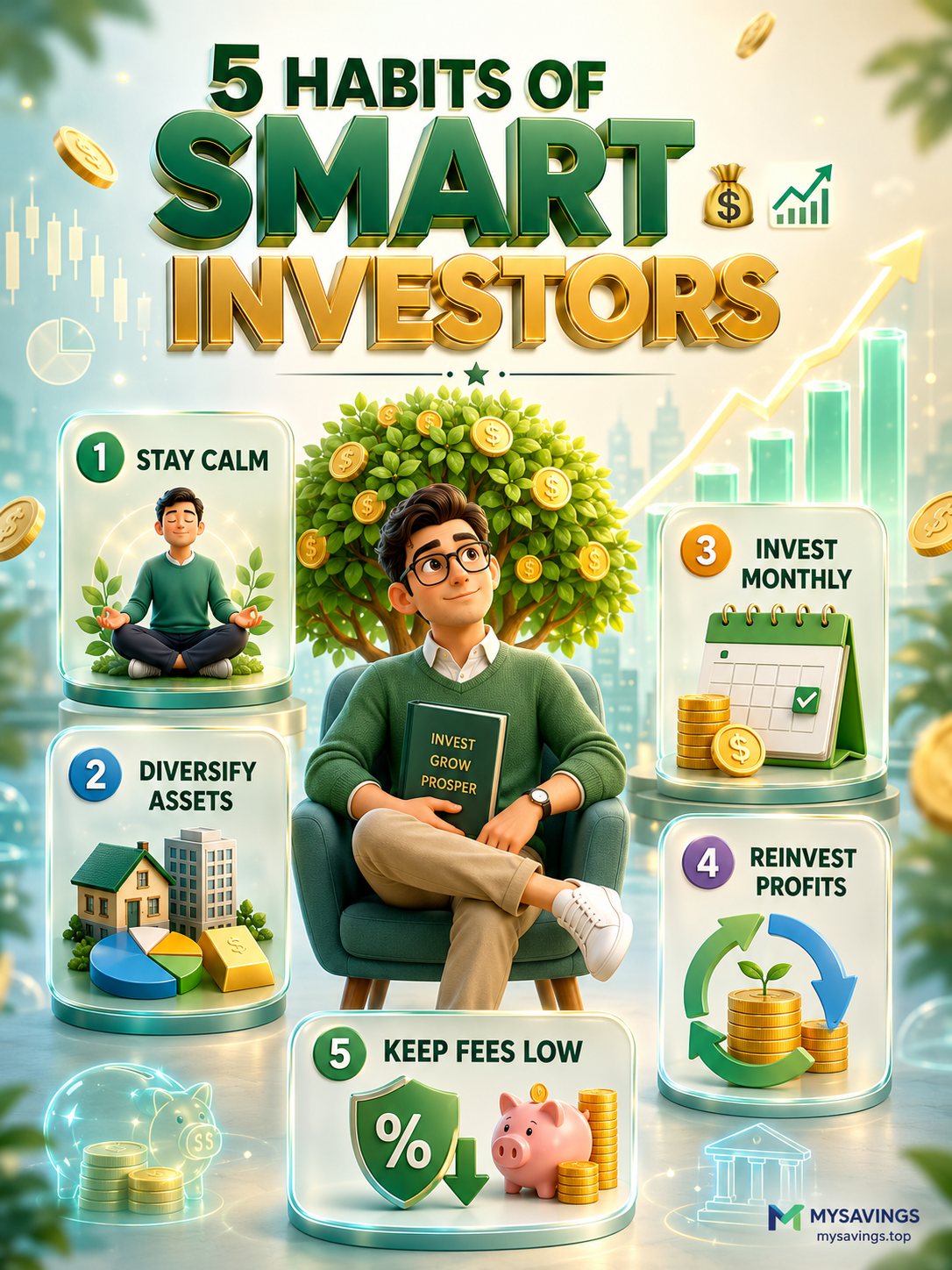
💡 Building wealth is rarely about chasing the next big stock or getting rich overnight. Instead, successful investors focus on simple, repeatable habits that compound into substantial financial growth over time. This guide explores five essential investing habits that help create lasting financial freedom, including avoiding emotional decisions, diversifying investments, investing consistently, reinvesting earnings, and keeping costs low. 🌱📊
Learn why market patience often beats market timing, how diversification can reduce risk, and why small fees can significantly impact long-term returns. The article also introduces a practical wealth-building framework that emphasizes discipline, consistency, and continuous learning. Whether you are a beginner or an experienced investor, these proven principles can help you build a stronger portfolio and make smarter financial decisions. 🚀💵 Discover the habits that many successful investors use to grow wealth steadily and create a more secure financial future.
What Are the Best Investing Habits for Building Wealth Long Term?
Building wealth through investing often appears complicated. Many people believe success depends on finding the next winning stock or perfectly predicting market movements. In reality, long-term financial success is usually the result of disciplined habits practiced consistently over many years.
Successful investors understand that patience, diversification, and consistency frequently matter more than short-term gains. By developing the right habits, investors can create a solid foundation for long-term financial freedom.
🌟 Why Investing Habits Matter
Investment success is rarely determined by luck alone. Financial markets can be unpredictable, and emotional decisions often lead to poor outcomes. Good habits help investors remain focused on long-term objectives instead of reacting to temporary market fluctuations.
Consistent investing behaviors can:
✨ Reduce investment risk
✨ Improve long-term returns
✨ Encourage disciplined financial decisions
✨ Build sustainable wealth over time
✨ Increase financial confidence
📉 1. Avoid Emotional Investing
One of the biggest challenges investors face is controlling emotions during market volatility.
When markets rise sharply, investors may become overly optimistic and buy at inflated prices. When markets fall, fear often leads to panic selling and locking in losses.
Why Emotional Investing Is Dangerous
Emotions can cause investors to:
🔹 Sell investments during downturns.
🔹 Chase popular investment trends.
🔹 Buy assets near market peaks.
🔹 Abandon long-term financial plans.
Financial markets naturally experience cycles of growth and decline. Temporary market corrections are a normal part of investing.
Practical Ways to Stay Disciplined
💡 Create a long-term investment strategy.
💡 Focus on long-term goals rather than daily market movements.
💡 Ignore sensational financial headlines.
💡 Review investments periodically instead of constantly.
Remaining calm during uncertain periods often leads to better long-term outcomes.
🌍 2. Diversify Your Portfolio
Diversification is one of the most effective risk management strategies available to investors.
Rather than placing all funds into a single investment, diversification spreads capital across different assets, industries, and geographic regions.
Benefits of Diversification
✨ Reduces exposure to individual investment failures.
✨ Improves portfolio stability.
✨ Helps smooth investment returns.
✨ Provides access to multiple growth opportunities.
Assets Commonly Used for Diversification
📈 Stocks
📊 Exchange-Traded Funds (ETFs)
🏦 Index Funds
🏠 Real Estate Investments
💵 Bonds
🌎 International Markets
🪙 Alternative Assets
No single asset class performs well all the time. Diversification allows investors to benefit from different market conditions while reducing overall risk.
⏳ 3. Invest Consistently
One of the most powerful wealth-building habits is investing regularly.
Many investors attempt to predict market highs and lows, but consistently timing the market is extremely difficult.
Instead, successful investors often focus on making regular contributions regardless of market conditions.
The Power of Consistency
Regular investing offers several advantages:
✨ Builds financial discipline.
✨ Removes emotional decision-making.
✨ Takes advantage of market fluctuations.
✨ Creates long-term wealth through compounding.
Dollar-Cost Averaging Explained
Dollar-cost averaging involves investing a fixed amount at regular intervals.
When prices are low, investors buy more shares. When prices are high, they buy fewer shares.
Over time, this strategy can reduce the impact of market volatility.
How to Build Consistency
📅 Set a monthly investing schedule.
⚙️ Automate contributions.
🎯 Focus on long-term goals.
📈 Continue investing during market declines.
Consistency often matters more than finding the perfect entry point.
🔄 4. Reinvest Your Earnings
Compounding is one of the most powerful concepts in investing.
Albert Einstein reportedly described compound growth as one of the world’s most powerful financial forces because investment gains can generate additional gains over time.
What Is Reinvestment?
Reinvestment means using investment income to purchase additional assets instead of withdrawing profits.
This may include:
💰 Dividend reinvestment
🏦 Interest reinvestment
📊 Reinvesting capital gains
Why Reinvestment Matters
Compounding creates exponential growth because returns begin earning additional returns.
A portfolio that continuously reinvests earnings can grow substantially larger over several decades compared to one that regularly withdraws profits.
Benefits of Compounding
✨ Accelerates wealth creation.
✨ Increases long-term portfolio value.
✨ Maximizes investment efficiency.
✨ Helps investors reach financial goals faster.
Patience is essential because compounding becomes more powerful over longer periods.
💸 5. Keep Investment Costs Low
Investment costs may seem small initially, but even minor fees can significantly reduce long-term returns.
Over several decades, high fees can quietly consume a large portion of investment gains.
Common Investment Costs
📋 Fund management fees
📋 Trading commissions
📋 Advisory fees
📋 Tax inefficiencies
📋 Account maintenance costs
Why Low Costs Matter
A seemingly small annual fee difference can result in thousands of dollars in lost returns over time.
Reducing expenses allows more capital to remain invested and continue compounding.
Ways to Lower Costs
💡 Consider low-cost index funds.
💡 Avoid excessive trading activity.
💡 Review fee structures carefully.
💡 Focus on tax-efficient investing strategies.
Small savings today can create significant benefits in the future.
🚀 The Wealth-Building Framework
Successful investors often follow a simple framework that emphasizes discipline and long-term thinking.
Seven Core Wealth Principles
🌱 Invest regularly.
🌍 Diversify wisely.
📈 Stay invested long term.
🔄 Reinvest earnings.
💰 Minimize unnecessary costs.
🧠 Avoid emotional decisions.
📚 Continue learning about investing.
These principles provide a practical roadmap for building sustainable financial security.
🏆 Why Patience Wins in Investing
Many people underestimate the value of patience.
Building substantial wealth rarely happens overnight. Long-term investing rewards those who remain disciplined and committed to their strategy.
Historical market data consistently shows that investors who stay invested through market cycles often outperform those who frequently enter and exit the market.
Successful investing is usually less about finding perfect opportunities and more about avoiding major mistakes.
🎯 Final Thoughts
Financial freedom is often built through small, consistent actions repeated over many years.
Avoiding emotional decisions, maintaining diversification, investing consistently, reinvesting earnings, and keeping costs low can significantly improve long-term outcomes.
The journey toward wealth creation is not about perfection. It is about discipline, patience, and allowing time and compounding to work in your favor.
By developing these smart investing habits today, investors can build stronger portfolios, increase financial resilience, and move closer toward long-term financial independence.