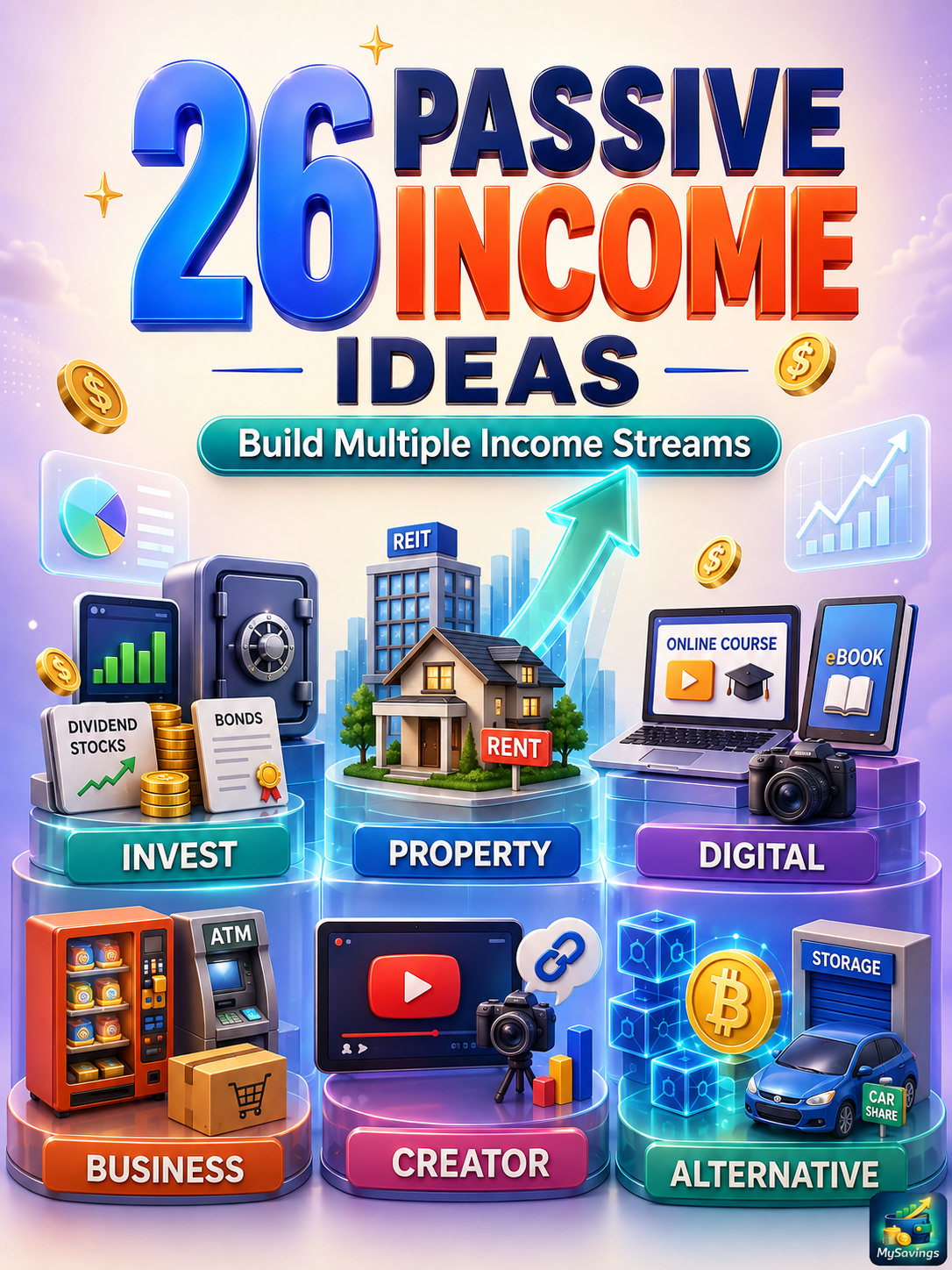
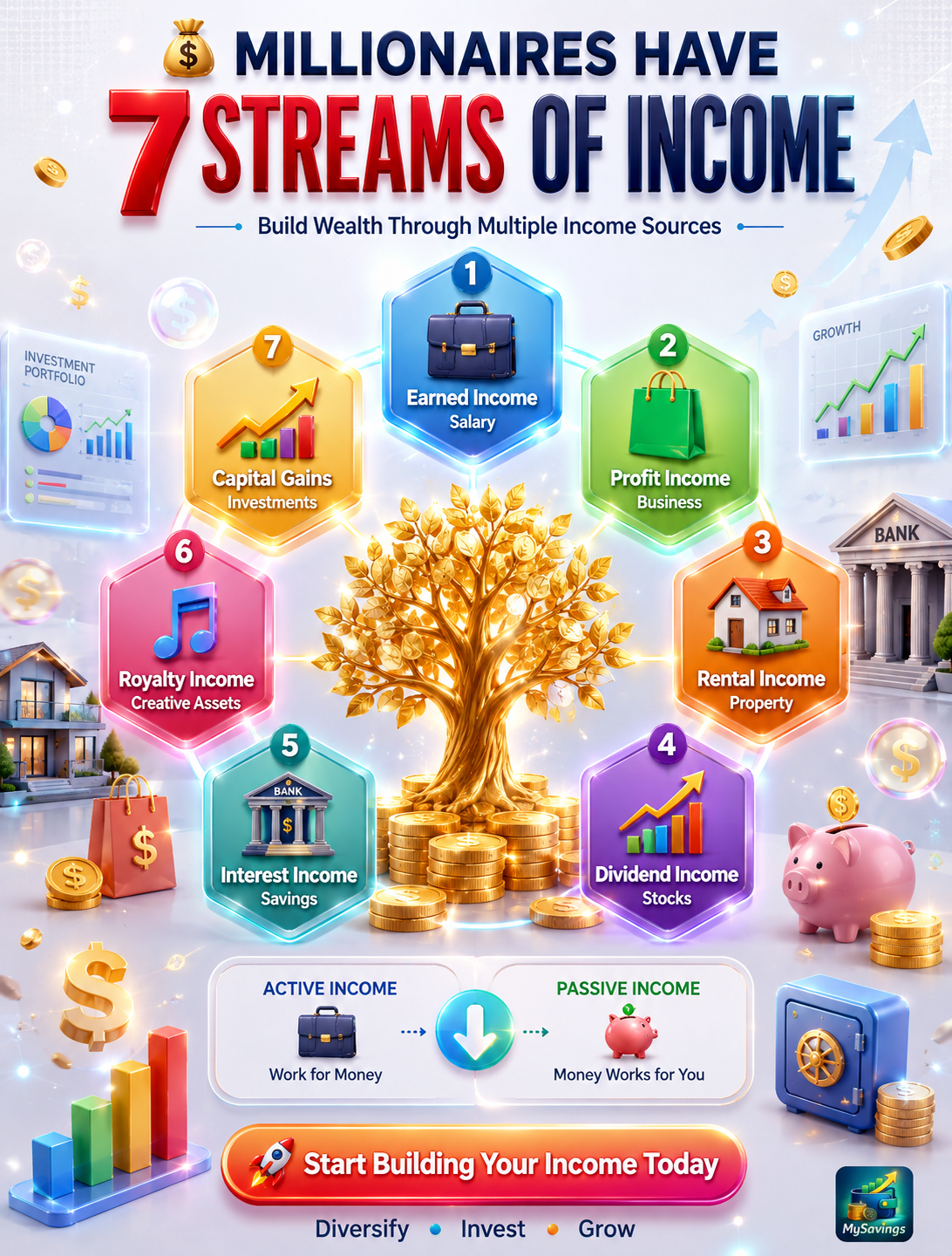
💰 Building long-term wealth rarely depends on a single paycheck. Most financially successful individuals diversify their earnings by creating multiple income streams that continue generating money over time. This guide explores the seven primary income sources commonly associated with wealth creation: earned income, profit income, rental income, dividend income, interest income, royalties, and capital gains. 📈 You’ll learn how each income stream works, its benefits, potential risks, and practical ways beginners can start building them. Whether you’re aiming to improve financial security, create passive income, or achieve greater financial independence, understanding these income categories can help you make smarter money decisions. 🌱 The article also explains how to prioritize income streams based on your current financial situation and long-term goals. By combining active and passive income strategically, you can create a more resilient financial future while reducing dependence on a single source of earnings.
Understanding Why Multiple Income Streams Matter
Financial stability isn’t built overnight, and it rarely comes from relying on a single paycheck. One of the most common characteristics of financially successful people is diversification. Instead of depending on one source of income, they build several streams that work together to increase cash flow and reduce financial risk.
Multiple income streams provide:
🌟 Greater financial security
💵 More opportunities to grow wealth
📉 Reduced dependence on one employer or business
🏡 Better protection during economic uncertainty
🚀 Faster progress toward financial independence
Each income source plays a unique role. Some require active work, while others continue generating money with minimal ongoing effort after they’re established.
What Are the Seven Income Streams?
The seven major income streams include:
💼 Earned Income
🛍️ Profit Income
🏠 Rental Income
📈 Dividend Income
🏦 Interest Income
🎵 Royalty Income
📊 Capital Gains
Let’s explore each one in detail.
Earned Income
What Is Earned Income?
Earned income is money received by working for someone else or operating a business where your time directly creates income. This is the starting point for most people’s financial journey.
Examples include:
💼 Full-time employment
👨💻 Freelancing
🛠️ Skilled trades
🏥 Professional services
📚 Consulting
Earned income is predictable and provides financial stability, but it usually stops when you stop working.
Advantages
✅ Consistent monthly cash flow
✅ Easier budgeting
✅ Supports savings and investments
Limitations
⚠️ Limited by available time
⚠️ Income often stops during unemployment or retirement
The key is using earned income to build other income streams.
Profit Income
What Is Profit Income?
Profit income comes from buying products or services at one price and selling them for more.
Common examples include:
🛒 E-commerce stores
📦 Product reselling
🏪 Retail businesses
🎨 Handmade products
📱 Digital products
Unlike earned income, profit income depends on business performance rather than hourly work.
Benefits
✅ Unlimited growth potential
✅ Business scalability
✅ Flexible earning opportunities
Risks
⚠️ Inventory costs
⚠️ Market competition
⚠️ Changing customer demand
Successful businesses focus on solving customer problems while maintaining healthy profit margins.
Rental Income
What Is Rental Income?
Rental income is generated by allowing others to use your property in exchange for regular payments.
Examples include:
🏠 Residential homes
🏢 Apartments
🏬 Commercial buildings
🚗 Vehicle rentals
🛠️ Equipment rentals
Rental properties can provide consistent monthly cash flow while also increasing in value over time.
Advantages
✅ Regular passive cash flow
✅ Potential property appreciation
✅ Portfolio diversification
Challenges
⚠️ Property maintenance
⚠️ Vacancy periods
⚠️ Repair expenses
Proper management helps maximize long-term returns.
Dividend Income
What Is Dividend Income?
Dividend income comes from owning shares of companies that distribute a portion of their profits to shareholders.
Instead of selling your investments, you receive periodic payments simply for holding qualifying stocks.
Examples include:
📈 Dividend-paying companies
🏦 Bank stocks
⚡ Utility companies
🥤 Consumer goods companies
Many investors reinvest dividends to accelerate wealth growth through compounding.
Benefits
✅ Passive cash flow
✅ Long-term investment growth
✅ Compound wealth potential
Considerations
⚠️ Dividend payments aren’t guaranteed
⚠️ Stock prices fluctuate
Diversification helps reduce investment risk.
Interest Income
What Is Interest Income?
Interest income is earned by lending money or depositing savings into interest-bearing accounts.
Examples include:
🏦 High-yield savings accounts
📜 Government bonds
💳 Peer-to-peer lending
💰 Certificates of deposit
Interest income generally offers lower risk than many investments but often provides lower returns.
Benefits
✅ Predictable earnings
✅ Lower investment risk
✅ Easy to manage
Drawbacks
⚠️ Returns may not keep pace with inflation
⚠️ Interest rates can change
It’s commonly used for preserving capital while earning steady returns.
Royalty Income
What Is Royalty Income?
Royalty income is generated when someone pays to use intellectual property or creative work.
Examples include:
🎵 Music
📚 Books
🎬 Films
📷 Photography
💻 Software
🎨 Digital artwork
Once created, intellectual property can continue generating income for years.
Benefits
✅ Highly scalable
✅ Potential long-term passive income
✅ Global earning opportunities
Challenges
⚠️ Upfront creative effort
⚠️ Competitive markets
⚠️ Licensing requirements
Strong intellectual property can become a valuable long-term asset.
Capital Gains
What Are Capital Gains?
Capital gains occur when you sell an asset for more than you originally paid.
Common assets include:
📈 Stocks
🏠 Real estate
🪙 Precious metals
💼 Investment funds
💻 Businesses
For example, purchasing shares for $1,000 and selling them later for $1,500 creates a capital gain of $500.
Advantages
✅ Significant long-term wealth potential
✅ Portfolio growth
✅ Flexible investment choices
Risks
⚠️ Market volatility
⚠️ Timing uncertainty
⚠️ Investment losses
Long-term investing often helps reduce the impact of short-term market fluctuations.
Active Income vs Passive Income
Understanding the difference between active and passive income helps create a balanced financial strategy.
Active Income
💼 Salary
👨💻 Freelancing
🏪 Small business operations
Requires continuous effort to earn money.
Passive Income
🏠 Rentals
📈 Dividends
🏦 Interest
🎵 Royalties
These can continue generating income after the initial work or investment.
Most successful financial plans combine both types.
How Beginners Can Build Multiple Income Streams
You don’t need to create all seven income streams immediately.
A practical roadmap includes:
🌱 Build stable earned income.
💰 Create an emergency fund.
📈 Begin investing consistently.
🏠 Consider income-producing assets.
🛒 Explore small business opportunities.
📚 Develop valuable skills or intellectual property.
🔄 Reinvest profits to accelerate growth.
Consistency matters more than speed.
Common Mistakes to Avoid
Avoid these common financial pitfalls:
⚠️ Depending entirely on one paycheck
⚠️ Chasing unrealistic investment returns
⚠️ Ignoring financial education
⚠️ Spending instead of investing
⚠️ Taking unnecessary debt
⚠️ Failing to diversify income sources
Balanced planning supports sustainable wealth creation.
Frequently Asked Questions
What is the most common income stream?
Earned income is the most common source because most people begin by working for wages or salaries.
Which income stream is considered passive?
Rental income, dividends, royalties, and interest income are generally considered passive once established.
Do I need a lot of money to start investing?
No. Many investment platforms allow beginners to start with relatively small amounts and invest consistently over time.
Which income stream has the highest growth potential?
Profit income from businesses and capital gains from successful investments often have significant growth potential, though they also involve higher risk.
Can one person build all seven income streams?
Yes. Many financially successful individuals gradually build multiple income streams over many years rather than all at once.
Final Thoughts
Building wealth isn’t about finding a single perfect income source—it’s about creating a diversified financial foundation. Each of the seven income streams serves a different purpose, from providing stability through earned income to generating long-term growth through investments, royalties, rentals, and business profits.
Rather than trying to develop every income stream at once, focus on strengthening your primary income, improving financial knowledge, and consistently investing in opportunities that align with your goals. Over time, multiple income streams can work together to increase financial resilience, expand earning potential, and support long-term financial independence.