⚠️ Frugality Fails: 7 Cheap Habits That Secretly Drain Your Bank Account 💸
Trying to stretch every dollar is a great goal when building wealth. 💰 However, there is a massive difference between spending money intentionally and falling into penny-pinching habits that backfire on your bank balance. 📉
Cutting corners often leads to unexpected expenses, wasted time, or ruined purchases down the road. 🚪 Learning to spot common frugality traps helps you protect your net worth while spending smarter on daily essentials. 🧠
When does saving money backfire and cost you more in the long run?
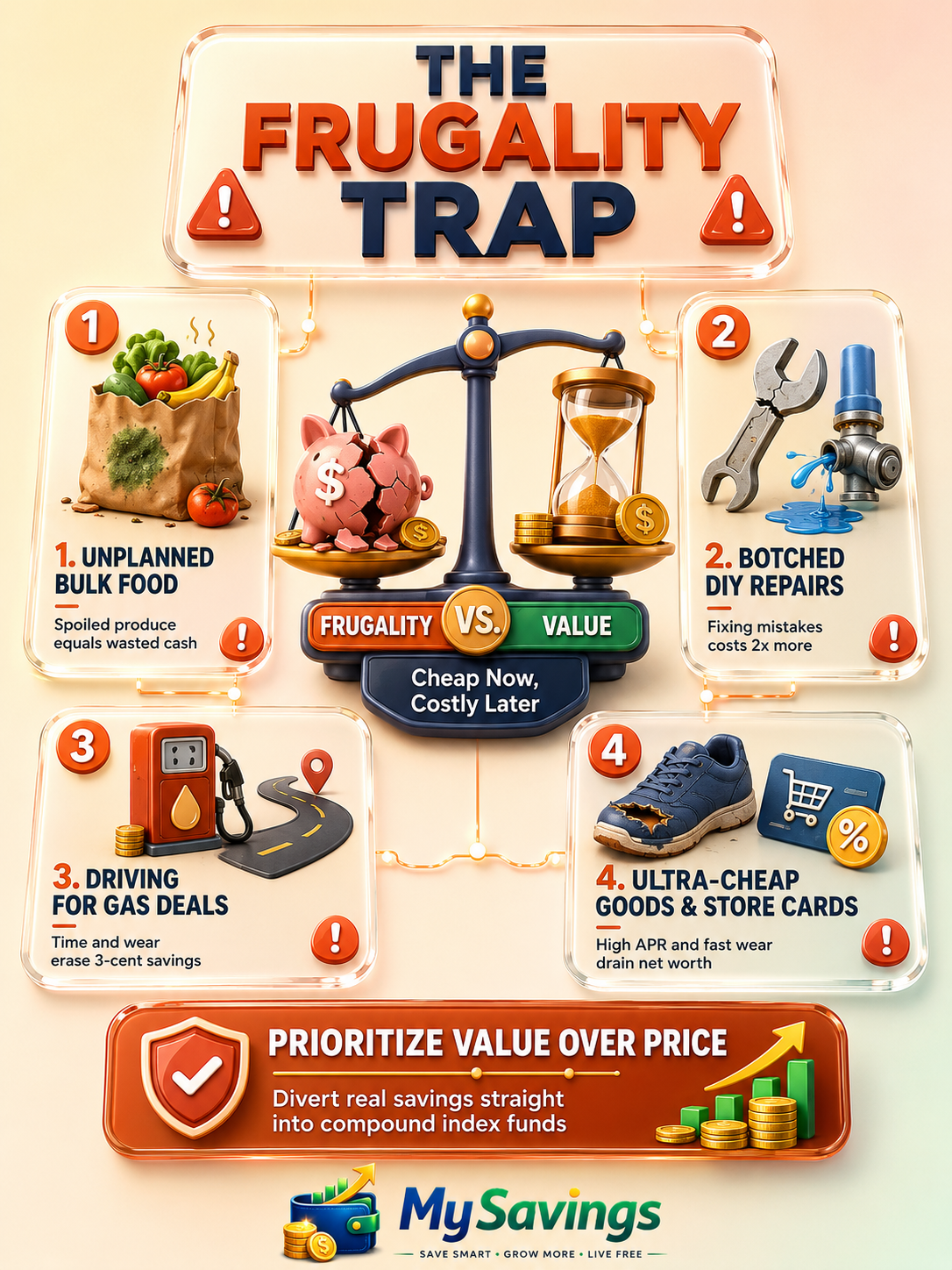
Saving money backfires when cheap habits create hidden secondary costs. Common examples include buying low-quality items that break quickly, attempting complex DIY repairs without proper skills, driving long distances to save pennies on gas, and buying bulk perishables that end up in the trash.
Let us break down seven classic frugality traps so you can stop wasting cash, and see how MySavings empowers you to build true financial independence. 🚀
🥩 1. Bulk Buying Perishable Food Without a Meal Plan 🛒
Stocking up at warehouse clubs looks like an instant win for your household budget. 🏭 Giant bags of fresh produce, massive blocks of cheese, and family-sized bakery items offer impressive unit price discounts on paper. 🏷️
Unless you have a strict prep plan or a large family, much of that fresh food spoils in your fridge before anyone eats it. 🥦 Throwing away spoiled groceries erases your initial savings and turns a smart idea into outright waste. 🗑️
💡 Stick to Non-Perishables: Buy bulk pantry staples like rice, dry beans, paper products, and canned goods instead of fresh items with short shelf lives.
📦 Freeze Immediately: Portion out bulk meat or bread on day one to prevent spoilage.
Aligning your grocery trips with actual consumption keeps food waste low and cash in your pocket. 💵
Unused bulk food isn’t a discount—it is an expensive illusion. Calculate your actual consumption habits before filling giant warehouse carts! 🛒
🔨 2. Complex DIY Home and Auto Repairs Gone Wrong 🚗
Taking on home improvements or basic car maintenance yourself can save serious labor costs. 🧰 Changing an air filter or painting a spare room is totally manageable for most beginners. 🎨
Attempting complex electrical work, plumbing overhauls, or brake repairs without experience often ends in property damage or safety hazards. 🚨 Hiring licensed professionals to fix a botched DIY project costs far more than calling them in the first place. 🛠️
📊 DIY vs. Professional Service Breakdown
| Household Task 🏠 | DIY Risk Level ⚠️ | Potential Fail Cost 💸 | Recommended Action 🎯 |
|---|---|---|---|
| Basic Painting & Caulking 🎨 | Low 🟢 | $50 (Touch-up paint) | Great DIY project! 🖌️ |
| Electrical Panel Work ⚡ | Extreme 🔴 | $2,000+ (Fire damage) | Hire a licensed pro 👨🔧 |
| Deep Pipe Plumbing 🚰 | High 🟡 | $1,500+ (Water damage) | Hire a licensed pro 🔧 |
Know your skill limits! Save DIY enthusiasm for low-risk cosmetic projects, and leave structural, water, and electrical systems to trained experts. 🛡️
⛽ 3. Driving Across Town to Save Pennies on Gas 🚗
Driving five miles out of your way to save three cents per gallon on fuel feels like a victory at the pump. ⛽ When you calculate the actual math, the savings rarely exceed a dollar or two per fill-up. 🧮
Burning fuel, adding vehicle mileage, and wasting valuable time sitting in traffic negates those tiny pump savings completely. 🚙 Your time and vehicle wear carry real monetary value that deserves protection. ⏰
⏱️ Value Your Time: Spending 30 minutes in traffic to save $1 equals working for $2 an hour.
📱 Use Fuel Apps: Check local gas prices along your existing commute route instead of making special trips.
Focusing on high-impact financial moves delivers far better returns than chasing pocket change across town. 🗺️
Ignoring vehicle depreciation and wear-and-tear costs when driving extra miles just to redeem minor coupons or discounts. 🚙
👞 4. Buying Ultra-Cheap Quality Items That Wear Out Fast 👟
Opting for the cheapest footwear, appliances, or work clothes saves money during checkout. 👟 Unfortunately, ultra-cheap manufacturing means these products break or wear down after a few months of light use. 📉
Replacing flimsy items three or four times over a couple of years costs significantly more than investing in one durable, well-made product up front. 👞 This is classic “Sam Vimes Boot Theory” in real life. 👢
Focus on cost-per-use! Paying $150 for boots that last five years ($30/year) is far cheaper than buying $50 boots that fall apart every six months ($100/year).
Investing in durable gear pays off over time by keeping replacement purchases off your credit card bill. 💳
💳 5. Opening Store Cards Just for a One-Time Discount 🛍️
Cashiers love offering a 15% discount on today’s purchase if you sign up for their store credit card at checkout. 🛍️ Getting $20 off an apparel haul feels like easy money in the moment. 🏷️
Store credit cards frequently carry astronomical interest rates—often exceeding 28% to 30% APR. 📈 Carrying a balance for even two months wipes out your initial savings and adds high-interest debt to your monthly budget. 💸
🚨 High APR Traps: Interest charges stack up rapidly if you miss a single payment deadline.
📉 Credit Score Dips: Multiple store card inquiries lower your average credit account age and pull down your score.
Smart frugality targets long-term value, whereas cheapskate habits focus strictly on short-term price tags, often triggering higher secondary costs.
📝 Key Takeaways for Value-Focused Spending 📝
🧠 Prioritize Value Over Price: Evaluate long-term durability and cost-per-use rather than chasing the lowest price tag.
🥦 Plan Bulk Purchases: Buy non-perishable staples in bulk and leave fresh items for weekly meal plans.
🛠️ Know Your DIY Limits: Hire professionals for high-risk plumbing, electrical, and structural repairs.
⏱️ Respect Your Time: Avoid spending hours driving or clipping coupons for trivial savings.
🚀 Invest Real Savings: Redirect the money you save on genuine deals into index funds to build lasting wealth.
🏁 Final Thoughts: Focus on Value to Build Real Wealth 🏁
Building financial security is about maximizing value, not stripping every bit of comfort from your life. Avoiding cheapness traps keeps your time free, your home organized, and your bank balance growing steadily. 💎
When you evaluate purchases based on long-term utility and durability, every dollar works harder for your future self. Spend intentionally, skip short-sighted shortcuts, and let your savings compound over time. 🌲
Take charge of your personal financial strategy right now. Explore our practical budgeting guides, calculators, and habit-building tools on MySavings to grow your net worth today! 🚀👇