
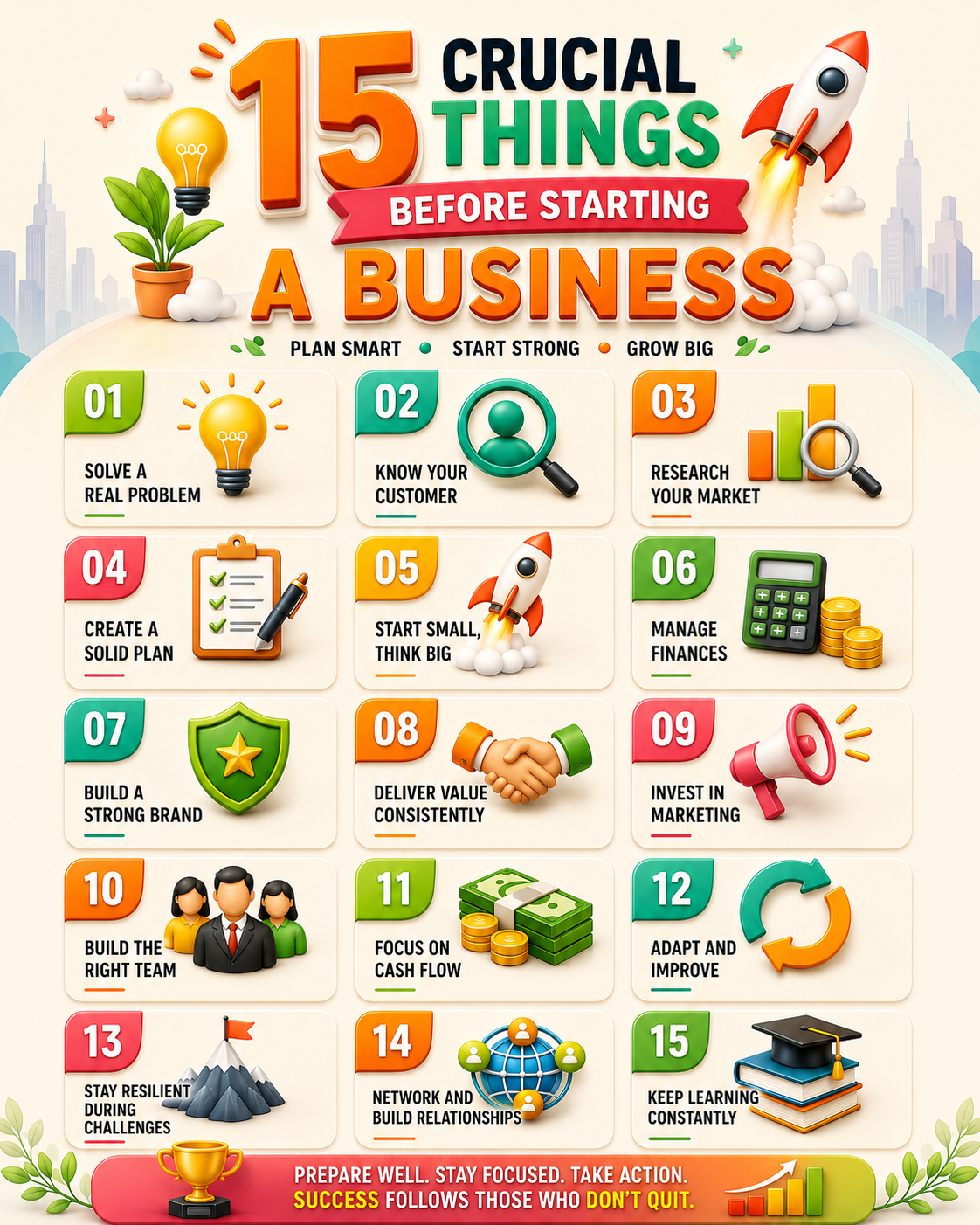
💡 Starting a business can be exciting, but success requires more than just a great idea. From understanding customer needs to managing finances wisely, every step plays a vital role in building a profitable and sustainable company. 🚀 This guide explores 15 crucial things every entrepreneur should know before launching a startup, including market research, branding, financial planning, customer satisfaction, and business growth strategies. 📊
📌 Whether launching an online business, small startup, or side hustle, these practical insights help reduce risks and improve decision-making. Learn how to create a strong business plan, build trust with customers, market effectively, adapt to changing trends, and stay resilient during challenges. 🌟
💰 Perfect for aspiring entrepreneurs, startup founders, freelancers, and small business owners looking to build long-term success with smart planning and strategic execution. 📈
🚀 Before Starting a Business 💼
Starting a business is one of the most rewarding yet challenging journeys an individual can take. While entrepreneurship offers opportunities for financial independence, innovation, and personal growth, it also comes with risks that require careful planning and strategic decision-making.
Many startups fail not because the idea is bad, but because entrepreneurs overlook essential business fundamentals. Understanding key principles before launching a company can significantly increase the chances of long-term success.
This guide explores 15 crucial things every entrepreneur should know before starting a business and explains how these factors can help build a profitable and sustainable venture.
💡 1. Solve a Real Problem
The foundation of every successful business is solving a genuine problem for customers.
A business idea should address a specific pain point, improve convenience, save time, reduce costs, or provide a better experience than existing alternatives. Products or services that fail to solve real problems often struggle to attract loyal customers.
Before investing money into a startup:
- Identify customer frustrations
- Analyze gaps in the market
- Understand what competitors are missing
- Validate demand through surveys or research
Businesses that focus on customer needs are more likely to generate sustainable revenue and long-term growth.
📊 2. Know Your Customer
Understanding the target audience is essential for effective business planning and marketing.
Entrepreneurs should identify:
- Customer demographics
- Buying behaviors
- Interests and preferences
- Common challenges
- Spending habits
Creating customer personas helps businesses tailor products, pricing, branding, and advertising strategies more effectively.
When businesses deeply understand their audience, they can improve customer satisfaction and build stronger brand loyalty.
🔍 3. Research Your Market Thoroughly
Market research helps entrepreneurs understand industry trends, customer expectations, and competition.
Before launching a business, analyze:
Competitors
Study successful competitors to identify strengths and weaknesses.
Industry Trends
Monitor emerging technologies, consumer behavior changes, and economic factors.
Opportunities
Find underserved niches or unmet customer needs.
Strong market research reduces business risks and improves decision-making.
📝 4. Create a Solid Business Plan
A business plan acts as a roadmap for growth and sustainability.
An effective business plan should include:
- Business objectives
- Target market analysis
- Revenue model
- Marketing strategy
- Financial projections
- Operational structure
A detailed plan helps entrepreneurs stay focused, secure funding, and measure progress effectively.
Businesses without structured planning often struggle with direction and resource management.
🌱 5. Start Small but Think Big
Many successful companies began with simple ideas and small-scale operations.
Starting small allows entrepreneurs to:
- Test the market
- Minimize financial risk
- Gather customer feedback
- Improve products gradually
However, entrepreneurs should still maintain a long-term vision for growth and scalability.
Strategic expansion based on validated demand is often more sustainable than rapid, uncontrolled growth.
💰 6. Manage Finances Carefully
Financial management is one of the most important aspects of business success.
Poor cash flow management can quickly damage even profitable businesses.
Key financial practices include:
Budgeting
Track expenses and control unnecessary spending.
Emergency Funds
Maintain reserves for unexpected challenges.
Cash Flow Monitoring
Understand income and outgoing expenses regularly.
Pricing Strategy
Set prices that cover costs while remaining competitive.
Using accounting software and financial planning tools can help improve accuracy and organization.
🤝 7. Build a Strong Brand
A strong brand creates trust, recognition, and emotional connection with customers.
Branding includes:
- Business name
- Logo and visual identity
- Messaging and tone
- Customer experience
- Online presence
Consistency across websites, social media, and marketing materials strengthens brand credibility.
Businesses with strong branding are more likely to stand out in competitive markets.
⭐ 8. Deliver Value Consistently
Customer satisfaction is essential for business growth and retention.
Successful businesses focus on:
- Product quality
- Excellent customer service
- Reliable communication
- Fast problem resolution
Satisfied customers are more likely to recommend a business through reviews and word-of-mouth marketing.
Consistency builds trust and strengthens customer loyalty over time.
📢 9. Invest in Marketing
Even the best products need effective marketing to reach customers.
A modern marketing strategy may include:
Content Marketing
Publishing blogs, videos, and guides to educate audiences.
Social Media Marketing
Building brand awareness through platforms like Facebook, Instagram, LinkedIn, and TikTok.
Search Engine Visibility
Optimizing content for discoverability and user intent.
Email Marketing
Maintaining direct communication with customers.
Paid Advertising
Using targeted ads to increase traffic and sales.
Businesses that actively market themselves gain a stronger competitive advantage.
👥 10. Build the Right Team
A business grows faster with skilled and reliable people.
Entrepreneurs should focus on hiring individuals who align with the company’s goals and values.
Strong teams contribute through:
- Creativity
- Productivity
- Problem-solving
- Collaboration
Clear communication and leadership also improve workplace efficiency and morale.
A positive company culture helps attract and retain talented employees.
📈 11. Focus on Cash Flow
Revenue alone does not guarantee business success.
Cash flow management determines whether a company can:
- Pay employees
- Cover operational expenses
- Invest in growth
- Handle emergencies
Monitoring financial performance regularly helps businesses avoid liquidity issues.
Entrepreneurs should track:
- Monthly income
- Operational costs
- Profit margins
- Outstanding payments
Healthy cash flow supports long-term business stability.
🔄 12. Adapt and Improve Continuously
Markets constantly evolve due to technology, customer behavior, and economic changes.
Businesses that resist change may struggle to survive.
Successful entrepreneurs continuously:
- Analyze performance data
- Gather customer feedback
- Improve products and services
- Update marketing strategies
- Embrace innovation
Adaptability allows businesses to remain competitive in changing environments.
🏔️ 13. Stay Resilient During Challenges
Entrepreneurship involves setbacks, uncertainty, and obstacles.
Common challenges include:
- Financial pressure
- Competition
- Slow growth
- Operational issues
Resilience helps entrepreneurs stay focused and continue improving despite difficulties.
Problem-solving skills, patience, and persistence are essential qualities for long-term business success.
🌐 14. Network and Build Relationships
Strong professional relationships create opportunities for growth, partnerships, and learning.
Networking can help businesses:
- Gain referrals
- Discover new markets
- Find mentors
- Build collaborations
Entrepreneurs can network through:
- Industry events
- Business communities
- Online platforms
- Social media groups
Building strong connections often leads to valuable opportunities and business support.
📚 15. Keep Learning Constantly
Business environments evolve rapidly, making continuous learning essential.
Entrepreneurs should stay informed about:
- Industry trends
- Marketing strategies
- Financial management
- Technology advancements
- Consumer behavior
Reading business books, attending workshops, taking online courses, and following market insights can help entrepreneurs remain competitive.
A growth mindset encourages innovation and long-term success.
🏆 Final Thoughts
Starting a business requires careful planning, discipline, and strategic execution. Entrepreneurs who focus on solving real problems, understanding customers, managing finances wisely, and continuously adapting are more likely to build sustainable businesses.
Success rarely happens overnight. Building a profitable company takes persistence, learning, and consistent improvement.
By applying these 15 crucial business principles, aspiring entrepreneurs can reduce risks, improve decision-making, and create stronger foundations for long-term growth.
The business world continues to evolve rapidly, but businesses that prioritize customer value, innovation, and financial discipline will always have opportunities to thrive.